Pruning
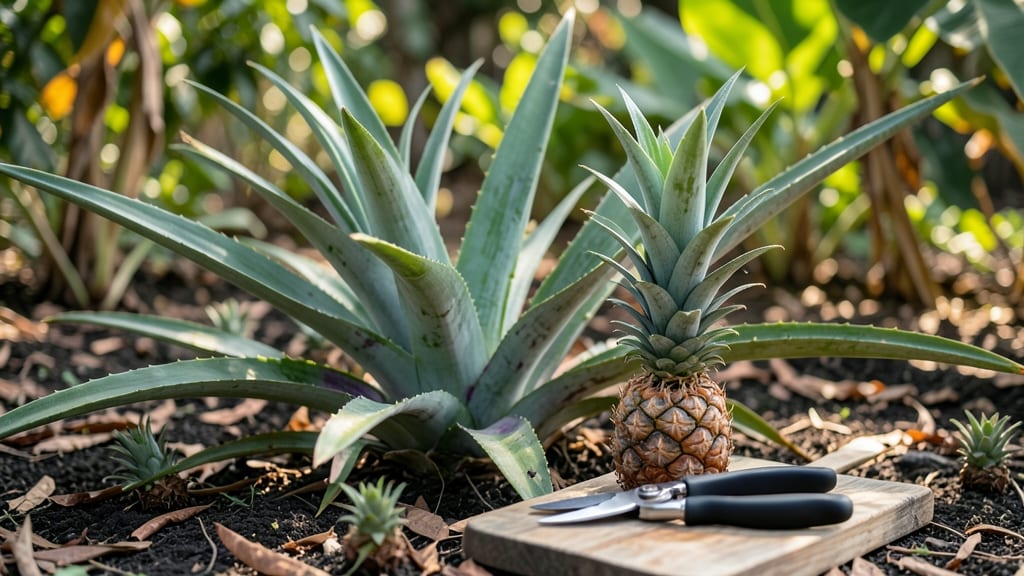
Trimming your pineapple plant isn’t just about cleanup—it’s the secret to year-round fruit production. 🌱 I learned this the hard way after my first plant produced just one tiny fruit before dying back. The right cuts redirect energy where you want it: more fruit, not just leaves.
You’ll need sharp pruning shears (clean ones!), a spray bottle with diluted hydrogen peroxide, and a sunny spot for recovery. The three key trims happen after flowering, when leaves yellow, and before new pups form. Each cut takes less than five minutes but extends your plant’s life by years.
After trimming, your plant will send out new shoots within weeks, and those pups can become their own fruiting plants. The first harvest might take 18–24 months, but with proper care, you’ll have multiple plants producing fruit simultaneously. The smell of fresh pineapple in your kitchen becomes a year-round reality.
Works for both container-grown plants and in-ground tropical gardens. The same principles apply whether you’re trimming a six-month-old plant or a mature one that’s been fruiting for years. Let’s get those shears ready!
📚 In This Guide
- What you need
- Instructions
- Tips and common mistakes
- Wrapping up and next steps
What you need
- ● Sharp pruning shears or clean, sterilized scissors – Choose tools with bypass blades (not anvil-style) to avoid crushing stems. Size: 4–6 inches for precision.
- ● Rubbing alcohol (70% isopropyl) or bleach solution – For sterilizing tools between cuts. Quantity: Small bottle or 1:10 bleach-water mix (1 part bleach to 9 parts water).
- ○ Horticultural sealant (optional but recommended) – A pruning sealant (like Tanglefoot or tree wound dressing) to coat cut surfaces and prevent disease. Size: 4–8 oz tube.
- ● Disposable gloves – Protects hands from sap and sharp edges. Type: Nitrile or latex-free for sensitive skin.
- ● Compost bin or biodegradable bag – For disposing of trimmed foliage or suckers. Size: Medium-sized bin or 1–2 gallon bags.
- ● Garden twine or plant ties – To secure heavy fruit or support new suckers if propagating.
- ● Balanced fertilizer (5-5-5 or 10-10-10) – A half-strength dose post-trimming to boost recovery. Quantity: Small bag (1–5 lbs).
- ● Rooting hormone gel – If you plan to propagate suckers (e.g., Clonex or Dip ‘N Grow).
- ● Spray bottle with water – For lightly misting cuts to reduce stress on the plant.
- ● Notebook & pen – To track trimming dates and plant progress!
Step-by-step guide to trimming your pineapple plant
Here's how I keep my pineapple plant thriving—no fancy tools, just smart cuts for more fruit.
🌱 Step 1: Identify and Remove Dead or Yellow Leaves
Start by inspecting your plant for any leaves that look brown, crispy, or yellowed at the base. These are dead or dying and won’t support new growth. Use clean, sharp scissors or pruning shears to snip them off at the base where they meet the stem. I always cut just above the healthy green tissue—this prevents disease from spreading to the rest of the plant.
Don’t pull leaves by hand, even if they seem loose. Tugging can tear the plant and leave ugly wounds. You’ll know you’ve done it right when the cut looks clean and the remaining leaves stay upright. This first trim keeps your plant focused on producing fruit instead of wasting energy on dead material.
✂️ Step 2: Trim Off Flower Stems After Harvesting
Once your pineapple produces a flower and eventually a fruit, the old flower stem will turn brown and dry out. Cut it off completely at the base with your pruners, making sure to remove any remaining bits of stem or dried flower. This step is critical because leaving dead flower stems can attract pests or rot.
I like to do this right after harvesting the fruit, when the stem is fully brown and brittle. If you wait too long, the stem might start to decompose and create a mess. After trimming, wipe down the cut area with a damp cloth to remove any sap or debris—this keeps your plant looking tidy and healthy.
🌿 Step 3: Prune Off Pups for Better Fruit Production
Pups, or baby pineapple plants, grow at the base of your main plant. While you can replant these for new plants, leaving too many on the mother plant weakens fruit production. Use your pruners to carefully cut off pups that are at least 3-4 inches tall, making sure to leave a small stub of the main stem attached.
Here’s the thing—I only remove pups if my main plant looks crowded or if I’ve already harvested the fruit. If you’re growing just for fruit, you can leave a few pups to eventually replace the parent plant. After cutting, let the pups dry out for a day before replanting them in their own pots with fresh potting mix.
☀️ Step 4: Lighten Up the Center for Airflow
Pineapple plants need good airflow to stay healthy, but their dense rosette shape can trap moisture. Once a year, I gently pull apart the outer leaves to create a small opening in the center. This isn’t a hard trim—just enough to let air circulate without damaging the plant’s structure.
You’ll notice this step makes a big difference in how your plant looks. The center will stay drier, reducing the risk of mold or rot. I do this in early spring, right before the growing season kicks into high gear. It’s a quick job that pays off with stronger, healthier growth all year.
Tips & tricks for perfect pineapple plant trimming
These simple yet powerful tips will help you maintain a thriving pineapple plant that keeps producing fruit year after year.
Tool Selection: Invest in a good pair of bypass pruners—they make clean cuts that heal faster than jagged ones. I keep a small bottle of rubbing alcohol nearby to wipe down the blades between cuts, which prevents spreading any potential plant diseases. Sharp tools also make the job easier and less stressful on your plant.
Timing is Everything: The best time to trim your pineapple plant is in the early morning when the plant is fully hydrated. This helps reduce stress on the plant and allows any cuts to heal more quickly. Avoid trimming during extreme heat or cold—your plant will be more vulnerable to damage during these times. I always do my trimming right after watering to give the plant extra moisture support.
Pup Propagation: When you remove those 3-4 inch pups in Step 3, don't throw them away! These baby plants can become your next pineapple harvest. Let them dry out for a day, then plant them in their own pots with fresh potting mix. I keep mine in bright, indirect light until they're established, then gradually move them to full sun. This way, you're not just maintaining your current plant—you're building your pineapple collection!
Seasonal Maintenance: While the four-step process covers the basics, I recommend doing a light trim every 6-8 weeks during the growing season (spring through fall) to keep your plant looking its best. Focus on removing any new dead leaves or yellowing tips you notice between your regular trims. This ongoing maintenance prevents buildup of dead material and keeps your plant's energy focused on producing fruit rather than maintaining dead growth.
Pro Tips for Trim Pineapple Plant
- These simple yet powerful tips will help you maintain a thriving pineapple plant that keeps producing fruit year afte...
- Tool Selection: Invest in a good pair of bypass pruners—they make clean cuts that heal faster than jagged ones. I kee...
- Timing is Everything: The best time to trim your pineapple plant is in the early morning when the plant is fully hydr...
Frequently asked questions
How often should I trim my pineapple plant?
Trim your pineapple plant once per year (after fruiting) to encourage new growth. If you’re shaping it for aesthetics, do light trims every 3–6 months—just avoid over-pruning. Over-trimming can stress the plant and reduce fruit production. Focus on removing dead leaves and overcrowded fronds first.
Can I trim a pineapple plant that’s not producing fruit?
Yes! Trimming a non-fruiting pineapple plant can actually stimulate flowering. Focus on:
- Removing yellow or brown leaves (they drain energy).
- Trimming tall, leggy fronds to redirect nutrients.
- Cutting back pups (offspring plants) if they’re crowding the mother plant.
What’s the best time of year to trim a pineapple plant?
The ideal time is late winter or early spring (just before new growth starts). Avoid trimming in summer heat or winter dormancy—the plant needs energy to recover. If you live in a tropical climate, trim after heavy rain or when growth slows naturally.
What can I do with the trimmings from my pineapple plant?
Don’t toss those trimmings! Here’s how to repurpose them:
- Propagate pups: Plant healthy offshoots in soil to grow new pineapple plants.
- Compost: Chop leaves and add them to your compost pile—they break down quickly.
- Infuse water: Steep trimmed leaves in water for 3 days to make a natural fertilizer (dilute before using).
Why is my pineapple plant dying after trimming?
Over-trimming or cutting too close to the base can shock the plant. If yours is struggling:
- Check for root rot (yellowing leaves, mushy stems).
- Ensure it’s in well-draining soil and not overwatered.
- Move it to a sunny spot (6+ hours of light daily).
Wrapping up and next steps
Trimming your pineapple plant isn’t just about keeping it tidy—it’s the secret to unlocking year-round fruit production!
By mastering the three key trims (removing old fruit stalks, pruning dead leaves, and harvesting suckers), you’ll encourage healthier growth and bigger harvests. 🌱✨ Whether you’re a beginner or a seasoned gardener, these steps make the process simple and rewarding.
Now that you’re armed with the know-how, roll up your sleeves and give your pineapple plant the care it deserves! Start with one trim this week, observe how your plant responds, and soon you’ll be enjoying sweet, homegrown pineapples—all year long. Happy pruning! 🍍💚