Transplanting
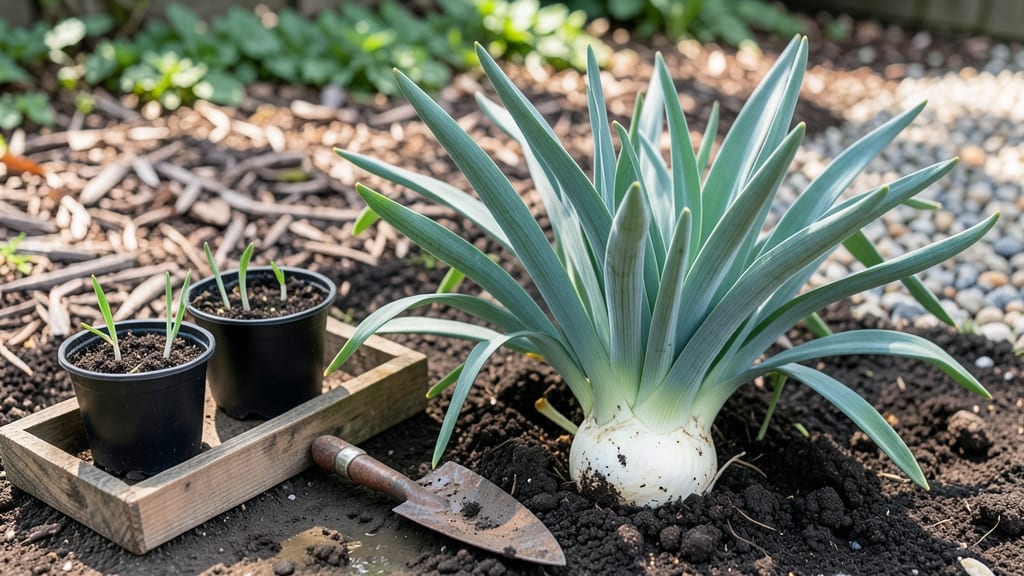
Planting wild leeks transforms shady corners into edible forests. 🌿 I’ve watched these hardy perennials spread effortlessly under oak trees, their lush, strappy leaves popping up year after year. The secret lies in mimicking their natural woodland habitat—moist, rich soil and dappled light—without fuss.
You’ll need a spot with 6+ hours of shade, a fork to loosen soil, and either seeds (slow) or divisions (faster). Wild leeks thrive in USDA zones 3-8, making them adaptable for most northern gardens.
The key? Avoid disturbing their roots—once established, they’ll naturalize like clover, requiring almost no care.
Within 2-3 years, you’ll harvest tender shoots in early spring, their garlic-y flavor perfect for soups and pesto. The plants spread slowly but steadily, creating a sustainable, low-maintenance food source. Just avoid over-harvesting—leave at least half the foliage to feed the bulbs.
For best results, plant in fall or early spring when soil is cool. If you’re foraging wild leeks from the woods, dig up small clumps and transplant them—just don’t strip entire patches. These plants reward patience with decades of harvests, all while protecting local ecosystems.
📚 In This Guide
- What you need
- Instructions
- Tips and common mistakes
- Wrapping up and next steps
What you need
- ● Wild leek bulbs or seeds: 10–20 bulbs (for immediate greens) or 5–10 seeds (for long-term growth, patience required!)
- ● Garden soil: Well-draining, slightly acidic (pH 6.0–7.0). Amend with compost if needed.
- ● Garden fork or trowel: For digging and transplanting.
- ● Watering can or hose: With a gentle spray nozzle.
- ○ Mulch (optional but helpful): Straw, leaves, or wood chips (1–2 inches) to retain moisture.
- ● Organic fertilizer: Low-nitrogen (e.g., 5-5-5) to avoid overfeeding.
- ● Shade cloth: If planting in hot climates (30–50% coverage).
- ● Garden gloves: To protect hands from soil and sharp bulb edges.
- ● Label markers: To track planting dates (wild leeks take 2–3 years to mature!).
Step-by-Step instructions for planting wild leeks
Wild leeks thrive with minimal effort—just follow these straightforward steps for a hardy, self-sustaining perennial.
🌱 Step 1: Choose the Right Location and Prepare the Soil
Wild leeks flourish in partial to full shade, making them ideal for under trees, along fence lines, or in wooded garden edges. They tolerate a range of soil types but prefer moist, well-draining soil with organic matter. If your soil is heavy clay, amend it with 2-3 inches of compost mixed into the top 6 inches of soil.
Test the soil moisture by squeezing a handful—it should hold together but not be soggy. If it's dry, water deeply before planting. Wild leeks spread aggressively, so avoid planting near delicate perennials or in small containers. A 3-foot diameter planting area gives them room to establish without crowding.
🌿 Step 2: Plant Wild Leek Crowns or Seeds
For fastest results, plant crowns (the bulb-like base) in early spring or fall. Dig a hole 1 inch deeper than the crown’s height and twice as wide. Gently place the crown in the hole, ensuring the small shoots face upward. Cover lightly with soil, leaving the top ½ inch exposed—this prevents rot while allowing sunlight to reach the growing point.
If starting from seed, sow them ¼ inch deep in late summer or early fall. Wild leek seeds germinate slowly, often taking 2-3 weeks to sprout. Keep the soil consistently moist but not waterlogged until germination. Once seedlings reach 3-4 inches tall, thin them to 6 inches apart to prevent overcrowding.
💧 Step 3: Water and Mulch for Establishment
Water newly planted wild leeks deeply once a week for the first 4-6 weeks to encourage strong root growth. After establishment, they’re drought-tolerant but perform best with 1 inch of water weekly during dry spells. Avoid overhead watering, as wet foliage increases the risk of fungal diseases like rust.
Apply a 2-inch layer of mulch (such as shredded leaves or straw) around the base to retain moisture and suppress weeds. Mulch also regulates soil temperature, protecting the plants during extreme heat or cold. Replenish the mulch layer annually in early spring as it breaks down.
✂️ Step 4: Maintain and Harvest Responsibly
Wild leeks require no pruning unless you notice dead or yellowed leaves—simply trim them at the base to redirect energy to new growth. They’re perennial, so they’ll return year after year with minimal care. In early spring, you can harvest the young shoots (6-8 inches tall) by cutting them at the base with a sharp knife. Avoid over-harvesting; leave at least half the foliage to ensure the plant stores energy for regrowth.
If the patch becomes too dense, divide it in early spring by digging up the clumps and separating them into 3-inch sections, each with a few shoots. Replant the divisions immediately in prepared soil. This keeps the plants vigorous and prevents overcrowding, which can reduce yield and increase disease risk.
☀️ Step 5: Protect and Encourage Long-Term Growth
Wild leeks are cold-hardy and handle USDA Zones 3-9, but they appreciate a light frost in early spring to sweeten their flavor. In hot climates, provide afternoon shade to prevent bolting (premature flowering). If birds or deer are an issue, install a light wire mesh cage around new plantings until they’re established.
Fertilize lightly in early spring with a balanced organic fertilizer (10-10-10) applied at ½ the recommended rate. Over-fertilizing encourages leafy growth at the expense of bulb development. Instead, focus on soil health—annual applications of compost or well-rotted manure keep the soil rich without risking nutrient burn.
Tips & tricks for perfect wild leek planting
A few simple tricks will help your wild leeks thrive with minimal effort—and avoid the most common pitfalls that turn first-time gardeners away.
Soil Prep Secret: The 2-3 inches of compost you mix into the top 6 inches of soil isn't just about nutrients—it's about creating the perfect moisture-retention balance. I've found that adding a handful of perlite to clay-heavy soils prevents compaction, which is crucial for those first 4-6 weeks when roots are establishing. Test your soil's drainage by filling a jar halfway with soil, adding water, and timing how long it takes to drain—wild leeks prefer this to happen in about 30 minutes.
Planting Crowns Like a Pro: When planting crowns in Step 2, resist the urge to bury them completely. That exposed ½ inch isn't just a suggestion—it's what prevents rot by allowing air circulation while still protecting the growing point. I've learned this the hard way after losing entire batches to crown rot. Also, if you're planting in fall, choose crowns with firm, white bulbs rather than those with green tops, as these are more dormant and better suited for winter survival.
Watering Wisdom: The "deeply once a week" guideline in Step 3 is perfect for most climates, but I've found that in hot summers, you might need to water every 5-6 days instead. The key is to water at the soil base rather than overhead—this prevents fungal diseases like rust that can devastate wild leek patches. I use a soaker hose buried just below the soil surface for the first month, which delivers water exactly where the roots are forming.
Long-Term Growth Hack: That annual spring mulch refresh isn't just about moisture—it's also about protecting your investment from temperature swings. In Zone 5 where I garden, I've found that adding a thick layer of straw mulch in late fall provides extra insulation against winter freeze-thaw cycles. And if you notice plants bolting (sending up flower stalks) in hot weather, simply provide afternoon shade with a lightweight shade cloth—this simple step can extend your harvest window by weeks.
Pro Tips for Planting Wild Leeks
- A few simple tricks will help your wild leeks thrive with minimal effort—and avoid the most common pitfalls that turn...
- Soil Prep Secret: The 2-3 inches of compost you mix into the top 6 inches of soil isn't just about nutrients—it's abo...
- Planting Crowns Like a Pro: When planting crowns in Step 2, resist the urge to bury them completely. That exposed ½ i...
Frequently asked questions
When’s the best time to plant wild leeks?
Wild leeks thrive when planted in early spring (March–April) or fall (September–October). Avoid extreme heat—they prefer cooler temps (50–70°F). If transplanting in summer, keep them well-watered and shaded until established.
Can I grow wild leeks in containers?
Yes! Use a large pot (at least 12 inches deep) with well-draining soil. They’ll need regular watering and partial shade. Just avoid tiny containers—they spread slowly and need room to grow.
What pests should I watch for?
Wild leeks are generally pest-resistant, but watch for deer (they love them!) and slugs in damp climates. Use organic slug bait or handpick pests. A light mulch layer helps deter critters.
How long until I can harvest?
First harvest is possible in 1–2 years, but full maturity (best flavor) takes 3–4 years. Leaves can be snipped year-round, but bulbs taste sweetest in spring. Be patient—they’re worth the wait!
What if my wild leeks aren’t growing?
Check soil moisture (they like it damp but not soggy) and sunlight (partial shade is ideal). If leaves yellow, they may need more nitrogen—add compost or a balanced fertilizer. Overcrowding? Thin plants to 6–12 inches apart.
Wrapping up and next steps
Planting wild leeks is a game-changer for gardeners seeking low-maintenance, nutrient-rich greens that thrive year after year! 🌱 These hardy perennials reward patience with bold flavors and minimal effort, making them perfect for both beginners and seasoned growers.
Whether you’re reviving a patch of wild leeks or starting fresh, your garden—and your taste buds—will thank you.
Ready to dive in? Start small—plant a few clumps this season, then expand as you gain confidence. Soon, you’ll be harvesting fresh, wild-leek-infused dishes straight from your backyard. Happy growing! 🌿