Diseases
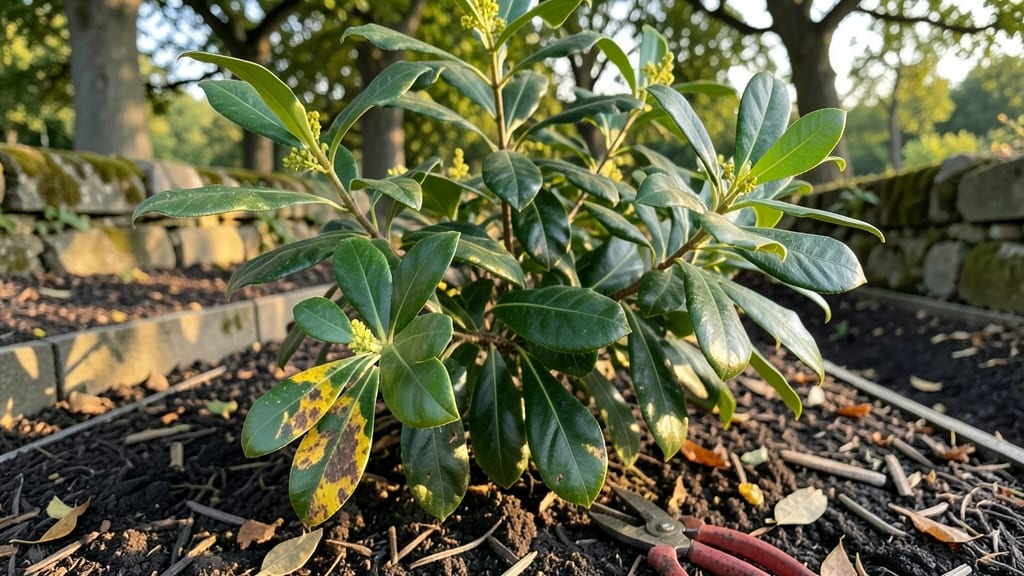
Laurel plant diseases turn those glossy leaves into sad, spotted messes faster than you’d think. I’ve watched powdery mildew blanket my laurel’s foliage in just two weeks—until I learned how to spot the early signs and act fast.
The key is catching problems before they spread, because once they do, you’re fighting a losing battle with wilting branches and yellowing leaves.
Most issues start with too much moisture or poor airflow—laurel plants hate being crowded or left soggy. Powdery mildew looks like dusty white patches, while bacterial leaf spot shows up as dark, water-soaked spots with yellow halos.
Scale insects, those tiny armored pests, leave sticky residue that attracts ants and sooty mold. The good news? All of these have fixes, from pruning for airflow to organic sprays like neem oil or copper fungicide.
You’ll save your laurel by acting at the first sign of trouble—wipe leaves with soapy water, trim affected branches, and adjust watering habits. Within a month, you’ll see fresh growth pushing through, and those glossy leaves will return, healthier than ever.
The secret is staying one step ahead of the problem, not playing catch-up.
This works for both English laurel and cherry laurel, whether you’re growing them as hedges or container plants. The same principles apply—spot early, treat smart, and keep your laurel thriving year after year. Let’s get those plants back to their best.
Root Causes Behind Laurel Woes
Laurel plants, with their glossy leaves and elegant appearance, can quickly become a gardener’s nightmare when diseases strike. Understanding why these issues arise is half the battle in prevention and treatment. Below, we dive into the science behind the most common stressors that leave your laurels vulnerable.
Fungal diseases like Phytophthora root rot and Botrytis blight thrive in excess moisture, whether from overwatering, poor drainage, or humid climates. Laurels, especially those planted in heavy clay soil, struggle to dry out efficiently, creating the perfect breeding ground for spores.
- Why it happens: Fungi spread via zoospores (mobile spores) in waterlogged soil. Warm, damp conditions accelerate their growth, while stagnant water on leaves (from overhead irrigation) promotes Botrytis infections.
- Actionable insight: Laurels need well-draining soil (amend with perlite or sand) and 1–1.5 inches of water per week. Avoid mulching too close to the stem to prevent fungal buildup.
Insects like aphids, scale, and spider mites don’t just sap nutrients—they damage plant tissue, leaving wounds that invite bacterial and fungal infections. For example, laurel wilt (caused by the Raffaelea lauricola fungus) spreads via redbay ambrosia beetles, which bore into weakened wood.
- Why it happens: Pests vector pathogens (carry them on their bodies) or create entry points for secondary infections. Stressed laurels (from drought or poor soil) are 3x more attractive to these invaders.
- Actionable insight: Inspect leaves weekly for sticky residue (aphids) or webbing (mites). Use neem oil or horticultural oil to disrupt pest life cycles before they compromise your plant’s defenses.
Laurels are temperate-loving plants, and extreme heat or cold can weaken their immune response. Heat stress (above 90°F/32°C) causes leaf scorch, while cold snaps (below 20°F/-7°C) lead to cold damage, both of which open doors for opportunistic pathogens like Cercospora leaf spot.
| Stress Type | Disease Risk | Prevention Tip |
|---|---|---|
| Heat stress | Leaf scorch → Cercospora infection | Provide afternoon shade in hot climates; mulch to retain moisture. |
| Cold damage | Fungal rots (e.g., Armillaria) | Choose hardy varieties (e.g., Prunus laurocerasus) and avoid planting in frost pockets. |
Laurels prefer slightly acidic soil (pH 5.0–6.5) rich in organic matter. When soil is too alkaline, compacted, or nutrient-deficient, the plant’s cell walls weaken, making it easier for pathogens to penetrate. For instance, iron chlorosis (yellowing leaves) signals poor iron uptake, which reduces disease resistance.
- Why it happens: Pathogens exploit weak roots. Compacted soil restricts oxygen, while high pH locks out essential minerals like iron and manganese, critical for disease-fighting enzymes.
- Actionable insight:
- Test soil pH and amend with sulfur (to lower pH) or lime (to raise it).
- Add compost or worm castings annually to boost organic matter.
- Use chelated iron fertilizers if chlorosis appears.
Many laurel diseases chain-react. For example: 1. Overwatering → Root rot → Weakened roots → Increased susceptibility to beetles → Laurel wilt. 2. Nutrient deficiency → Stunted growth → Thicker leaf cuticles → Poor gas exchange → Fungal infections.
Key takeaway: Address one stressor (e.g., drainage) to prevent a cascade of others. Think of your laurel’s health like a puzzle—each piece must fit!
Quick Fixes for Common Laurel Troubles
Laurel plants are tough, but even the hardiest can fall victim to diseases and pests. The good news? Most issues have simple, effective solutions—if you catch them early. Below, we’ve mapped out practical fixes for the most common problems, along with prevention tips to keep your laurel thriving.
Think of this as your emergency repair guide for ailing laurel foliage!
---
Cause: Fungal infections (like anthracnose or leaf blight) thrive in damp, humid conditions, causing brown spots, yellowing, or premature leaf drop.
How to Fix It: 🔥 Remove infected leaves immediately – Snip off any leaves with spots or lesions using sterilized pruners (wipe with rubbing alcohol between cuts). 🍳 Apply a fungicide – Use a copper-based fungicide (like Bordeaux mixture) or a neem oil solution (1 tsp neem oil + 1 quart water + a drop of dish soap). Spray early in the morning to avoid fungal growth overnight. 👨🍳 Improve air circulation – Thin out dense foliage and space plants 3–4 feet apart to reduce humidity. 🥘 Water at the base – Avoid overhead watering; use drip irrigation or water early in the day so leaves dry quickly.
Prevention Tips: ✔ Space plants properly – Crowding = fungal paradise. ✔ Clean up fallen leaves – Rake and dispose of debris to remove fungal spores. ✔ Avoid wetting foliage – Water only at the soil level.
---
Cause: Pests (like spider mites or scale insects) suck sap, causing yellowing, stippling, or sticky residue (honeydew).
How to Fix It: 🔥 Blast off pests – Spray plants with a strong stream of water to dislodge mites or scale. 🍳 Use insecticidal soap – Mix 1 tbsp mild liquid soap + 1 quart water and spray every 5–7 days until pests vanish. 👨🍳 Introduce beneficial insects – Ladybugs or lacewings devour spider mites naturally. 🥘 Neem oil treatment – Spray a neem oil solution (2 tbsp neem oil + 1 tsp soap per gallon of water) to smother eggs and adults.
Prevention Tips: ✔ Inspect new plants – Quarantine new laurel plants for 2 weeks before introducing them to others. ✔ Keep plants hydrated – Spider mites love dry conditions; water deeply during droughts. ✔ Use reflective mulch – Silver mulch confuses pests and deters mites.
---
Cause: Overwatering or poor drainage leads to soft, mushy roots and wilting despite moist soil.
How to Fix It: 🔥 Stop watering immediately – Let the soil dry out completely before watering again. 🍳 Repot in fresh soil – Gently remove the plant, trim rotted roots (use sterilized scissors), and repot in well-draining soil (mix garden soil with perlite or sand). 👨🍳 Improve drainage – Add a 1-inch layer of gravel at the pot’s bottom or plant in raised beds. 🥘 Fungicide treatment – Apply a root-rot-specific fungicide (like Mycorrhizal fungi) to help roots recover.
Prevention Tips: ✔ Use pots with drainage holes – No exceptions! ✔ Water only when topsoil is dry – Stick your finger 1–2 inches deep before watering. ✔ Avoid soggy soil – Laurel plants hate "wet feet."
---
Cause: Intense sun or heatwaves cause crispy edges, bleached leaves, or wilting.
How to Fix It: 🔥 Move to partial shade – Relocate the plant to morning sun + afternoon shade for a few weeks. 🍳 Deep watering – Water slowly and deeply (1–2 gallons per plant) to rehydrate roots. 👨🍳 Mulch heavily – Apply 2–3 inches of organic mulch (wood chips or straw) to retain moisture. 🥘 Mist leaves (temporarily) – Lightly mist foliage early in the day to cool leaves (but avoid evening misting to prevent fungus).
Prevention Tips: ✔ Acclimate slowly – If moving from shade to sun, gradually increase sunlight exposure over 2 weeks. ✔ Choose heat-tolerant varieties – Cherry laurel (Prunus laurocerasus) handles heat better than some others. ✔ Windbreaks help – Plant near a hedge or fence to reduce drying winds.
--- - 🌡️ Monitor soil temperature – Laurels prefer 60–75°F soil; use a soil thermometer in hot climates. - ✨ Fertilize lightly – Over-fertilizing stresses plants; use a balanced 10-10-10 fertilizer once in early spring. - 🔪 Sterilize tools – Always clean pruners with rubbing alcohol to prevent disease spread. - 🎯 Early action = easier fixes – The sooner you treat a problem, the less damage it causes.
--- Remember: Most laurel diseases and pests are preventable with good habits—proper watering, airflow, and regular checks go a long way! If a plant is severely infected, don’t hesitate to remove and replace it to protect your garden. 🌱
Frequently asked questions
What do white powdery patches on my laurel leaves mean?
Those are signs of powdery mildew, a common fungal disease that thrives in humid conditions. It starts as white dusty spots but can cover entire leaves if untreated. The best fix is to prune affected branches, improve airflow between plants, and spray with a neem oil solution (1 tsp neem oil + 1 quart water + dish soap).
Why are my laurel leaves turning yellow and dropping?
Yellowing leaves usually signal overwatering, nutrient deficiency, or root rot. Check the soil moisture—laurels prefer well-draining soil and 1–1.5 inches of water per week. If roots look mushy, repot in fresh soil and trim affected roots. For nutrient issues, use a balanced fertilizer (10-10-10) in early spring.
How do I know if my laurel has scale insects?
Look for small, armored bumps on stems or undersides of leaves—those are scale insects. They leave behind sticky honeydew, which attracts ants and promotes sooty mold. Blast them off with water first, then treat with insecticidal soap (1 tbsp soap + 1 quart water) or horticultural oil. Repeat every 5–7 days until gone.
Can I save a laurel with brown, crispy leaf edges?
Crispy edges often mean heat stress or underwatering. Move the plant to partial shade and water deeply (1–2 gallons) to rehydrate roots. Mulch heavily (2–3 inches) to retain moisture, and avoid evening watering to prevent fungal growth. Most laurels bounce back within a few weeks with proper care.
Is it safe to prune diseased branches without spreading the problem?
Always sterilize your pruners with rubbing alcohol before and after each cut to prevent cross-contamination. Remove infected leaves/branches completely (don’t leave stubs) and dispose of them in the trash—not compost—to stop spores from spreading. Prune in dry weather for best results.