
Pruning
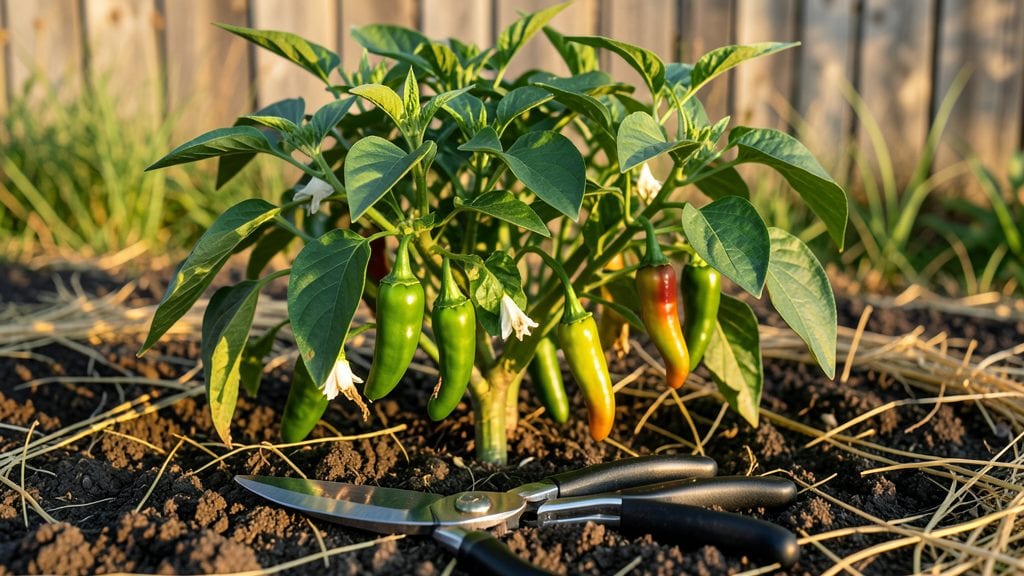
Trimming jalapeño plants unlocks the secret to year-round peppers—not just one big harvest, but a steady supply of fruit all season long. I learned this the hard way after my first plant exploded with blooms but then fizzled out by August.
The key isn’t just cutting branches; it’s knowing when and where to trim for maximum growth.
You’ll need sharp pruning shears, a clean cutting surface, and about 15 minutes once a week during peak growing months. The real magic happens with three strategic cuts: removing suckers (those little shoots between the main stem and branches), thinning crowded stems, and pruning damaged leaves.
This keeps air flowing, directs energy to fruit production, and prevents diseases that turn leaves yellow.
What you’ll get is a plant that keeps producing bold, spicy peppers for months instead of burning out after one flush. The first harvest comes faster, the fruit stays consistent in size, and you avoid the heartbreak of a plant that looks healthy but isn’t delivering.
Even my jalapeños—picky about care—responded within two weeks of proper trimming.
Works for container-grown plants, raised beds, or in-ground gardens, and adapts to both hot climates and cooler seasons. The only rule? Never trim more than one-third of the plant at once, or you’ll shock it into stress instead of growth. Let’s get those peppers popping!
📚 In This Guide
- What you need
- Instructions
- Tips and common mistakes
- Wrapping up and next steps
What you need
- ● Sharp pruning shears – Bypass-style (for clean cuts), sterilized (to prevent disease). Quantity: 1 pair.
- ● Garden gloves – Cut-resistant (to protect hands from thorns). Quantity: 1 pair.
- ● Disinfectant (70% isopropyl alcohol or bleach solution) – For sterilizing tools between cuts. Quantity: Small spray bottle or wipe.
- ○ Garden twine or plant ties – Optional but helpful for supporting heavy branches post-trim. Quantity: 1-2 rolls.
- ● Healthy jalapeño plants – At least 6+ inches tall (young plants can be trimmed lightly, but avoid over-pruning).
- ● Sunny location – Ensure plants get 6+ hours of sunlight daily (trimming stress requires recovery time!).
- ○ Watering can or hose – For post-trim hydration. Optional: Fish emulsion or balanced fertilizer (to boost recovery).
- ● Compost bin or mulch – To dispose of trimmed branches (rich in nutrients!).
Step-by-Step guide to trimming jalapeño plants for continuous harvests
Here's how to keep your jalapeños producing all season with just three key cuts.
Identify and Prune the First Flower Cluster
Start by locating the first flower cluster that appears on your jalapeño plant. This is usually about 4-6 weeks after transplanting, when the plant has 5-7 true leaves. Use clean, sharp pruning shears to make a diagonal cut just above a leaf node—this is where new growth will sprout. I always look for a spot where at least two leaves are growing, as this ensures strong regrowth.
This first cut encourages the plant to focus energy on developing more branches rather than just growing taller. You'll see new shoots emerge within 7-10 days from the pruned spot. If you wait too long, the plant may become leggy and produce fewer peppers. The goal here is to shape the plant early so it stays compact and productive.
Trim Side Shoots for Bushier Growth
Once your jalapeño plant has 3-4 main branches, focus on trimming the smaller side shoots that grow between the main stems and leaves. These are the suckers—the small shoots that appear in the V-shaped junction where a leaf meets the stem. Pinch or cut these off when they're about 2-3 inches long, using your fingers or pruners.
Real talk: This step is where most gardeners go wrong by leaving too many suckers. I keep only 1-2 strong suckers per main branch to prevent overcrowding. After trimming, you'll notice the plant directs more energy into the remaining branches, leading to thicker stems and more flower clusters. This means more peppers—and bigger ones—later in the season.
Remove Overripe or Damaged Peppers Regularly
As your jalapeños mature, make it a habit to check the plant weekly for peppers that are turning red or showing signs of damage, like cracks or pest bites. Use your fingers to gently twist off overripe peppers at the stem or snip them cleanly with pruners. This isn't just about harvest—it's about stimulating new growth. When you remove peppers, the plant responds by producing 2-3 new flower clusters within 2-3 weeks.
Don't skip this step, even if the peppers look perfect. Overripe peppers drain energy from the plant, slowing down new fruit production. I always harvest in the morning when peppers are firm and cool—this ensures the best flavor and keeps the plant motivated to keep producing. Aim to leave 3-5 green peppers per branch to balance harvest and growth.
Prune Leggy Growth Before Flowering Slows
If your jalapeño plant starts to grow tall and spindly with long stems between leaves, it's time for a renewal prune. Look for sections of the plant where the distance between leaves is 4 inches or more. Cut these leggy stems back to a leaf node just below the stretchy growth. This might seem drastic, but you'll see new, bushier growth within 10-14 days.
This final trim is crucial for plants that are 6-8 weeks old and haven't been pruned yet. Leggy growth often means the plant isn't getting enough light or has been overcrowded. After pruning, move the plant to a sunnier spot (jalapeños need 6-8 hours of full sun) and watch as it rebounds with thicker stems and more flowers. It’s like hitting the reset button for your plant.
Tips & tricks for perfect jalapeño plant trimming
These simple yet powerful techniques will help you maximize your jalapeño harvest all season long.
Timing is Everything: In Step 1, when you're making that first cut at 4-6 weeks, don't rush it. The plant needs time to establish its root system before you start shaping it. I've seen gardeners prune too early and end up with stunted growth. Wait until you see those 5-7 true leaves, and you'll give your plant the best possible start. This initial cut sets the foundation for all future growth.
Tool Selection Matters: Using clean, sharp pruning shears is non-negotiable. Dull shears can crush stems and create entry points for diseases. I keep a small bottle of rubbing alcohol nearby to wipe down my shears between cuts. For the side shoots in Step 2, your fingers work perfectly fine—just make sure your nails are clean to avoid transferring any pathogens to the plant.
Visual Cues for Pruning: When you're deciding where to make your cuts, look for the V-shaped junctions where leaves meet the stem. These are your leaf nodes, and they're the perfect spots for new growth to sprout. In Step 4, when you're dealing with leggy growth, look for those 4-inch gaps between leaves—they're your signal to prune. This visual approach makes the process intuitive once you get the hang of it.
Harvest Strategy: In Step 3, when you're removing overripe peppers, aim to harvest in the morning when the peppers are at their firmest. This not only gives you the best flavor but also helps prevent the plant from getting stressed. I've found that leaving just 3-5 green peppers per branch gives the plant enough energy to keep producing while still yielding a good harvest. It's all about balance.
Pro Tips for Trimming Jalapeno Plants
- These simple yet powerful techniques will help you maximize your jalapeño harvest all season long.
- Timing is Everything: In Step 1, when you're making that first cut at 4-6 weeks, don't rush it.
- Tool Selection Matters: Using clean, sharp pruning shears is non-negotiable.
Frequently asked questions
Got questions about trimming jalapeño plants?
You’re not alone! Whether you’re a first-time gardener or a seasoned grower, these common concerns can make all the difference in your harvest. Here’s what you need to know:
When is the best time to trim jalapeño plants for maximum yield?
Trim your jalapeños early and often—start when plants reach 12–18 inches tall and continue every 4–6 weeks during the growing season. This encourages bushier growth and more peppers. Avoid heavy pruning in late fall if frost is near, as plants need time to recover before winter.
How do I know which branches to cut without harming the plant?
Focus on removing suckers (shoots growing between the stem and branches) and yellowing or dead leaves. Cut just above a leaf node (where leaves meet the stem) at a 45-degree angle to prevent water pooling. Never trim more than 1/3 of the plant at once—this can stress it.
Can I still get peppers if I skip trimming my jalapeño plant?
Yes, but yields will be smaller and less consistent. Trimming redirects energy to fruit production, while untrimmed plants may grow tall and leggy with fewer peppers. Think of it like pruning a tomato plant—less effort now = more peppers later!
What should I do if my jalapeño plant looks stressed after trimming?
Stress is normal after pruning! Water deeply, keep the soil moist (but not soggy), and fertilize lightly with a balanced feed (like 10-10-10). Avoid trimming again until new growth appears. If leaves wilt or turn brown, it’s a sign to pause pruning and focus on recovery.
Are there any alternatives to traditional pruning for jalapeños?
If pruning feels overwhelming, try topping (cutting the main stem) to encourage bushier growth or pinching (removing just the tips of suckers). For container growers, thinning crowded plants can also improve airflow. Just avoid heavy pruning—jalapeños are resilient but not indestructible!
Wrapping up and next steps
Trimming your jalapeño plants doesn’t just boost yield—it keeps them healthy, productive, and thriving year-round! 🌱 With just three strategic cuts, you’ll encourage bushier growth, bigger peppers, and a continuous harvest that’ll make your kitchen (and taste buds) happy.
Now that you’ve got the know-how, grab those pruners and get ready to turn your garden into a jalapeño powerhouse.
Ready to take the next step? Start small—trim one plant this week, observe the results, and let your confidence (and harvest) grow! 🌶️✨