Size
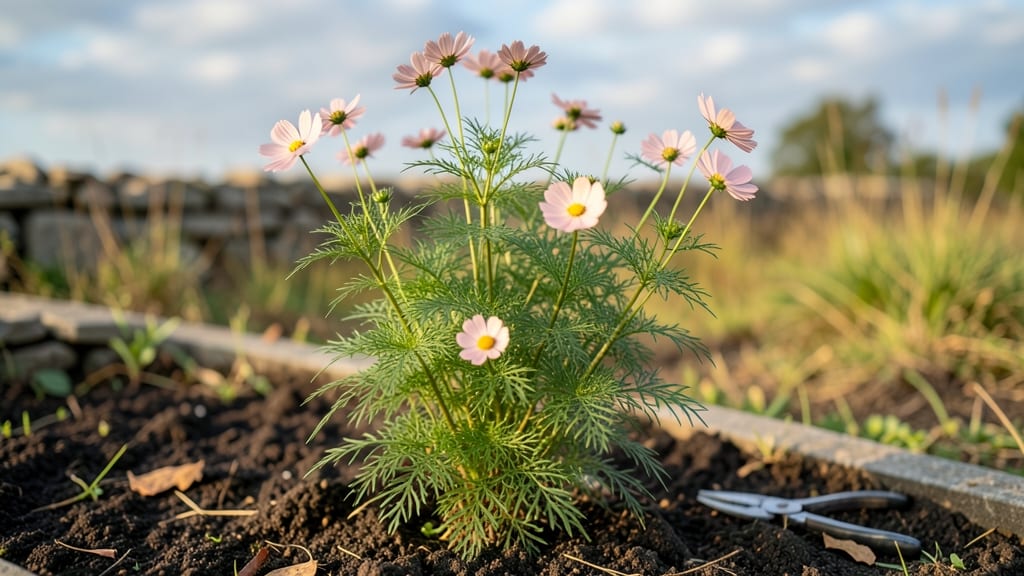
Tall cosmos plants typically reach heights between 4 to 6 feet, though some dwarf varieties stay under 2 feet, while giant cultivars can exceed 7 feet. Their slender stems and feathery foliage make them ideal for vertical garden spaces and cut flower arrangements.
Cosmos plants are famous for their dramatic vertical growth, which turns them into natural vertical accents in gardens. 🌿 The tallest varieties like 'Seashells' or 'Bright Lights' can tower over garden beds, creating stunning focal points, while their airy blooms add movement to summer landscapes.
What's fascinating is how their height varies—some stay compact for borders, while others stretch toward the sky, making them perfect for everything from wildflower meadows to container gardens.
For gardeners looking to coax extra height, the secret lies in their care. These plants thrive in full sun and well-draining soil, which helps their stems stay strong. I've found that regular watering—especially during dry spells—and occasional staking for windy areas can make a noticeable difference in their final height.
Pruning spent blooms also encourages more vertical growth, keeping them lush and upright all season long.
💡 In This Article
- Cosmos Plant Height Variations by Cultivar
- Maximizing Cosmos Plant Height with Proper Care
Cosmos plant height variations by cultivar
The height differences among cosmos varieties stem from genetic variations within the Cosmos genus. For instance, the classic Cosmos bipinnatus 'Bright Lights' typically reaches 4-5 feet, while its cousin Cosmos sulphureus 'Sunny Day' can stretch to 5-6 feet with its vibrant yellow blooms.
The key difference lies in their stem composition—sulphureus varieties have thicker, more rigid stems due to higher lignin content, which supports greater height. 🌟
Dwarf cosmos like 'Purity' or 'Double Click' stay under 2 feet, making them ideal for borders or container gardens. Their compact growth habit comes from a naturally shorter internode length—the distance between leaf nodes—which determines overall height.
Meanwhile, giant varieties like Cosmos bipinnatus 'Seashells' can exceed 7 feet when given optimal conditions, thanks to elongated internodes and stronger vascular structure that transports water and nutrients efficiently.
Growth habit also varies dramatically. Upright varieties like 'Cosmos atrosanguineus' (the chocolate cosmos) grow in single stems with fewer branches, creating dramatic vertical lines. In contrast, bushier types like 'Cosmos bipinnatus 'Sensation Mix'' develop multiple stems from the base, creating a fuller, more rounded shape.
This branching pattern is controlled by auxin hormones that regulate stem elongation and lateral bud growth. 🌿
Bloom density plays a role too—taller varieties often produce fewer but larger flowers, while shorter ones may have more clustered blooms. For example, 'Bright Lights' has 3-4 inch wide blooms spaced along its stem, while 'Double Click' packs 2 inch flowers in dense clusters.
The trade-off between height and bloom density is fascinating: genetics prioritize either vertical growth or reproductive output (flower production) based on the cultivar's breeding focus.
Here's what most gardeners don't realize: the stem strength in taller cosmos comes from a combination of fibrous root systems and secondary thickening in their stems. Varieties like 'Sunny Day' develop thicker stems because they allocate more resources to structural support, while shorter varieties invest more in rapid lateral growth.
This explains why tall cosmos often need staking in windy conditions—their stems are strong but not as flexible as shorter varieties. ✨
For visual impact, consider these height comparisons:
- Tallest: 'Seashells' (7+ feet) - perfect for vertical gardens
- Mid-height: 'Bright Lights' (4-5 feet) - ideal for cut flowers
- Compact: 'Double Click' (1.5-2 feet) - great for borders