
Diseases
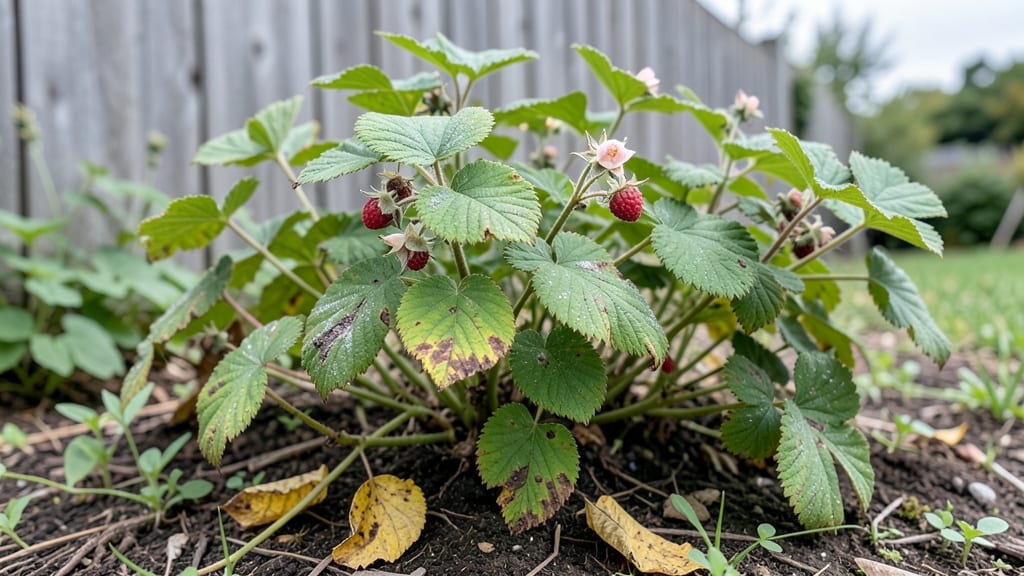
Raspberry plant diseases can turn your lush canes into a sad, spotted mess if you don’t catch them early. 🌿 I’ve lost entire harvests to rust and cane blight before learning the telltale signs—dark spots on leaves, oozing cankers, or fruit that rots before picking.
The good news? Most issues respond well to quick action, especially when you spot them before they spread.
Fungal infections like botrytis thrive in damp conditions, while bacterial spots spread through splashing water or infected tools. Viral diseases, though rarer, often arrive via aphids or contaminated plants. The key is prevention: prune for airflow, avoid overhead watering, and remove diseased canes immediately.
My biggest breakthrough? A 3% hydrogen peroxide spray (1 part peroxide to 9 parts water) stops fungal spread in its tracks.
You’ll save your plants—and your patience—by acting fast. Wipe down tools between bushes, rotate crops if possible, and watch for the first signs: yellowing leaves, sticky residue, or powdery growth.
With these steps, your raspberries can go from struggling to bursting with fruit by next season. Let’s get your canes healthy again.
Works for both summer-bearing and fall-bearing varieties, and the same principles apply whether you’re growing in rows or containers. The difference between a failed harvest and a bountiful one often comes down to what you do in the first 24 hours of noticing symptoms.
Don’t wait—your plants are counting on you.
Root Causes of Raspberry Plant Issues
Understanding why raspberry plants fall prey to diseases is the first step in protecting your garden. These problems rarely occur in isolation—they’re often the result of environmental stress, poor cultural practices, or biological invaders taking advantage of weak plants.
Below, we break down the primary triggers behind raspberry plant diseases, from fungal infections to bacterial blights, so you can address the real issue, not just the symptoms.
Raspberry plants thrive in specific conditions, and when those needs aren’t met, they become stressed—making them prime targets for pathogens. Here’s what throws them off balance:
- Excess Moisture & Poor Drainage - Raspberries hate soggy roots. Overwatering or heavy clay soil traps water, creating the perfect breeding ground for fungal diseases like Phytophthora root rot and Botrytis fruit rot. - Why it happens: Fungal spores thrive in damp, oxygen-poor soil.
Roots suffocate, weakening the plant’s defenses. - Actionable fix: Amend soil with compost or sand to improve drainage. Use raised beds or mulch (but keep it 2–3 inches away from the stem to prevent rot).
- High Humidity & Lack of Airflow - Raspberries need good air circulation to dry quickly after rain or watering.
Stagnant, humid air encourages powdery mildew and gray mold (Botrytis cinerea). - Why it happens: Dense foliage or crowded plants trap moisture on leaves, giving fungi a foothold. - Actionable fix: Prune plants to open up the canopy (remove weak or crossing canes).
Space plants 3–4 feet apart in rows.
- Extreme Temperature Swings
- Sudden shifts—like
- Why it happens: Temperature stress weakens cell walls, allowing pathogens to invade more easily.
- Actionable fix: Choose cold-hardy varieties (e.g., ‘Boyne’ or ‘Nova’) and mulch heavily in winter to protect roots.
Even the hardiest raspberry plants will struggle if basic care is ignored. These common oversights invite diseases:
- Over-Fertilizing (Especially Nitrogen)
- Too much nitrogen promotes
- Why it happens: Excess nitrogen reduces phenolic compounds (natural plant defenses), while also encouraging dense foliage that traps moisture.
- Actionable fix: Use a balanced fertilizer (e.g., 10-10-10) and side-dress with compost instead of synthetic boosts.
Overcrowded canes also block airflow. - Actionable fix: Prune in late winter/early spring—remove thin, weak, or crisscrossing canes, keeping only the healthiest 6–8 canes per plant.
- Ignoring Soil Health
- Compacted or nutrient-poor soil weakens raspberries, making them more prone to root diseases and nutrient deficiencies (e.g., yellowing leaves from iron chlorosis).
- Why it happens: Poor soil = weak roots = less ability to fight off invaders.
- Actionable fix: Test soil pH (ideal: 5.5–6.5) and amend with organic matter (leaf mold, worm castings).
Diseases don’t just appear—they’re introduced by spores, bacteria, or insects. Here’s how raspberries get infected:
- Fungal Spores in the Air or Soil - Pathogens like Phytophthora (root rot) or Sphaerotheca (powdery mildew) survive in soil or on plant debris from year to year. - Why it happens: Spores germinate when conditions are right (e.g., wet soil, warm temps).
They enter through wounds, stomata, or natural openings. - Actionable fix: Rotate crops (avoid planting raspberries in the same spot for 3+ years). Solarize soil (cover with clear plastic in summer) to kill fungal spores.
- Bacterial Hitchhikers on Tools or Hands
- Xanthomonas campestris (bacterial canker) and Pseudomonas (leaf spot) spread via contaminated pruners, gloves, or water.
- Why it happens: Bacteria enter through pruning cuts or rain splashes, then multiply in moist conditions.
- Actionable fix: Sterilize tools with 70% rubbing alcohol or bleach solution between plants. Water in the morning to allow foliage to dry.
- Insect Damage Weakening Plants
- Japanese beetles, aphids, or raspberry sawfly larvae chew leaves, creating entry points for secondary infections.
- Why it happens: Physical damage breaks the plant’s protective layer, inviting fungi/bacteria.
- Actionable fix: Monitor for pests and use neem oil or insecticidal soap early. Remove heavily infested leaves.
Not all raspberries are created equal—some varieties are naturally more resistant to diseases like orange rust or mosaic virus.
- Why It Happens: - Heritage or heirloom varieties (e.g., ‘Heritage’, ‘Brandywine’) often lack modern disease resistance bred into newer cultivars. - Why some thrive while others fail: Genes determine how well a plant recognizes and fights pathogens.
For example, ‘Caroline’ raspberries resist powdery mildew better than ‘Boyne’. - Actionable fix: Choose disease-resistant varieties for your climate (e.g., ‘Tulameen’ for mildew resistance, ‘Anne’ for canker resistance).
Pro Tip 💡: Prevention is easier than cure—focus on soil health, airflow, and sanitation to starve out pathogens before they take hold. If you spot symptoms early (e.g., spots, wilting, or mold), act fast with copper fungicides (for bacteria) or baking soda sprays (for mildew).
Quick Fixes for Raspberry Plant Ailments
When your raspberry plants show signs of distress, acting fast can save your harvest—and your sanity! Below are practical, step-by-step solutions tailored to the most common raspberry diseases, along with prevention tips to keep your berries thriving. Think of this as your emergency repair kit for ailing raspberry bushes.
Fungal diseases thrive in damp, crowded conditions, but you can outsmart them with these targeted moves.
🔥 Powdery Mildew: Scrub and Shield
Cause: White, powdery coating on leaves (usually from poor airflow or humidity). Fix: 1. Prune infected leaves 🔪—remove them immediately and dispose of them in the trash (not compost).
- Spray with a homemade mix 🍳: - 1 quart water + 1 tbsp baking soda + 1 tbsp horticultural oil + a drop of dish soap (as a surfactant). - Apply in the early morning to avoid burning leaves.
- Improve airflow 🌬️—space plants 2–3 feet apart and prune to let sunlight hit the center.
Prevention: ✅ Water at the base (never overhead) to keep foliage dry. ✅ Choose resistant varieties like ‘Boyne’ or ‘Heritage’ if powdery mildew is recurrent. ✅ Apply neem oil preventatively every 2 weeks during humid seasons.
🌡️ Gray Mold (Botrytis): Dry It Out
Cause: Gray, fuzzy spots on berries or leaves (loves wet conditions). Fix:
- Remove infected fruit immediately 🍓—don’t let it rot on the plant.
- Thin canes 🌿—overcrowding traps moisture. Aim for 6–8 strong canes per plant.
- Fungicide spray (if severe): - Use copper fungicide or baking soda spray (same recipe as above) every 7–10 days.
- Disinfect pruners ⏰—wipe with rubbing alcohol between cuts to avoid spreading spores.
Prevention: ✅ Harvest berries promptly—don’t let them overripe on the bush. ✅ Avoid late-season nitrogen (too much leafy growth = more shade = more moisture). ✅ Mulch with straw, not wood chips (wood holds moisture).
Bacterial diseases are trickier—once they strike, containment is key.
🔪 Bacterial Canker: Cut It Out
Cause: Oozing, sunken lesions on canes (often from splashing water or wounds). Fix: 1. Prune infected canes 6 inches below the lesion 🌱—sterilize tools with bleach between cuts.
- Burn or trash infected canes 🔥—do not compost (bacteria can survive).
- Apply copper-based bactericide 🛡️—spray every 2 weeks during wet seasons.
- Disinfect tools and hands ⏰—use 10% bleach solution after pruning.
Prevention: ✅ Water at the soil level (use drip irrigation or soaker hoses). ✅ Space plants for airflow—tight clusters = bacterial high-rise. ✅ Plant in well-draining soil—waterlogged roots invite bacteria.
💦 Bacterial Leaf Spot: Quarantine and Quell
Cause: Small, water-soaked spots on leaves (spreads via rain or tools). Fix: 1. Remove and destroy spotted leaves 🗑️—don’t let them fall to the ground.
- Spray with a copper fungicide 🛡️—follow label instructions for frequency.
- Rotate copper products (if using often) to avoid resistance.
Prevention: ✅ Avoid overhead watering—use a rain gauge to monitor moisture. ✅ Clean tools with bleach after every use. ✅ Rotate crops—don’t plant raspberries in the same spot yearly.
Sometimes the problem starts underground—fix the foundation first.
🍅 Verticillium/Wilt: Replace and Rotate
Cause: Yellowing leaves, wilting canes (fungus in the soil). Fix:
- Remove and destroy infected plants 🚫—do not compost.
- Solarize the soil ☀️—cover beds with clear plastic for 4–6 weeks in summer to kill fungus.
- Plant resistant varieties like ‘Nova’ or ‘Caroline’ in clean soil.
Prevention: ✅ Test soil before planting—aim for pH 5.5–6.5. ✅ Rotate crops—wait 5+ years before replanting raspberries in the same spot. ✅ Improve drainage—raise beds or add compost to heavy clay soil.
- 🌡️ Monitor humidity—aim for <70% in the growing season.
- 🍂 Clean up debris—fall is the best time to remove old canes and leaves.
- 🔄 Use mulch—straw or pine needles help regulate soil moisture.
- 🌱 Test new plants—buy from reputable nurseries to avoid bringing in diseases.
Remember: The best cure is prevention—healthy plants resist disease better! With these fixes, your raspberry bushes will bounce back stronger than ever. 🚀🍇
Frequently asked questions
What are the first signs my raspberry plants might be sick?
Watch for yellowing leaves (often starting between veins), dark spots on foliage, or powdery white growth—these signal fungal issues like rust or mildew. Bacterial problems appear as oozing cankers on stems or water-soaked leaf spots. Viral infections may show as mosaic patterns or stunted growth. Act fast when you see these early warnings!
Can I save my raspberries if they already have fungal diseases?
Yes, but you must act immediately! Prune infected canes 6 inches below visible lesions, then sterilize tools with 70% rubbing alcohol. Apply a copper fungicide or baking soda spray (1 tbsp baking soda + 1 quart water) every 7-10 days while improving airflow. Remove all debris and avoid overhead watering to prevent spread.
Why do my raspberries get diseases more often in humid weather?
High humidity creates the perfect breeding ground for fungal spores like Botrytis and Phytophthora. Stagnant air traps moisture on leaves, while damp soil encourages root rot. To combat this, prune for better airflow, water at soil level, and mulch with straw (not wood chips) to regulate moisture. Resistant varieties like 'Tulameen' also handle humidity better.
Is it safe to compost raspberry plant debris if it has diseases?
No—never compost infected plant material! Fungal spores and bacteria can survive composting and reinfect your garden. Instead, double-bag diseased debris in plastic and dispose of it in yard waste. For severe cases, burn infected canes (if local regulations allow) or trash them immediately.
How do I know if my raspberry disease is fungal or bacterial?
Fungal diseases often show as powdery coatings, spots with fuzzy edges, or yellowing between leaf veins. Bacterial issues appear as water-soaked lesions, oozing cankers, or dark spots with yellow halos. The key difference: fungi thrive in damp conditions, while bacteria spread through wounds or contaminated tools. Test with a microscope if unsure!