
Pruning
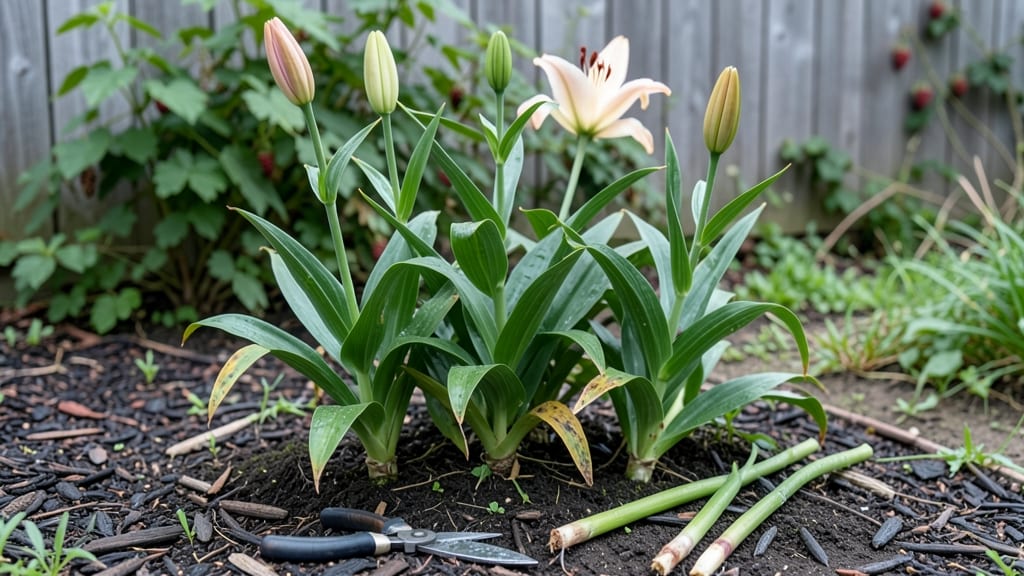
Pruning lily plants isn't just about tidying up—it's the secret to longer blooms and stronger stems next season. I've learned that cutting back at the wrong time can weaken your plants, but doing it right means more flowers and fewer floppy stalks.
The key is timing: wait until the foliage yellows after blooming, then trim carefully to encourage new growth.
You only need a few basic tools: sharp pruners for clean cuts, gloves to protect your hands, and a bucket for the clippings. Most lilies benefit from a one-third reduction in foliage after they finish blooming, but Oriental lilies need a gentler touch.
The goal is to remove dead flowers and spent leaves while leaving enough green to feed the bulb for next year.
After pruning, your plants will focus energy on storing nutrients in the bulb rather than maintaining weak stems. Within weeks, you'll notice fresh shoots emerging from the base, setting the stage for vibrant blooms the following spring.
The trick is patience—don't rush the process, and avoid cutting too early or too late in the season.
This method works for Asiatic, Oriental, and even daylilies, though daylilies have slightly different needs. Whether you're pruning for aesthetics or to boost next year's performance, the right technique makes all the difference. Let's get those lilies looking their best!
📚 In This Guide
- What you need
- Instructions
- Tips and common mistakes
- Wrapping up and next steps
What you need
- ● Pruning shears: Bypass pruners (sharp, clean, and sterilized with rubbing alcohol or bleach to prevent disease). Specs: 5–7-inch blades for precision.
- ● Garden gloves: Heavy-duty, cut-resistant (e.g., nitrile-coated) to protect hands from thorns and sap.
- ● Disposable pruning bags: 1–2 large bags (10–20 gallons) to collect debris and prevent soil-borne pathogens.
- ○ Garden twine or zip ties: For securing large stems (optional but handy for post-pruning support).
- ● Compost bin or bucket: To repurpose healthy clippings (avoid diseased foliage).
- ● Hose with nozzle: For rinsing tools and cleaning up sap/stems post-pruning.
- ● Hand pruners: Smaller, ergonomic shears for tight spaces (e.g., Felco F-2 style).
- ● Lily-specific fertilizer: Balanced 10-10-10 or bulb booster (apply post-pruning for recovery).
- ● Mulch (straw or shredded bark): 2–3 inches to protect the base after trimming.
- ● Label markers: If dividing lilies, tag new sections with variety names.
- ● Safety glasses: For dusty or windy conditions (sap can irritate eyes!).
Step-by-step guide to pruning lily plants for healthier growth
Pruning lilies at the right time keeps them blooming beautifully for years. Here's the straightforward approach I trust every season.
Identify the Right Time to Prune
Wait until lilies finish blooming and the flower stalks turn brown before cutting anything. This usually happens in late summer or early fall, depending on your climate. You'll know it's time when the seed pods form and the foliage begins yellowing naturally—don't rush this process. Pruning too early removes nutrients the plant needs to store for next year's blooms.
If you live in a colder region, hold off until after the first frost. The shock of cold helps the plant direct energy underground. In warmer zones, you can prune right after the flowers fade. Always work on a dry day when the soil isn't soggy—this prevents disease from entering through fresh cuts.
Cut Back Flower Stalks and Foliage
Use clean, sharp pruners to remove the spent flower stalks at the base, cutting just above the first set of leaves. Never leave stubs—they can harbor pests and diseases. For the foliage, wait until it turns completely yellow and brown before cutting it back. This ensures the plant has finished photosynthesizing and storing energy.
Leave about 2 inches of stem above the ground when trimming the foliage. This small stub helps protect the bulb from winter cold and prevents soil from splashing onto it during rain. I like to rake up all the debris afterward and compost it—never leave old plant material near the base, as it can spread fungal diseases.
Prune for Bulb Division (If Needed)
Every 3 to 4 years, lilies benefit from dividing their bulbs to prevent overcrowding. The best time is after the foliage dies back naturally. Gently dig around the base with a spading fork, being careful not to puncture the bulbs. You'll see clusters of smaller bulbs forming around the original one.
Separate the bulbs with your hands, ensuring each has at least one healthy shoot. Replant the largest, healthiest bulbs immediately in the same spot or relocate them to new areas. Discard any bulbs that look soft, mushy, or diseased—these won't regrow. Water lightly after replanting to help settle the soil around the bulbs.
Prepare for Winter and Next Season
After pruning, add a 2-inch layer of mulch around the base of the lilies to insulate the bulbs during winter. I use shredded leaves or straw, avoiding thick layers that can suffocate the plants. In spring, remove the mulch once new growth appears—usually in early April, depending on your zone.
Fertilize lightly in early spring with a balanced, slow-release fertilizer. You'll see fresh, vibrant growth within weeks. Avoid heavy feeding after mid-summer, as this encourages late-season growth that won't harden off before winter. With proper pruning, your lilies will reward you with stronger stems and even more spectacular blooms next year.
Tips & tricks for pruning lily plants
These simple tricks will help you maintain healthy lilies that bloom beautifully year after year.
Timing is Everything: Don't rush the pruning process—wait until the foliage has completely turned yellow and brown before cutting anything. This natural yellowing indicates the plant has finished storing energy for next season. In colder climates, wait until after the first frost to prune, as the cold shock helps direct energy underground. I've learned the hard way that pruning too early can weaken the plant and reduce next year's blooms.
Clean Tools Matter: Always use clean, sharp pruners to avoid spreading disease between plants. I sterilize my pruners with rubbing alcohol before and after each use. Dull blades can crush stems and create jagged cuts that invite pests. For larger jobs, consider using a pair of bypass pruners—they make cleaner cuts than anvil pruners. After pruning, wipe down your tools with a cloth to remove any plant residue.
Proper Cutting Technique: When removing flower stalks, cut just above the first set of leaves to maintain the plant's energy reserves. For foliage, leave about 2 inches of stem above ground—this small stub acts as insulation against winter cold and prevents soil splash during rain. I've found that leaving these stubs also helps protect the bulb from temperature fluctuations that can cause rot.
Bulb Division Strategy: When dividing bulbs every 3 to 4 years, focus on the largest, healthiest ones with visible shoots. I've had the best success replanting these immediately in the same spot—they establish more quickly than bulbs moved to new locations. Always discard any bulbs that appear soft, mushy, or diseased, as these won't regrow and could spread problems to healthy plants. Water lightly after replanting to help settle the soil around the bulbs.
Pro Tips for Pruning Lily Plants
- These simple tricks will help you maintain healthy lilies that bloom beautifully year after year.
- Timing is Everything: Don't rush the pruning process—wait until the foliage has completely turned yellow and brown before cutting anything.
- Clean Tools Matter: Always use clean, sharp pruners to avoid spreading disease between plants.
Frequently asked questions
about pruning lily plants can help you avoid common mistakes and keep your garden thriving! Here are answers to the most common queries:When is the best time to prune lilies?
Prune lilies after they finish blooming in late summer (August–September) or in early spring before new growth emerges. Avoid pruning during dormancy (fall/winter) or while flowers are still open—this can stress the plant or reduce next year’s blooms. Pro tip: Cut back foliage when it turns yellow or brown to signal the plant to store energy for next season.
How much of the lily plant should I cut back?
Trim lilies to about 6–12 inches above the ground, depending on the variety. Overly aggressive pruning (below 6 inches) may harm the bulb’s food reserves, while leaving too much foliage can attract pests or diseases. Exception: Oriental lilies can be cut back to 2–3 inches since they’re hardier.
What if I prune lilies at the wrong time?
Pruning too early (while flowers are still open) can stunt blooms, while late pruning (after frost) may leave bulbs vulnerable to rot. If you accidentally prune at the wrong time, don’t panic! Lilies are resilient—just focus on proper care (watering, mulching) afterward. Spring pruning is safer than fall if you’re unsure.
Can I leave dead lily foliage over winter?
No—dead foliage should be removed in late fall (after the first frost) to prevent fungal diseases and pests. However, don’t prune early; let the leaves die back naturally first. This helps the bulb store nutrients for next year’s growth. Cold-hardy varieties (like Tiger Lilies) tolerate slight delays better.
What if my lilies don’t bloom after pruning?
Lack of blooms often stems from over-pruning, poor soil, or bulb stress. Ensure you’re leaving enough foliage (6+ inches) and fertilizing with low-nitrogen, high-phosphorus food in early spring. If the problem persists, check for pests (like lily beetles) or overcrowded bulbs—divide clumps every 3–4 years for better airflow.
Wrapping up and next steps
Pruning your lily plants might seem like a daunting task, but with the right timing, tools, and techniques, it’s a game-changer for vibrant blooms and sturdy stems! 🌸 By removing spent foliage, deadheading blooms, and thinning congested areas, you’re not just tidying up—you’re inviting your lilies to thrive.
Whether you’re a seasoned gardener or just starting out, a little seasonal care goes a long way.
Ready to give your lilies the love they deserve? Grab your pruners, mark your calendar, and start with just one plant this season—you’ll be amazed at the difference! For even more tips, check out our pruning guide or dive into next year’s prep now.