Watering
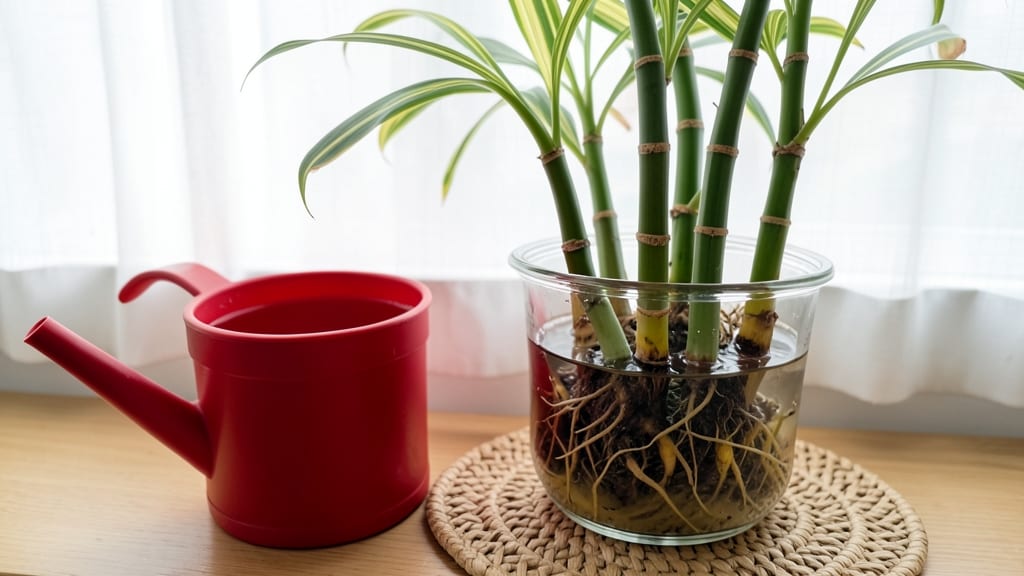
When your bamboo plant’s leaves turn yellow and mushy, it’s a classic sign of overwatering—something I’ve fixed more times than I’d like to admit. 🌱 The good news? Bamboo is tough, and with the right adjustments, you can bring it back to life fast.
Most people assume bamboo thrives on constant moisture, but soggy roots and poor drainage are the real villains here.
First, check the soil: if it smells sour or feels squishy, that’s your answer. Dump the plant from its pot and inspect the roots—healthy ones are white or pale, while rotten ones are brown and mushy.
Trim the bad roots immediately, then repot in fresh, well-draining mix (think chunky soil with perlite or orchid bark).
After repotting, let the soil dry out between waterings—stick your finger in first to test moisture. Bamboo prefers slightly dry soil over soggy conditions, and within weeks, you’ll see new green growth pushing through.
The key is patience: skip the watering schedule and let the plant tell you when it’s thirsty.
For future care, place your bamboo in bright, indirect light and avoid saucers that trap water. If you’re growing it indoors, a humidity tray with pebbles and water can help mimic its natural environment. With these tweaks, your bamboo will bounce back faster than you think.
Root Causes Of Overwatering
When your bamboo plant starts showing signs of distress—yellowing leaves, mushy stems, or a foul odor—it’s often a cry for help from its roots. Understanding why this happens is the first step to saving your plant.
Overwatering isn’t just about giving too much water; it’s a chain reaction triggered by poor drainage, environmental factors, or even well-meaning (but misguided) care routines. Let’s break down the science behind the soggy soil scenario.
Bamboo thrives in moist but well-draining soil. When pots lack drainage holes or the soil is too dense (like heavy clay), excess water pools at the roots instead of draining away. Over time, this creates an anaerobic environment—one where roots suffocate because they can’t access oxygen.
- 🔬 The science: Roots need oxygen to respire (break down sugars for energy). Waterlogged soil displaces air, forcing roots to switch to inefficient fermentation, which produces toxic byproducts like ethanol.
- 🚨 Signs: Yellowing leaves (especially older ones), black or mushy stems, and a sour, rotten smell from the soil.
- 💡 Fix it: Repot in a container with drainage holes and amend soil with perlite, sand, or orchid bark to improve aeration.
High humidity or stagnant air—common in greenhouses, bathrooms, or poorly ventilated rooms—slows evaporation. If your bamboo is already in a pot without drainage, the combo of slow-drying soil + excess moisture in the air turns the pot into a swamp.
- 🔬 The science: Humidity reduces the vapor pressure deficit (VPD), meaning water evaporates from the soil much slower. Bamboo roots, designed for tropical climates, can’t handle prolonged saturation.
- 🚨 Signs: Leaf edges turning brown (from fungal growth like Pythium), wilting despite wet soil, and a slow decline over weeks.
- 💡 Fix it: Increase airflow with a small fan, avoid placing near showers or humidifiers, and water only when the top 1–2 inches of soil are dry.
Even the hardiest bamboo can drown if watered on a strict schedule without checking soil moisture. Seasonal changes (like winter’s slower growth) or sudden weather shifts (e.g., moving from a sunny patio to a dim room) alter how quickly soil dries.
- 🔬 The science: Bamboo’s root zone should oscillate between moist and slightly dry. Overwatering disrupts this cycle, leading to root rot (caused by fungi like Phytophthora) within 3–5 days of constant saturation.
- 🚨 Signs: Leaves yellowing uniformly, stems soft to the touch, and roots turning brown/black when pulled gently.
- 💡 Fix it: Use the finger test: Stick your index finger 1–2 inches into the soil. If it’s damp, wait. If it’s bone-dry, you’ve been underwatering (not over!).
Bamboo roots need a balance of organic matter and inorganic particles to wick away excess water. Heavy, peat-based potting mixes or garden soil compact easily, trapping moisture like a sponge.
- 🔬 The science: Ideal bamboo soil should have a porosity rate of 30–50%—meaning 30–50% of the volume is air pockets. Compacted soil reduces porosity to <10%, drowning roots.
- 🚨 Signs: Soil stays clumpy even when dry, leaves develop crispy edges (from nutrient lockout), and growth stalls.
- 💡 Fix it: Mix 50% peat-free potting mix with 30% perlite and 20% coconut coir. For outdoor bamboo, amend garden soil with sand or gravel.
🎯 Pro Tip: If your bamboo is already suffering, don’t panic—this section covers emergency fixes. But prevention is key: always pair watering with a quick soil check and proper drainage!
Fix Overwatered Bamboo Quickly
Reviving an overwatered bamboo plant starts with corrective action—but the key is doing it right to avoid further damage. Below, we break down cause-specific fixes with step-by-step solutions, plus prevention tips to keep your bamboo thriving long-term.
Cause: Waterlogged soil cuts off oxygen, causing nutrient starvation and leaf discoloration.
How to Fix:
- 🔥 Stop Watering Immediately
- Let the top 2–3 inches of soil dry out before watering again. Stick your finger in the soil—if it’s damp past 1 inch, wait.
- 🍳 Improve Drainage Fast - For pots: Add a 1-inch layer of perlite or coarse sand to the soil mix (or repot into a well-draining blend with orchid bark or pumice). - For ground-planted bamboo: Dig a 12-inch-deep trench around the base to encourage drainage.
Fill it with gravel or broken pottery shards.
- 👨🍳 Prune Damaged Foliage
- Snip off yellow or mushy leaves with clean scissors. Healthy leaves will regrow in 2–4 weeks if roots stay intact.
💡 Prevention Tip:
- Use a moisture meter (or the finger test) to check soil before watering. Bamboo prefers slightly dry soil—water only when the top 1–2 inches feel dry.
Cause: Soggy roots suffocate, leading to black, foul-smelling roots and stunted growth.
How to Fix:
- ⏰ Act Fast—Remove the Plant
- Gently dig up the bamboo (or remove from pot) and rinse roots in lukewarm water to wash away excess soil.
- 🔪 Trim Rotten Roots
- Cut off black, mushy roots with sterilized scissors. Keep only firm, white/cream roots—these are salvageable.
- 🌡️ Repot in Fresh, Dry Mix
- Use a fast-draining mix: 50% cactus/succulent soil, 30% perlite, 20% orchid bark.
- Pro tip: Add 1 tbsp of hydrogen peroxide (3%) to the water when repotting to disinfect roots and boost recovery.
- 🌿 Adjust Watering Routine
- Water only when the soil is bone-dry (check weekly in summer, biweekly in winter).
- Bottom-water (place pot in a tray of water for 10 mins, then drain) to prevent over-saturation.
✨ Prevention Tip:
- Never let bamboo sit in saucers of water. Empty saucers immediately after watering.
Cause: Overwatering weakens the plant’s structure, causing stems to flop.
How to Fix:
- 🌡️ Provide Support Temporarily
- Stake the bamboo with soft ties (use old T-shirts or horticultural tape) to prevent breakage while it recovers.
- 💪 Boost Nutrients Gently
- Fertilize 2 weeks after repotting with a balanced, diluted fertilizer (half-strength 10-10-10). Avoid high-nitrogen feeds—they worsen root stress.
- 🌞 Increase Airflow & Light
- Move to a bright, indirect spot (e.g., near a window but not in direct sun). Poor airflow = slower recovery.
🎯 Prevention Tip:
- Mulch lightly (1–2 inches of straw or wood chips) to retain just enough moisture—not too much.
If your bamboo is severely rotted (no white roots left), try: - 🌱 Propagate from Healthy Cuttings - Take 6-inch stem cuttings from the base, let callus form (24 hours), then plant in sand/perlite mix.
Keep barely moist until roots form (4–6 weeks). - 🌿 Consider a New Plant - If the rhizome (underground stem) is completely mushy, start fresh with a healthy bamboo cutting.
Final Reminder: Bamboo is hardy but finicky—drainage is non-negotiable. Once you adjust watering habits, your plant should bounce back in 4–8 weeks! 🌿💧
Frequently asked questions
How do I know if my bamboo plant is overwatered instead of underwatered?
Check the soil first—if it’s soggy or smells sour, that’s overwatering. Yellowing leaves (especially on older growth) and mushy stems are classic signs. For underwatering, leaves turn crispy and dry, and the soil pulls away from pot edges. Always test with your finger: damp past 1 inch means too much water.
Can I save my bamboo if the roots are completely black and mushy?
You might still save it by cutting out all rotted roots and repotting in fresh, fast-draining mix. If the rhizome (underground stem) is entirely mushy, propagation from healthy cuttings is your best bet. Take 6-inch stem sections, let them callus for 24 hours, then plant in perlite/sand mix.
Why does my bamboo keep getting overwatered even when I think I'm being careful?
Bamboo thrives in moist but well-draining soil—most people water too often because they assume it needs constant moisture. Use a moisture meter or finger test (top 1-2 inches dry), and always use pots with drainage holes. High humidity or low light slows drying, so adjust watering seasonally.
Is it better to underwater than overwater bamboo?
No—both extremes stress bamboo, but recovery is faster from underwatering. Yellowing from overwatering often signals root rot, while brown edges from underwatering are usually reversible. The key is balance: let soil dry slightly between waterings, and never let roots sit in water.
How often should I water bamboo in winter vs. summer?
Summer: Water when the top 1 inch of soil feels dry (every 5-7 days). Winter: Reduce to every 2-3 weeks—growth slows, so roots need less moisture. Always check soil before watering, as indoor humidity and light levels change seasonally.