Plants
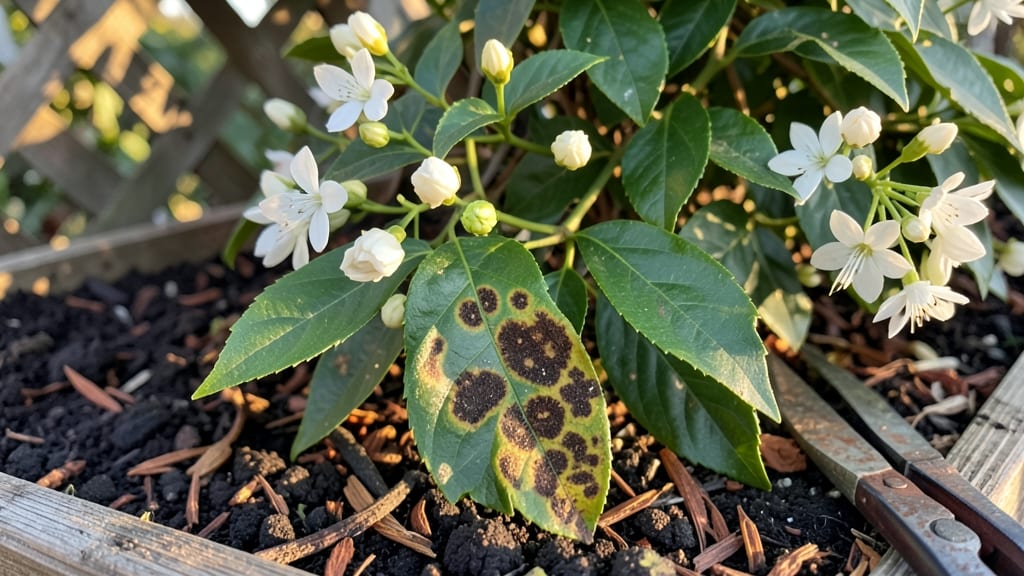
Jasmine plant fungus can turn your fragrant climber into a sad, spotty mess if you don’t catch it early.
I’ve watched powdery mildew and root rot creep across my own vines, and the key to saving them is spotting the signs before they spread—white dust on leaves, yellowing, or that foul smell from soggy roots. The good news?
Most fungal issues respond well to quick action, and I’ll show you exactly how to stop them in their tracks.
Fungus thrives when jasmine plants get too much water, sit in stagnant air, or struggle with poor drainage. That white powdery coating? Powdery mildew loves humid conditions and crowded foliage. Root rot, on the other hand, sneaks in when roots stay waterlogged for days.
The moment you see these signs, you’ve got a 24-48 hour window to act before the fungus takes over completely.
Start by trimming away infected leaves—don’t compost them, or you’ll spread the problem. Then, treat with a mix of baking soda and water for mildew, or a copper-based fungicide for stubborn cases. For root rot, improve drainage and let the soil dry out between waterings.
With the right care, your jasmine will bounce back stronger than ever, and you’ll avoid the heartbreak of losing it altogether.
Prevention is easier than cleanup: water at the base, not the leaves, and prune for airflow. A little vigilance now means you’ll enjoy those intoxicating blooms all season long without fungal interruptions. Let’s get your jasmine back to its best—and keep it that way.
Understanding Fungal Threats In Jasmine
Fungal infections in jasmine plants are rarely random—they thrive when specific conditions align. Below, we break down the core causes of fungal outbreaks, from environmental triggers to plant vulnerabilities, so you can take targeted action before damage spreads.
Jasmine plants (Jasminum spp.) are drought-tolerant, but excess moisture creates the perfect breeding ground for fungi like Botrytis (gray mold) or Phytophthora (root rot). Here’s why it happens:
- Root Suffocation: Compacted or waterlogged soil cuts off oxygen, weakening roots and inviting fungal spores to colonize.
- Foliar Fungus Feast: Damp leaves (especially in humid climates) trap spores, leading to leaf spot or powdery mildew.
- Potted Plant Peril: Without drainage holes, excess water pools at the base, accelerating rot.
Actionable Fix:
- Test soil moisture with your finger—water only when the top 1–2 inches are dry.
- Upgrade pots with drainage holes and use a well-amended mix (50% potting soil, 30% perlite, 20% compost).
- Mulch lightly (1–2 inches) to retain moisture without smothering roots.
Fungi love stagnant, humid air—think of it as their natural spa. Jasmine’s delicate leaves act as a buffet when humidity hovers above 70% without circulation.
- Spores Spread Easily: Fungal spores (like Alternaria or Septoria) float in damp air and land on leaves, germinating within 24–48 hours.
- Leaf Surface Traps Moisture: Dew or overhead watering creates a microclimate where fungi thrive, especially on undersides of leaves.
- Greenhouse Effect: Plastic covers or dense foliage trap heat and humidity, accelerating outbreaks.
Actionable Fix:
- Space plants 12–18 inches apart to improve airflow.
- Use a fan (on low) near jasmine for 30+ minutes daily to reduce humidity.
- Water in the morning so leaves dry before nightfall (avoid evening watering).
- Dehumidifier trick: Place a small fan blowing over a bowl of cat litter or silica gel near plants to absorb excess moisture.
Stressed jasmine plants are fungal magnets. When defenses drop, opportunistic pathogens like Fusarium or Rhizoctonia pounce.
- Nutrient Deficiencies: Lack of phosphorus (P) or potassium (K) weakens cell walls, making leaves susceptible to infection.
- Physical Damage: Pruning cuts, pests (like spider mites), or hail create entry points for spores.
- Sudden Environmental Shifts: Moving plants from shade to full sun (or vice versa) shocks them, lowering resistance.
Actionable Fix:
- Fertilize with balance: Use a 10-10-10 or 5-10-10 NPK fertilizer every 4–6 weeks during growing season.
- Prune properly: Use sterilized shears and seal cuts with cinnamon powder (natural antifungal).
- Hardening off: Gradually acclimate jasmine to new light conditions over 7–10 days.
- Neem oil spray (1 tbsp/quart water) monthly as a preventive boost for immunity.
Fungal spores are sneaky stowaways—they hitch rides on tools, soil, or even your hands.
- Tool Transmission: Pruners or gloves contaminated with Botrytis or Powdery Mildew spread spores to healthy plants.
- Infested Soil: Reusing potting mix from a previously infected plant introduces dormant spores that reactivate.
- Cross-Contamination: Touching infected leaves, then potting new plants, transfers spores.
Actionable Fix:
- Sterilize tools: Wipe blades with 70% isopropyl alcohol or bleach solution (1:10 ratio) between uses.
- Fresh potting mix: Never reuse soil from a diseased plant—sterilize by baking at 200°F (93°C) for 30 minutes or using hydrogen peroxide (3%) to drench soil before repotting.
- Disposable gloves: Use nitrile gloves when handling infected plants and dispose of them afterward.
Fungi have ideal temperature ranges—too hot or too cold, and they strike.
- Cool, Wet Springs/Falls: Temperatures 60–75°F (15–24°C) with high humidity trigger gray mold or downy mildew.
- Heat Stress: Sudden heatwaves (above 85°F/30°C) weaken plants, making them vulnerable to root rot if overwatered.
- Frost Damage: Cold snaps rupture cell walls, creating fungal entry points for Fusarium.
Actionable Fix:
- Monitor microclimates: Use a soil thermometer to avoid extremes—jasmine prefers 65–80°F (18–27°C).
- Adjust watering by season: Reduce frequency in summer heat and increase slightly in cool, damp springs.
- Row covers: Use frost cloth in late fall to protect tender jasmine varieties.
Pests like aphids, spider mites, or scale insects don’t just sap nutrients—they injure plants, creating perfect fungal entry points.
- Honeydew Feast: Aphids excrete honeydew, a sugary film that attracts sooty mold fungi.
- Physical Trauma: Mites puncture leaves, leaving wounds where Alternaria spores land.
- Weakened Sap Flow: Heavy infestations starve plants, lowering their ability to fight infections.
Actionable Fix:
- Inspect leaves weekly: Look for sticky residue (honeydew) or fine webbing (mites).
- Blast pests off: Spray plants with water (forceful stream) to dislodge aphids/mites.
- Introduce predators: Release ladybugs or lacewings to control pests naturally.
- Systemic treatment: Use neem oil or insecticidal soap (repeat every 5–7 days).
Fixing Fungal Issues in Jasmine Plants
Fungal infections can turn your vibrant jasmine plant into a sad, wilted mess—but the good news is, you can often reverse the damage with the right steps.
Below, we’ve mapped out practical fixes for common fungal problems (like powdery mildew, root rot, or leaf spot) along with prevention tips to keep your jasmine thriving. No green thumb required—just follow these easy solutions!
Cause: High humidity, poor airflow, or overcrowded plants create the perfect breeding ground for this pesky fungus.
How to Fix It:
- 🔥 Prune for Airflow Trim back dense foliage to improve circulation. Aim for 20-30% less leaf coverage—this reduces moisture buildup.
- 🍳 Spray with Baking Soda Mix Combine 1 tsp baking soda + 1 quart water + a drop of dish soap. Spray both sides of leaves weekly until the white powder disappears.
- 🌡️ Adjust Watering Habits Water only at the base (avoid wetting leaves) and early in the day so foliage dries quickly.
💡 Prevention Tip:
- Space plants 6-12 inches apart to prevent humidity traps.
- Neem oil spray (1 tbsp neem oil + 1 quart water) monthly as a fungal deterrent.
Cause: Overwatering or poorly draining soil suffocates roots, inviting fungal growth like Phytophthora.
How to Fix It:
- ⏰ Let Soil Dry Between Waterings Stick your finger 1 inch into the soil—if it’s damp, wait. Jasmine prefers slightly dry soil over soggy conditions.
- 👨🍳 Repot in Fresh, Dry Mix Remove the plant, trim black/mushy roots with sterilized scissors, and repot in cactus/succulent mix (add perlite for drainage).
- 🌧️ Improve Drainage Add a 1-inch layer of gravel at the pot’s bottom or drill holes if using decorative containers.
💡 Prevention Tip:
- Use terracotta pots (they wick away moisture faster than plastic).
- Avoid saucers unless they have drainage holes—standing water = root rot paradise.
Cause: Fungal spores (e.g., Alternaria or Cercospora) thrive in wet, warm conditions.
How to Fix It:
- 🔪 Remove Infected Leaves Snip off spotted leaves with clean shears and dispose of them (don’t compost!). Sterilize tools with rubbing alcohol.
- 🥘 Fungicide Treatment Use copper fungicide (follow label rates) or a hydrogen peroxide spray (1 part 3% H₂O₂ + 4 parts water). Spray every 7-10 days until new growth appears.
- 🌿 Boost Plant Health Feed with balanced fertilizer (10-10-10) to strengthen defenses. Avoid nitrogen-heavy feeds—they weaken stems.
💡 Prevention Tip:
- Water in the morning so leaves dry by evening.
- Space plants to allow sunlight to reach lower leaves (fungi love shade).
| Problem | Quick Fix | Long-Term Solution |
|---|---|---|
| Slow Recovery | Move to bright, indirect light | Rotate pot weekly for even growth |
| Recurring Fungus | Quarantine infected plants | Solarize soil (cover with plastic for 4-6 weeks to kill spores) |
| Weak New Growth | Prune lightly to redirect energy | Boost humidity (pebble tray with water) |
🎯 Pro Tip: Always sterilize tools between plants to avoid cross-contamination. Use 70% isopropyl alcohol or bleach solution (1 part bleach : 9 parts water).
By acting fast and adjusting care habits, your jasmine can bounce back—fungus-free and flourishing in no time! 🌿✨
Frequently asked questions
What does jasmine plant fungus look like?
Fungal issues on jasmine often appear as white powdery coatings (powdery mildew), dark brown spots with yellow halos (leaf spot), or mushy, blackened roots (root rot). Gray fuzzy patches on leaves or stems signal Botrytis (gray mold). Check undersides of leaves first—they’re prime fungus real estate!
Can I save my jasmine if it already has fungus?
Yes! Act fast by pruning infected areas, improving airflow, and applying fungicide (copper-based or neem oil). For root rot, repot in fresh, dry mix with perlite. With proper care, jasmine often recovers within 2-4 weeks, but severe cases may need complete soil replacement. Don’t give up—early action works wonders!
Why does my jasmine keep getting fungus even after treatment?
Recurring fungus usually means underlying conditions persist—like poor drainage, overwatering, or crowded growth. Check your watering habits (jasmine hates soggy soil), ensure pots have drainage holes, and space plants for airflow. A monthly neem oil spray also helps prevent reinfection.
Is it safe to use household items like baking soda or vinegar?
A mix of 1 tsp baking soda + 1 quart water + dish soap works great for powdery mildew. For vinegar, use 1 tbsp white vinegar per gallon of water (test on a small leaf first). Both are safe but less potent than fungicides—use them weekly for best results.
How can I prevent fungus before it starts?
Focus on airflow and dryness: water at the base (not leaves), space plants apart, and use terracotta pots. Prune regularly to reduce humidity traps, and fertilize with balanced NPK (like 10-10-10) to strengthen defenses. A 30-minute daily fan session also cuts humidity—fungi hate it!