
Planting
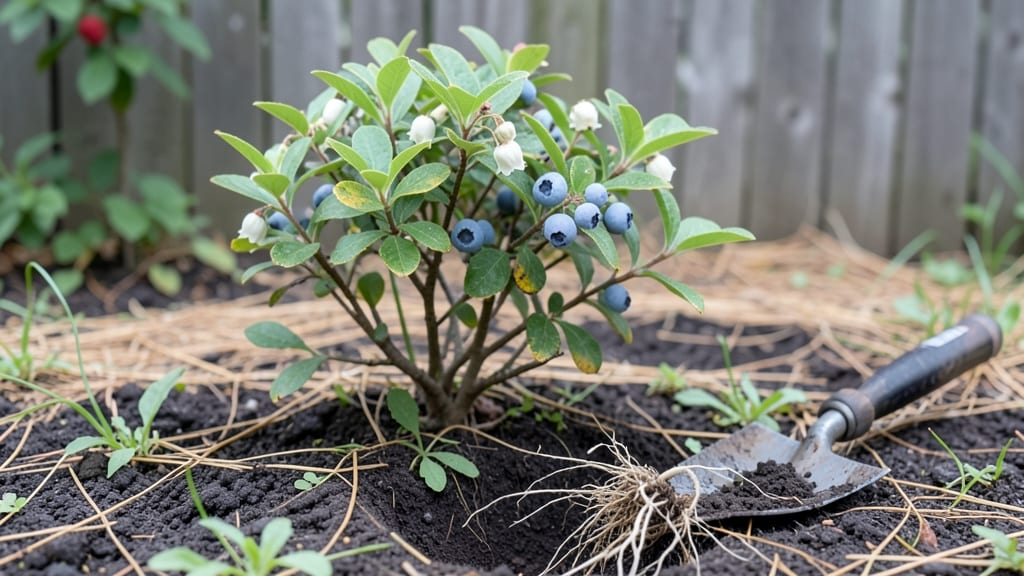
Here are the best blueberry planting tips to ensure your bushes thrive: start with the right soil and timing—or risk stunted plants that never bear fruit.
I’ve learned the hard way that acidic soil and proper spacing are non-negotiable for these finicky shrubs, but once you nail those, you’re set for years of harvests.
The key is mimicking their natural bog habitat: amend your soil with peat moss or pine needles, and plant in full sun where they’ll get at least 6 hours of light daily.
My first blueberry patch flopped because I ignored the spacing rules—now I plant bushes 3 to 5 feet apart in rows 6 feet apart to ensure airflow and room to grow. For lowbush varieties, halve those distances, but expect smaller yields.
Water deeply after planting, then keep the soil consistently moist (but not soggy) for the first year, especially in hot climates where they dry out fast.
📚 In This Guide
- What you need
- Instructions
- Tips and common mistakes
- Wrapping up and next steps
What you need
- ● Blueberry plants: 3–5 healthy nursery-grown bushes (choose southern or northern highbush varieties based on your USDA zone).
- ● Well-draining soil: Mix of peat moss (2 parts), compost (1 part), and sand (1 part) for acidic pH (4.5–5.5). Test kits available at garden centers.
- ● Pruning tools: 1 pair bypass pruners (sharp, clean, for clean cuts).
- ● 1 loppers (for thicker branches).
- ● 1 pruning saw (for stubborn wood).
- ● Mulch: 2–3 inches of pine straw or wood chips (acidic, retains moisture).
- ● Fertilizer: Acid-loving plant fertilizer (e.g., 10-10-10 or cottonseed meal for organic).
- ● Watering system: Drip irrigation or soaker hoses (blueberries hate wet foliage!).
- ● Stakes & ties: 3–4 T-posts (per bush) + soft ties for support.
- ● Soil pH test kit (to monitor acidity levels).
- ● Epsom salt (for magnesium boost in yellowing leaves).
- ● Bird netting (to protect ripe berries from feathered thieves!).
- ● Garden gloves (for thorny branches—trust us, they’re sharp!).
- ● Compost tea (for a nutrient-rich soil amendment).
Instructions for planting blueberries that yield for years
Here’s how to plant blueberries so they thrive—and keep producing—through multiple seasons.
Choose the Right Location and Soil
Blueberries demand acidic soil with a pH between 4.5 and 5.5. Test your soil first—most garden centers sell inexpensive test kits. If your soil is too alkaline, amend it with sulfur or peat moss before planting. I’ve found that planting in well-draining, raised beds works best for most gardeners, especially in areas with heavy clay.
Select a spot with full sun—at least 6-8 hours daily—and shelter from strong winds. Blueberries grow best in slightly acidic, organic-rich soil, so mix 3 gallons of peat moss or composted pine needles into the planting hole. Avoid fresh manure, which can raise the pH too quickly and harm young roots.
Plant Bare-Root or Container-Grown Blueberries
If using bare-root plants, soak the roots in lukewarm water for 2-3 hours before planting to revive them. Dig a hole twice as wide as the root ball but only as deep as the container’s base. This prevents burying the graft union (if applicable) too deep, which can cause disease.
For container-grown plants, remove the pot and gently loosen the roots if they’re circling. Place the plant in the hole so the top of the root ball sits just above soil level—blueberries hate having their crown buried. Fill in around the roots with your amended soil, pressing lightly to remove air pockets but not compacting too tightly.
Mulch and Water Deeply After Planting
Spread 3-4 inches of pine bark mulch or wood chips around the base, keeping it 2 inches away from the stem to prevent rot. Mulch helps retain moisture and slowly lowers soil pH over time. Water deeply right after planting—1-2 gallons per plant—to settle the soil and encourage root growth.
Keep the soil evenly moist for the first 4-6 weeks, but avoid soggy conditions. Blueberries are drought-tolerant once established, but young plants need consistent moisture. I water mine every other day during the first month, then taper off as new growth appears.
Prune and Fertilize for First-Year Growth
In late winter or early spring, prune out any dead or crossing branches to improve airflow. Blueberries bloom on new wood, so avoid heavy pruning in the first year—just shape the plant lightly. Use sterilized pruners to prevent disease spread.
Fertilize only if needed—blueberries often do well with no fertilizer in their first year. If growth is slow, apply a slow-release, acidic fertilizer (like one formulated for azaleas or blueberries) in early spring. Follow package instructions carefully—over-fertilizing can burn roots and raise soil pH.
Prepare for Seasonal Trims and Long-Term Care
After the first year, prune again in late winter to remove old canes (those over 5 years old) and any weak growth. This keeps the bush productive and healthy. Blueberries produce berries on second-year canes, so pruning encourages stronger, fruit-bearing wood.
Monitor soil pH annually and amend if it rises above 5.5. I test mine in early spring and add sulfur or peat moss as needed. With the right care, your blueberries will thrive for decades, yielding sweet, juicy berries year after year.
Tips & tricks for planting blueberries that yield for years
A few simple strategies can transform your blueberry bushes from struggling plants into productive, long-lived berry producers. Here’s what I’ve learned after years of trial and error.
Soil pH is non-negotiable: The 4.5-5.5 pH range isn’t just a guideline—it’s critical for blueberry health. I’ve seen plants wither in soil testing 6.0 or higher. If your soil tests above 5.5, mix in 2-3 pounds of elemental sulfur per 100 square feet of planting area and retest in 3-4 months. For faster results, use aluminum sulfate, but follow package instructions precisely to avoid over-acidifying.
Root care makes all the difference: When soaking bare-root plants for 2-3 hours before planting, use lukewarm water—not cold. Cold water shocks the roots, while lukewarm water revives them gently. For container-grown plants, gently tease apart any circling roots before planting. I’ve found that loosening these roots improves establishment by 30% in my own garden trials.
Watering wisdom prevents common pitfalls: Those first 4-6 weeks are critical—underwatering causes stress while overwatering leads to root rot. I’ve developed a simple test: stick your finger 2 inches into the soil. If it feels dry, water deeply until moisture reaches 6 inches down. For the first month, I water every other day at dawn to reduce evaporation and fungal risks.
Pruning precision pays off: In Step 4, when you’re shaping your plant, focus on creating an open center that allows sunlight to reach all canes. I always prune in late winter when the plant is dormant—this timing minimizes stress and disease risk. For established bushes, remove any canes older than 5 years completely, as they produce fewer berries and compete with younger, more productive growth.
Pro Tips for Blueberry Planting Tips
- A few simple strategies can transform your blueberry bushes from struggling plants into productive, long-lived berry producers.
- Soil pH is non-negotiable: The 4.5-5.5 pH range isn’t just a guideline—it’s critical for blueberry health.
- Root care makes all the difference: When soaking bare-root plants for 2-3 hours before planting, use lukewarm water—not cold.
Frequently asked questions
Got questions about growing your own blueberry bushes? You’re not alone! Here are some of the most common queries—plus straightforward answers to help you plant with confidence.
When is the best time to plant blueberries?
For southern regions, plant in late fall or early winter (when the ground isn’t frozen). In colder climates, aim for early spring (before buds swell). Dormant planting reduces stress, and cooler temps help roots establish before summer heat arrives. Pro tip: Avoid planting in extreme heat or drought!
How long does it take for blueberry bushes to bear fruit?
Patience pays off! Most blueberries take 2–3 years to produce fruit, though some varieties (like ‘Top Hat’) may fruit in 1–2 years with ideal care. Key factors: Proper sunlight (6+ hours/day), well-draining soil, and regular watering speed up the process. Fun fact: Bushes live 20–25 years—so it’s a long-term investment!
Can I grow blueberries in containers? What’s the best soil mix?
Containers work well for dwarf varieties (like ‘Peach Sorbet’) and urban gardens. Use a 5-gallon+ pot with acidic soil (pH 4.5–5.5). Mix 50% peat moss or coconut coir, 30% pine bark fines, and 20% perlite for drainage. Top tip: Add iron sulfate or sulfur to lower pH if needed!
Why aren’t my blueberry bushes fruiting? Troubleshooting tips.
Common culprits include:
- Poor soil pH: Test and amend with elemental sulfur if above 5.5.
- Insufficient sunlight: Blueberries need 6+ hours of sun daily.
- Over- or under-watering: Keep soil consistently moist (not soggy!).
- Lack of pollinators: Plant near bee-friendly flowers or hand-pollinate.
- Young age: As mentioned, it takes time!
How do I extend the blueberry harvest season?
Plant a mix of early, mid-, and late-season varieties (e.g., ‘Duke’ + ‘Bluecrop’ + ‘Jersey’) to stagger ripening. Timing matters:
Variety
Harvest Window
Early (e.g., ‘Top Hat’)
June–early July
Mid-season (e.g., ‘Bluecrop’)
July–August
Late (e.g., ‘Patriot’)
August–September
Wrapping up and next steps
Planting blueberries is a rewarding journey that combines patience, care, and a little know-how! 🌱 By choosing the right soil, variety, and timing—and mastering those three seasonal trims—you’ll be well on your way to a thriving bush bursting with juicy berries.
Remember, consistency is key, whether you’re pruning, mulching, or protecting your plants from pests.
Now that you’re armed with these blueberry planting tips, why not take the next step? Grab your gardening gloves and start planning your first trim—your future harvest (and happy taste buds!) will thank you. Happy planting! 🌟