
Watering
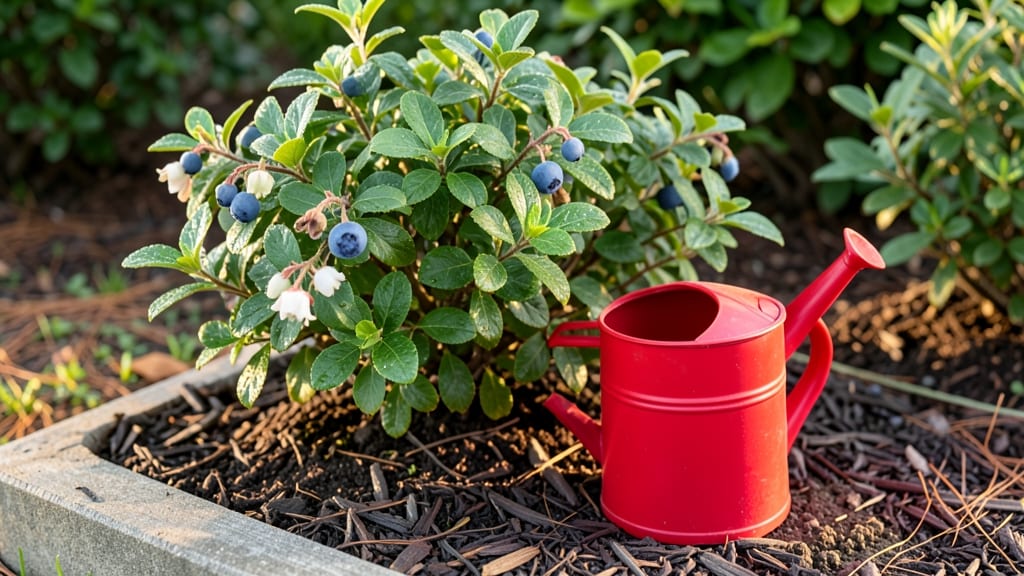
Watering blueberry plants 🫐 the right way is the difference between a handful of tart berries and a bucketful of sweet, plump fruit.
You’ve probably watered them, only to watch your bushes struggle—yellowing leaves, stunted growth, or worse, no berries at all. The truth? Blueberries are finicky about moisture, and most gardeners either drown their roots or leave them parched.
The key isn’t just how much you water but when and how deeply—and I’ll show you exactly how to get it right.
In USDA Zone 6a, where spring rains taper off and summer heat kicks in, timing matters more than you think. A deep soak once or twice a week keeps roots happy, while shallow sprinkles just waste water and invite disease.
Below, I break down the science-backed schedule, soil tricks, and red-flag signs that your watering habits are backfiring.
Ready to turn your blueberry bushes into berry-producing powerhouses? Let’s fix your watering game—starting with the one mistake almost everyone makes.
Blueberry plant watering schedule: how often and when to water for optimal growth
Blueberries thrive on consistent moisture, but getting the balance right can feel like walking a tightrope. Too little water stresses the plant, while too much leads to root rot and fungal diseases. The key lies in understanding your blueberry's growth stage and adjusting your watering routine accordingly.
Whether you're nurturing a young sapling or a mature bush laden with fruit, these guidelines will help you water like a pro.
Young blueberry plants need frequent, shallow watering to establish roots, while mature bushes prefer deep, infrequent soaks that encourage strong root development. Seasonal changes also play a critical role—summer heat demands more frequent watering, while winter dormancy requires minimal moisture.
Let’s break down the perfect watering schedule for every stage of your blueberry’s life cycle.
🌱
For young blueberry plants, the first two years are critical for root establishment. Water every 2-3 days with about 1 gallon per plant, focusing on keeping the soil consistently moist but never waterlogged.
Use a soaker hose or drip irrigation to deliver water directly to the root zone, minimizing evaporation and disease risk. Morning watering is ideal because it allows foliage to dry out during the day, reducing the risk of fungal infections like botrytis.
When your blueberries enter the flowering stage in spring, adjust your watering to every 3-4 days with 1.5 gallons per plant. This stage is delicate—too much water can cause blossoms to drop, while too little stresses the plant.
Aim for deep watering rather than frequent shallow sessions. Avoid wetting the flowers themselves, as moisture can promote mold and mildew. If rain is frequent, reduce supplemental watering to prevent over-saturation.
During the fruiting season (summer), your blueberries will demand the most attention. Increase watering to every 2-3 days, delivering 2 gallons per plant in the early morning. This deep watering encourages larger, juicier berries by ensuring the plant has enough moisture to support fruit development.
Monitor the soil—it should feel moist but not soggy about an inch below the surface. If the soil dries out too quickly, consider adding organic mulch to retain moisture and regulate temperature.
Signs of overwatering vs. underwatering blueberry bushes: what to watch for
Blueberry bushes are finicky about water—too much or too little can spell disaster for your harvest. Overwatering and underwatering both cause visible stress, but the symptoms differ dramatically.
Learning to read your plants helps you adjust before damage sets in. Yellowing leaves or wilted stems are red flags, but the real clues lie in the roots and berries.
Start by checking the soil 1-2 inches deep. If it’s soggy, you’re likely overwatering. If it’s bone-dry, your plants are thirsty. Blueberries need consistently moist but not waterlogged soil.
The key is balance—think of a damp sponge, not a dripping one. Ignoring these signs can lead to root rot or stunted growth, both of which kill your berry yield.
Overwatering Blueberry Bushes
- Prevents wilting in extreme heat
- Keeps soil cool for root health
- Causes root rot (foul-smelling soil)
- Leads to yellow leaves with brown edges
- Berries may split or mold
- Encourages fungal diseases like botrytis
Underwatering Blueberry Bushes
- Encourages deep root growth
- Reduces pest attraction (like slugs)
- Causes dry, crispy leaves (brown edges)
- Leads to small, tart berries (poor flavor)
- Stunts new growth and flowering
- Increases stress cracks on branches
Overwatered blueberries often show yellowing leaves that stay soft even when dry. Check the undersides for mold or mildew, a classic sign of excess moisture. Root rot is another giveaway—gently dig near the base and look for mushy, dark roots.
If they smell foul, you’ve got a problem. Adjust by reducing water and improving drainage with organic matter like pine bark.
Underwatered bushes, on the other hand, have crispy, curled leaves that feel dry to the touch. The soil around the roots may pull away easily, revealing a dry, cracked surface. Berries might shrivel on the bush or fall prematurely.
To fix this, deep-water once a week (1-2 gallons per plant) and mulch heavily to retain moisture. Avoid shallow watering—blueberries need deep, consistent hydration.
Don’t ignore berry quality as a clue. Overwatered berries often split or develop gray mold, while underwatered ones stay small and mealy. If your harvest is disappointing, revisit your watering routine. Morning watering is ideal—it gives foliage time to dry, reducing disease risk.
Use a moisture meter or the finger test to check soil levels regularly.
Remember, blueberries thrive in acidic, well-draining soil. If your watering habits aren’t working, test your soil’s pH and drainage. Amend with peat moss or sulfur if needed, and consider raised beds for better control.
With the right balance, your bushes will reward you with plump, sweet berries every season. 🫐