Pruning
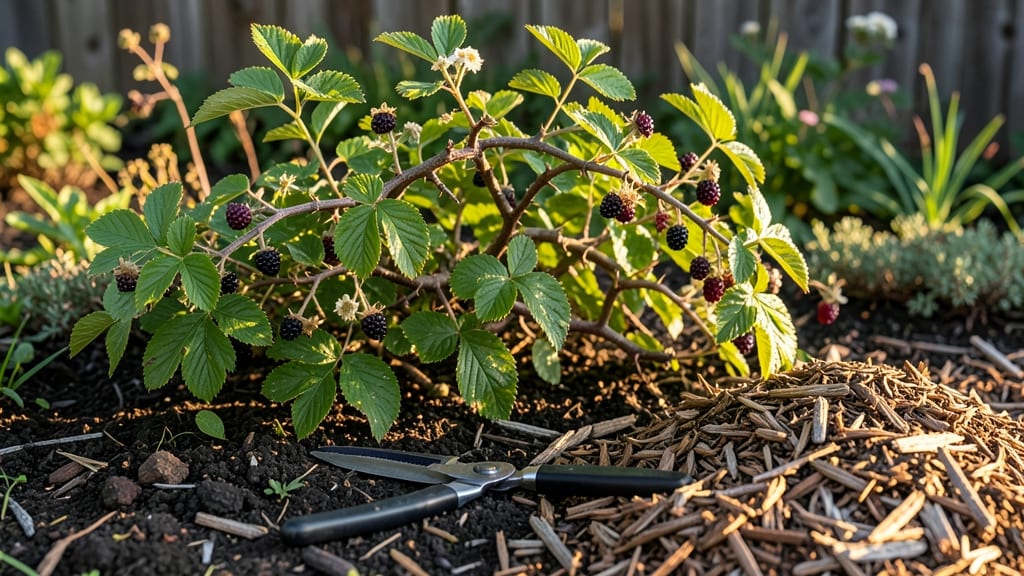
Pruning blackberry plants with just two strategic cuts transforms a tangle of canes into a year-round fruit machine—something I learned the hard way after my first harvest petered out by August.
The key isn’t just cutting back; it’s understanding which canes produce fruit and when. Most gardeners overlook the difference between primocane and floricane varieties, and that’s where the real boost comes from.
You’ll need sharp bypass pruners, heavy-duty gloves, and a sanitizing solution to prevent disease spread between cuts. My first attempt with dull shears left jagged cuts that took forever to heal, so invest in quality tools—it makes all the difference.
The process takes about 30 minutes for established plants, and you’ll see new growth within weeks that’s stronger than ever.
After pruning, your blackberries will reward you with earlier ripening, heavier fruit clusters, and fewer thorns—yes, really. The first flush of berries comes from last year’s canes, while new canes build next year’s harvest.
Mulch heavily after pruning to retain moisture, and avoid over-fertilizing, which leads to leafy growth at the expense of fruit.
This method works for both home gardens and small-scale farms, though container-grown blackberries need slightly more frequent pruning. The biggest mistake? Waiting until spring—dormant-season pruning gives plants a head start. Let’s get those canes shaped for maximum harvests!
📚 In This Guide
- What you need
- Instructions
- Tips and common mistakes
- Wrapping up and next steps
What you need
- ● Pruning shears or secateurs: Choose bypass-style shears (not anvil-type) for clean cuts. Opt for a 5-inch blade with stainless steel or high-carbon steel for durability. Quantity: 1 pair (sterilize with rubbing alcohol between cuts!).
- ● Loppers: For thicker canes (½ inch or larger), use long-handled loppers (20-24 inches) with a bypass blade. Quantity: 1 pair.
- ● Gloves: Wear gardening gloves (nitrile-coated for grip) to protect against thorns and bacteria. Quantity: 1 pair.
- ● Disinfectant: A small bottle of rubbing alcohol (70% isopropyl) or bleach solution (1 part bleach to 9 parts water) to sterilize tools between cuts. Quantity: Small spray bottle or dropper.
- ● Sharpie or permanent marker: For labeling canes if you’re pruning a mixed variety. Quantity: 1.
- ○ Garden twine or plant ties: (Optional but helpful) To secure newly pruned canes if they’re floppy. Quantity: Small roll.
- ● Wheelbarrow or bucket: For collecting pruned canes and debris. Quantity: 1.
- ● Hand pruners: For delicate trimming of smaller branches or suckers. Quantity: 1 pair.
- ● Pruning saw: If your blackberries have very thick canes (over 1 inch), a curved pruning saw can help. Quantity: 1.
- ● Garden hose or spray bottle: To rinse tools or clean off sap after pruning. Quantity: 1.
- ● Compost bin or trash bag: For disposing of diseased canes (do not compost these!). Quantity: As needed.
- ● Sunscreen and hat: Because pruning on a sunny day? Slip, slop, slap! 😎
Instructions for pruning blackberry plants year-round
Here's the precise method I use to maximize fruit production while keeping plants healthy and vigorous.
Identify and Remove Old Canes in Late Winter
Blackberries produce fruit on second-year canes, so the first cut is about renewal. In late winter—just before bud break—locate the thick, dark, woody canes that produced fruit last season. These are called primocanes, and they're done for fruiting. Use sharp pruning shears to cut them to the ground at the soil line. You'll see a mix of old and new canes; the new ones are thinner and greenish, with smaller buds.
This is the moment that matters: if you leave these old canes, they'll compete with new growth for nutrients, reducing fruit quality. I always make this cut first because it opens up space for the new, fruit-bearing canes to thrive. Remove any dead or diseased canes at the same time—burn or discard them to prevent spreading pathogens.
Thin and Shape New Canes in Early Spring
Once new canes emerge in early spring, focus on selecting the strongest 4-6 canes per plant. These will become your fruit producers next year. Remove any weak, crossing, or crowded canes at the base, cutting them off completely. You're aiming for a well-ventilated center that lets sunlight and air reach all parts of the plant.
Here's the thing—blackberries can get leggy if overcrowded. I space the remaining canes about 12-18 inches apart from each other, tying them to a trellis or support if needed. This ensures they grow upright and receive even light exposure. If a cane grows too close to another, it'll struggle to fruit well, so don't hesitate to prune it out early.
Summer Pruning for Airflow and Fruit Quality
During the growing season, keep an eye out for suckers—those vigorous shoots that emerge from the base or along the roots. These divert energy from fruit production, so pinch them off as soon as you spot them. Additionally, remove any canes that are diseased, damaged, or producing poor-quality fruit. Cut these back to the nearest healthy bud or remove entirely if severely affected.
This is where it gets fun—watch how the plant responds. After a few weeks of summer pruning, you'll notice new side shoots forming on the remaining canes. These are called floricanes, and they'll produce fruit next season. Prune lightly in summer to encourage bushier growth, but avoid heavy cutting, as it can stress the plant when it's already working hard to produce berries.
Light Cleanup in Fall and Winter
After the harvest season, do a final cleanup to prepare for dormancy. Remove any remaining old canes, dead foliage, or debris around the plant. This reduces overwintering pests and diseases. I also trim back any canes that produced fruit this year, cutting them to the ground. They've fulfilled their purpose and will only compete with next year's growth.
Real talk: blackberries are resilient, but they reward precision. A little effort now means bigger, sweeter berries next season. Leave the pruned canes on the ground near the plant—they'll decompose and add organic matter to the soil, feeding the roots over winter. Just avoid piling them too thickly, or they'll smother new shoots in spring.
Tips & tricks for perfect blackberry plant pruning
Precision pruning transforms blackberry bushes from chaotic tangles to high-producing powerhouses. Here's how to maximize your harvest with these key insights.
Timing is Everything: Late winter pruning—just before bud break—is non-negotiable for blackberries. The exact window varies by climate (aim for when forsythia blooms in your area), but never prune after buds swell. I've seen gardeners rush this step and end up with stunted growth or even frost damage to emerging shoots. Mark your calendar now: this is the single most important timing factor for next year's fruit production.
Cane Identification Made Easy: The difference between productive and unproductive canes comes down to this: primocanes (first-year, thin, green) become floricanes (second-year, thicker, fruit-bearing) next season. In Step 1, when you're cutting those thick, dark canes to the ground, think of it as making space for next year's stars. Pro tip: Run your hand along the cane—healthy canes have smooth bark, while diseased ones feel rough or have oozing spots. Remove anything questionable immediately to prevent spread.
Summer Pruning Strategy: During the growing season, don't just cut—observe. When you notice those vigorous suckers popping up from the base, pinch them off at the soil line. These energy vampires can reduce fruit production by up to 40% if left unchecked. I also recommend keeping a small pruning shears in your gardening tool belt during summer—you'll catch problems early when they're easier to manage. The goal is to redirect that energy to your established canes, not to new growth that won't bear fruit for another year.
Equipment Essentials: Sharp pruning shears aren't just recommended—they're essential. Dull blades crush canes and create jagged cuts that invite disease. I invest in high-quality Felco pruners ($40) that last years and make clean cuts through even the thickest canes. For larger branches, a pruning saw with a curved blade handles the job without tearing the bark. Always clean your tools between cuts with rubbing alcohol to prevent cross-contamination of pathogens.
Pro Tips for Blackberry Plant Pruning
- Precision pruning transforms blackberry bushes from chaotic tangles to high-producing powerhouses. Here's how to maxi...
- Timing is Everything: Late winter pruning—just before bud break—is non-negotiable for blackberries. The exact window ...
- Cane Identification Made Easy: The difference between productive and unproductive canes comes down to this: primocane...
Frequently asked questions
Got questions about pruning your blackberry plants like a pro? Here are answers to the most common queries—so you can keep those thorny vines thriving and fruiting all year!
When is the best time to prune blackberries?
For floral cane varieties (like Triple Crown), prune in late winter or early spring (just before buds swell). Primocane types (like Chester) need a summer pruning (June–July) to encourage fall fruit. Always prune after harvest to avoid stressing the plant.
How do I tell the difference between old and new canes?
Old canes are woody, brown, and dead-looking—remove them completely. New canes are green, flexible, and covered in thorns (they’ll fruit next year). Pro tip: Cut at the base to avoid leaving stubs that attract pests.
What if I prune at the wrong time?
Pruning too early (mid-winter) can shock the plant, while late spring cuts may delay fruiting. If you miss the window, focus on removing dead/diseased canes and thinning crowded growth—your berries won’t be as abundant, but the plant won’t die.
Can I prune blackberries without shears?
Yes! Use clean, sharp pruners for best results, but in a pinch, gloves + sturdy hedge clippers work. Avoid dull tools (they crush canes) or your hands (thorns + frustration = bad combo). For large patches, a pruning saw helps with thick canes.
Why are my blackberries small or sparse after pruning?
Small/sparse fruit often means over-pruning (too many canes removed) or poor nutrition. Check for:
- Sunlight: At least 6–8 hours daily.
- Water: 1–2 inches weekly (deep soaks).
- Fertilizer: High-potassium (like 5-10-10) in spring.
- Patience: New canes need 1–2 years to fruit.
Wrapping up and next steps
Mastering blackberry plant pruning is your secret weapon for a bountiful harvest year after year!
By following the two strategic cuts—summer thinning and winter renewal—you’ll encourage healthier growth, bigger berries, and fewer pests. 🌱 Now that you’re armed with the know-how, grab those pruners and give your bushes the TLC they deserve—your future fruit feasts will thank you!
Ready to take action? Start with this weekend’s pruning session and watch your blackberry plants thrive! For extra tips, bookmark this guide or share it with fellow gardeners. Happy pruning! 🍇