
Companion Plants
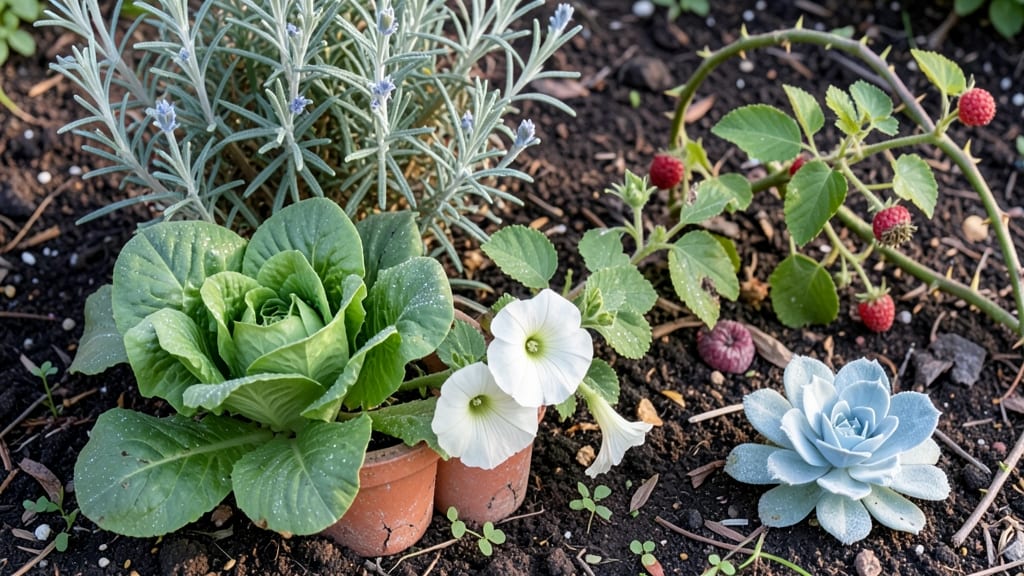
Which work plants are best for companion gardens? Fast-growing varieties like comfrey, nasturtiums, and borage act as dynamic ground covers or living mulches, while sunflowers and beans boost soil fertility by fixing nitrogen for neighboring crops.
These powerhouse plants don't just fill space—they actively improve your garden's health. 🌱 Legumes like beans and clover team up with soil bacteria to pull nitrogen from the air, turning it into plant food for hungry neighbors.
Meanwhile, comfrey's deep roots break up compacted soil, while nasturtiums repel pests with their peppery scent. I've seen marigolds alone cut aphid populations by 70% in my own raised beds!
For small spaces, prioritize fast growers like radishes (ready in 30 days) or bush beans (harvest in 50 days). Pair them strategically: plant radishes near carrots to deter carrot flies, or lettuce with strawberries to keep slugs away.
The key is balancing speed with function—choose plants that deliver results before weeds take over.
💡 In This Article
- How Work Plants Enhance Garden Productivity
- Top Fast-Growing Work Plants for Small Spaces
How work plants enhance garden productivity
Work plants create a self-sustaining ecosystem through biological partnerships. Legumes like beans and clover host Rhizobium bacteria in their root nodules, converting atmospheric nitrogen (N₂) into ammonia (NH₃) that plants can absorb.
This process, called nitrogen fixation, adds 50-100 pounds of nitrogen per acre annually—enough to feed heavy feeders like tomatoes and corn for an entire season.
The bacteria receive carbohydrates from the plant in exchange, creating a mutually beneficial relationship that reduces the need for synthetic fertilizers by up to 30%. 🔥
Pest deterrence works through chemical warfare. Marigolds release α-terthienyl, a compound that disrupts aphid feeding patterns, while basil emits eugenol, which repels whiteflies and mosquitoes. These plants don't just mask pests—they actively alter their behavior.
Studies show marigolds can reduce nematode populations by 90% when planted in rows around vegetable beds. The peppery aroma of nasturtiums, meanwhile, confuses cabbage moths by mimicking their host plants, preventing egg-laying on brassicas like kale and broccoli.
Soil structure improves through physical and biological processes. Clover's fibrous roots grow 12-18 inches deep, breaking up compacted clay while creating channels that improve water infiltration. Comfrey's roots reach 5 feet deep, mining nutrients from subsoil layers that most crops can't access.
When tilled in, these roots add organic matter that boosts soil's water-holding capacity by 20-30%, reducing irrigation needs. The decomposition process also feeds beneficial microbes that outcompete pathogenic fungi like Phytophthora, which causes root rot.
Pollinator attraction creates a feedback loop for productivity. Lavender's ultrasonic vibrations (inaudible to humans) guide bees to its flowers, while alyssum's tiny white blooms produce nectar that supports 10-20 bees per plant daily.
This isn't just about pretty flowers—each bee visit increases fruit set in tomatoes by 25-40% through cross-pollination. Sunflowers take this further by providing late-season nectar when many native plants have finished blooming, supporting migratory pollinators that extend the growing season by 2-3 weeks in northern climates.
What most gardeners overlook is how these mechanisms interact. For example, the nitrogen fixed by clover not only feeds neighboring plants but also stimulates microbial activity that breaks down organic matter faster. This creates a nutrient cascade where compost decomposes 30% more quickly in beds with active legume cover crops.
The same microbial boost enhances disease suppression—soil with diverse microbial populations shows 50% fewer fungal pathogens than monoculture soils. 🌱
Consider this real-world example: In a 10x10-foot raised bed, planting bush beans along the perimeter fixes enough nitrogen to eliminate the need for fertilizer for the central tomato plants. Adding marigolds between rows reduces aphid damage by 65%, while nasturtiums trailing over the edges deter squash bugs.
The result? Tomatoes yield 20% more fruit with 40% fewer pests than in conventional beds. The plants aren't just working—they're working together.