
How To
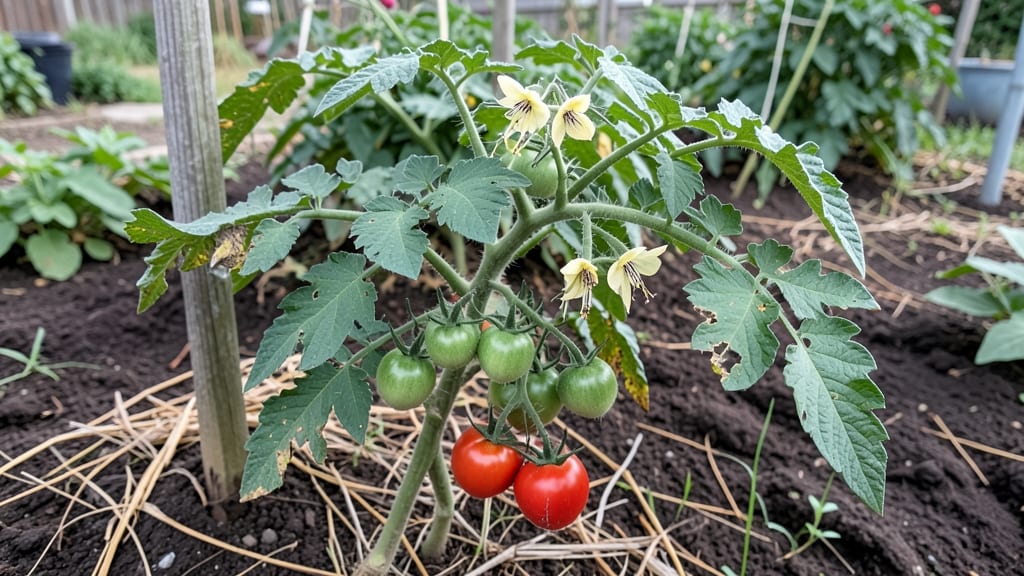
Tomato plants grow anywhere from 1 foot to 10 feet tall, depending on the variety and care you give them 🍅 — but most home gardeners end up with a 6-foot sprawl if they don’t prune or support them.
Wondering whether your tomato plants will reach for the sky or stay compact? The height of your tomato plants depends entirely on the variety, growing conditions, and support you provide — getting it right can mean the difference between a thriving harvest and a tangled mess.
Determinate varieties like 'Roma' max out around 3-4 feet, while indeterminate types such as 'Sungold' can climb to 12 feet if left unchecked. Sunlight, pruning, and proper staking all play a role in controlling their growth.
Below, I break down how to predict your tomato’s height, the best support systems for tall varieties, and simple tricks to keep even the biggest plants manageable in your garden.


Tomato plant height by variety: dwarf to vining giants
When planning your tomato garden, one of the first questions I ask myself is: how tall will my tomato plants grow? The answer depends entirely on whether you're growing determinate (bush) or indeterminate (vining) varieties.
Determinate tomatoes stop growing once they start fruiting, while indeterminate types keep climbing until frost. This simple distinction affects everything from spacing to support needs.
Choosing the right variety for your space is key. Dwarf tomatoes like 'Tiny Tim' stay under 2 feet, perfect for containers, while vining giants like 'Sungold' can reach 10 feet without support.
Even within these categories, heights vary by 3-4 feet—so let's break down what to expect from popular varieties and how to manage their growth patterns.
| Variety | Type | Mature Height | Growth Habit | Best For |
|---|---|---|---|---|
| Tiny Tim | Determinate | 1-2 ft | Compact bush | Containers, small spaces |
| Roma | Determinate | 3-4 ft | Medium bush | Sauces, canning |
| Celebrity | Determinate | 4-5 ft | Bushy | All-purpose |
| Sweet 100 | Indeterminate | 6-8 ft | Vining | Fresh eating |
| Beefsteak | Indeterminate | 8-10 ft | Tall vining | Large fruits |
| Sungold | Indeterminate | 6-10 ft | Vining | Cherry tomatoes |
| Patio | td style="padding: 8px; border-bottom: 1px solid #ffcc00;">Determinate2-3 ft | Compact bush | Balconies, containers |
If you're working with limited space, dwarf varieties like 'Tiny Tim' or 'Patio' are my go-to choices. These stay under 3 feet tall, making them ideal for container gardening or small balconies.
I've successfully grown 'Tiny Tim' in 5-gallon pots with minimal support—just a small cage to keep the plants upright. The trade-off? You'll get fewer tomatoes, but they're perfect for snacking fresh.
For indeterminate varieties, think vertically. Plants like 'Sungold' or 'Sweet 100' can grow 10 feet tall if left unchecked, but with proper pruning and support, you can direct their growth. I use 6-foot trellises for these types, training them to climb while keeping the fruit accessible.
The key is regular pruning to remove suckers (those little shoots in the leaf axils) to encourage stronger stems.
One of my biggest mistakes was planting Beefsteak tomatoes without support. These 8-10 foot giants flopped over, making harvesting a nightmare. Now, I always install tall cages or stakes at planting time. For heavy-fruited varieties, I even add additional ties mid-season to prevent breakage. The extra effort pays off
How growing conditions affect tomato plant height
Tomato plant height isn’t just about the variety—your growing conditions play a massive role in whether your plants will stretch skyward or stay compact. Sunlight exposure, temperature fluctuations, soil quality, and even your pruning habits can push your plants toward becoming towering vines or keeping them neatly contained.
Understanding these factors lets you control growth for your garden’s space and needs.
For example, indeterminate varieties like 'Sungold' can grow 10+ feet without intervention, while determinate types like 'Roma' max out around 3-4 feet. But even within those ranges, your environment can shift the needle dramatically—sometimes by 2-3 feet—simply by adjusting care practices.
Let’s break down the key influences and how to work with them.
- Sunlight exposure: 6+ hours of full sun fuels rapid vertical growth, while partial shade (≤4 hours) stunts plants by 30-50%. Place tall varieties in south-facing spots for maximum height potential.
- Temperature: Ideal 70-85°F days and 55-65°F nights encourage vigorous growth. Below 50°F, plants slow or stop growing entirely, while 90°F+ can scorch leaves and limit height gains.
- Soil quality: Nutrient-rich, well-draining soil with 6.0-6.8 pH supports strong stems. Poor soil (compacted or nutrient-deficient) weakens plants, reducing height by up to 40% and increasing disease risk.
- Pruning techniques: Regular sucker removal (every 2-3 weeks) directs energy upward, adding 2-4 feet to indeterminate varieties. Over-pruning, however, stresses plants and limits growth—never remove more than 1/3 of foliage at once.
- Support systems: Trellises or cages encourage upward growth by 30-50% compared to unsupported plants. Stakes provide stability but may limit lateral spread, while floppy growth (no support) can reduce height by 20% due to energy diversion.
If you’re growing in a compact space, focus on determinate varieties and limit fertilizer to avoid excessive height. For vertical gardens, prioritize indeterminate types and prune aggressively to train vines upward.
I’ve seen 'Cherokee Purple' reach 8 feet in a trellis system with consistent care, while the same variety in a pot with partial shade stayed under 4 feet.
Don’t overlook watering consistency—uneven moisture causes splitting stems or weak growth. Deep watering 2-3 times per week (1-1.5 gallons per plant) keeps stems strong. In my container gardens, I use self-watering pots to maintain steady growth, even for 6-foot 'Brandywine' plants.
For tall varieties, start pruning early to avoid overcrowded foliage, which can harbor pests. Use sharp, sterilized shears to cut 1/4-inch above a leaf node, and always prune in the morning to allow wounds to heal in daylight.
This simple habit can add 1-2 feet to your harvest season.
Pro tip: Monitor your plants’ growth rate weekly. If they’re stretching too fast (long, thin stems), they need more sunlight or balanced fertilizer. If growth stalls, check for root-bound conditions or nutrient deficiencies. Adjusting these factors mid-season can salvage even the most wayward plants. 🌱