Fertilization
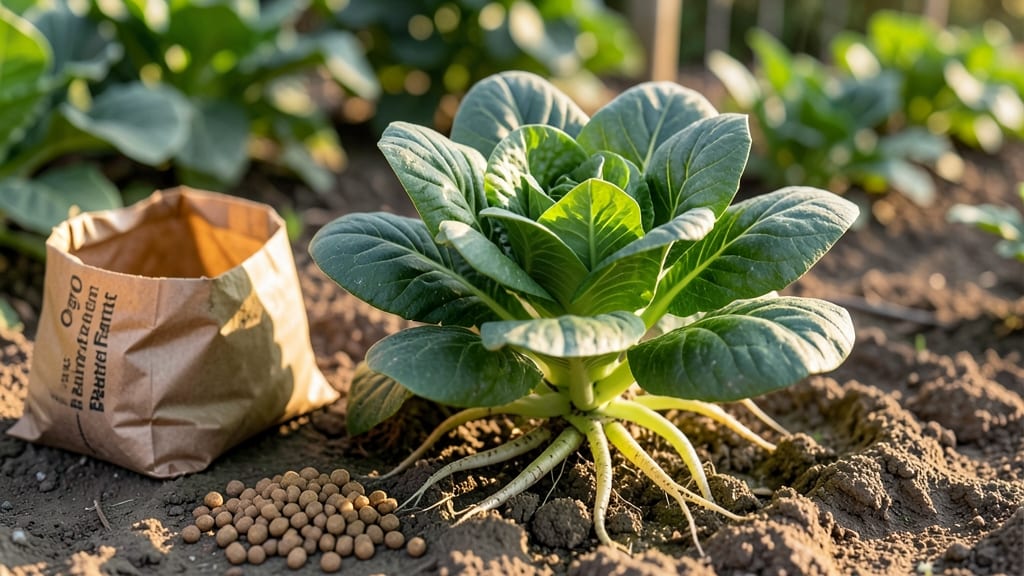
Plant food essentially acts as a nutrient booster shot for your plants. 🌱 Unlike soil, which releases nutrients slowly through microbial activity, fertilizers provide an immediate dose of essential elements. This makes them especially useful for container plants or gardens with nutrient-poor soil.
For example, nitrogen-heavy fertilizers promote leafy growth, while phosphorus boosts root development and flowering. Many gardeners use a balanced 10-10-10 mix as a starting point, adjusting based on their plants' specific needs.
What sets plant food apart is its precision—you can target exactly what your plants need at different growth stages. Organic options like compost or fish emulsion break down slowly, while synthetic fertilizers offer quick results.
I recommend testing your soil first to identify deficiencies before choosing a fertilizer, as overdoing it can harm plants just as much as underfeeding them.
💡 In This Article
- How Plant Food Differs From Natural Soil Nutrients
- Choosing the Right Plant Food for Your Garden
How plant food differs from natural soil nutrients
Natural soil releases nutrients through microbial decomposition, a process that can take weeks or months. Plant food, however, delivers nutrients in highly soluble forms like ammonium nitrate or urea, which plants absorb within hours.
This is why a 10-10-10 fertilizer (10% nitrogen, 10% phosphorus, 10% potassium) shows visible results in just 7-14 days compared to organic compost, which may take 3-6 months to become fully available.
The key difference lies in chemical composition: synthetic fertilizers contain inorganic salts that dissolve instantly, while organic options (like bone meal or fish emulsion) require microbial breakdown.
For example, potassium in synthetic fertilizers comes as potassium chloride (KCl), which plants uptake immediately, whereas organic potassium from wood ash releases slowly as microbes convert it into plant-accessible forms. 🌱 This explains why synthetic fertilizers are preferred for fast-growing crops like lettuce or tomatoes, while organic fertilizers suit long-term soil health.
Nutrient ratios matter too. A high-nitrogen fertilizer (e.g., 30-0-0) promotes leafy growth, while a balanced 10-10-10 supports overall development. Soil, however, releases nutrients unevenly—phosphorus binds tightly to soil particles, making it less available unless amended with compost or lime.
Plant food bypasses this limitation by providing nutrients in forms like monoammonium phosphate (MAP), which dissolves readily.
Another critical factor is pH sensitivity. Synthetic fertilizers work best in slightly acidic soil (pH 6.0-7.0), while organic fertilizers buffer pH changes over time. For instance, applying 1 pound of urea per 100 sq ft can temporarily acidify soil, whereas compost gradually improves soil structure without drastic pH shifts.
This makes organic fertilizers safer for delicate plants like azaleas or blueberries.
Consider this real-world example: A tomato plant suffering from magnesium deficiency (yellow leaves) will show improvement within 3-5 days after applying Epsom salt (magnesium sulfate), a synthetic amendment. The same deficiency in soil would take 4-6 weeks to correct naturally through microbial activity and organic matter breakdown. 💫
For gardeners, the choice between plant food and soil nutrients depends on urgency. Need rapid results? Synthetic fertilizers deliver. Building long-term soil health? Organic amendments win. Both play vital roles—just in different timeframes.