Watering
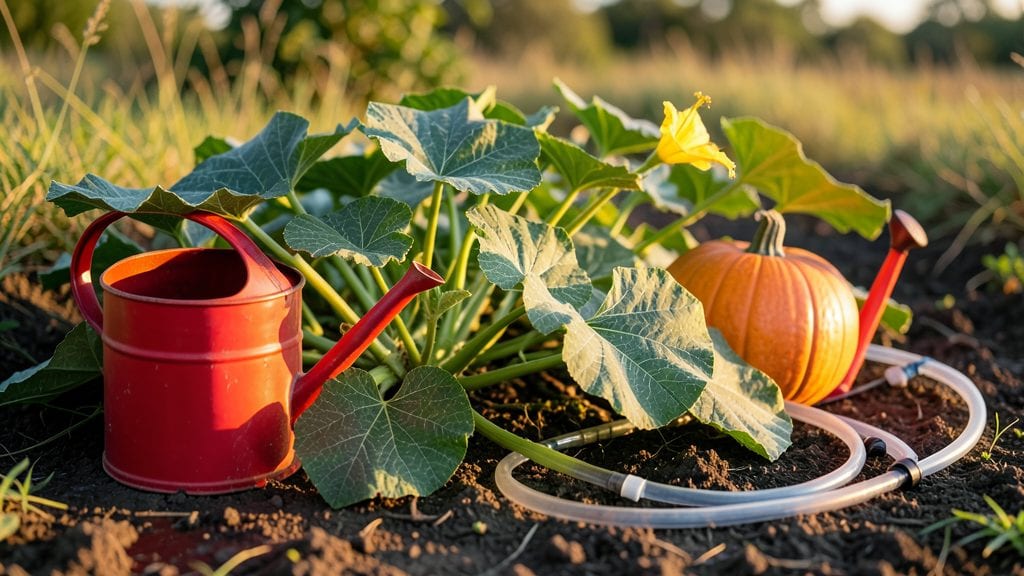
Watering pumpkin plants 🎃 right keeps those sprawling vines strong and your harvest sweet—skip the consistency, and you’ll end up with bitter fruit or vines that collapse under their own weight.
Pumpkins are thirsty plants—get the watering wrong, and you risk weak vines, bitter fruit, or even total crop failure. But master these soil moisture secrets, and you’ll grow pumpkins that thrive from seed to harvest.
Here’s the deal: deep, infrequent watering beats shallow sprinkles every day. Think of it like giving your pumpkin a long drink instead of a quick sip—it encourages roots to grow deeper, which means stronger plants and better fruit.
In this guide, I’ll break down exactly how much water your pumpkins need at each stage, the best times to water, and how to spot when you’re overdoing (or underdoing) it. No guesswork, just results.
How much water do pumpkin plants need (and when to give it)
Pumpkin plants are heavy drinkers—they need consistent moisture to grow strong vines and sweet, flavorful fruit. Too little water leads to bitter pumpkins and weak stems, while overwatering invites root rot and fungal diseases.
The key is deep, infrequent watering that keeps the soil evenly moist but never soggy. I’ve learned this the hard way after watching my first pumpkin patch wilt under inconsistent watering.
Your watering schedule should change as your pumpkin plants grow. Seedlings need gentle care, while flowering plants and fruiting vines demand more hydration. The best way to track moisture? Use the finger test—stick your finger 1-2 inches deep into the soil.
If it feels dry, it’s time to water. For precise readings, a moisture meter takes the guesswork out of it, especially in hot climates where soil dries out fast.
Here’s the golden rule for pumpkin watering: 1-2 inches of water per week, but adjust based on temperature, rainfall, and soil type. Sandy soil drains quickly, so you’ll need to water more often than in clay or loamy soil.
In my Zone 6a garden, I’ve found that morning watering (before 10 AM) is ideal—it gives the vines time to dry out during the day, reducing disease risk.
Now, let’s break down exactly how much water pumpkin plants need at each stage of growth. This stage-by-stage guide will help you avoid common mistakes and keep your pumpkins thriving.
summary-table
| Growth Stage | Watering Frequency | Depth | Soil Moisture Check | Signs of Stress |
|---|---|---|---|---|
| Seedlings (0-3 weeks) | Every 2-3 days | ½ inch | Top inch dry | Wilting, yellow leaves |
| Vine Growth (3-6 weeks) | Every 3-4 days | 1 inch | 1-2 inches dry | Stunted growth, curled leaves |
| Flowering (6-8 weeks) | Daily or every other day | 1.5 inches | 2 inches dry | Dropped flowers, weak stems |
| Fruiting (8-12 weeks) | Every 2-3 days | 2 inches | 3 inches dry | Bitter fruit, cracked rind |
| Harvest Prep (12+ weeks) | Reduce to weekly | 1 inch | Top 1 inch dry | Overripe, rotten fruit |
During the seedling stage (weeks 0-3), pumpkin plants have shallow roots and need gentle watering. Overwatering at this stage can lead to damping off, a fungal disease that kills young seedlings.
I’ve found that spraying soil lightly with a watering can (instead of flooding) keeps the environment just right. Aim for ½ inch of water every 2-3 days, and always water at the base of the plant to avoid wetting the leaves, which can cause mildew.
When your pumpkins enter the vine growth stage (weeks 3-6), their roots deepen, and they need more water. This is when you should switch to deep watering—aim for 1 inch of water every 3-4 days.
Use a soaker hose or drip irrigation to deliver water slowly to the roots. I’ve seen firsthand how surface watering (like sprinklers) can lead to uneven moisture, causing vines to grow in odd directions as they stretch toward water.
The flowering stage (weeks 6-8) is critical—this is when pumpkins need the most water to support
Best watering techniques to prevent pumpkin diseases and pests
Pumpkins need consistent moisture to fight off diseases like powdery mildew and pests such as squash vine borers. The key lies in root-focused watering—keeping soil evenly moist without soggy conditions.
I’ve learned that shallow watering leads to weak roots, while deep soaking strengthens them. Let’s explore the best methods to keep your pumpkins thriving.
Your watering technique directly impacts your pumpkin’s health. Surface watering can splash soil onto leaves, spreading fungal spores. Instead, focus on direct root hydration using methods like drip irrigation or deep watering at the base.
This simple shift reduces disease risk and saves time. I’ll show you how to choose the right approach for your garden setup.
Watering Techniques for Pumpkin Plants
Drip Irrigation
- Pros: Delivers water directly to roots, reduces fungal risk
- Cons: Requires setup, may need adjustment for vines
Surface Watering
- Pros: Simple, good for small gardens
- Cons: Increases disease risk, uneven moisture
Soaker Hoses
- Pros: Covers large areas, slow water release
- Cons: May need frequent checks for clogs
Mulching is another game-changer for pumpkin health. A 3-4 inch layer of straw or shredded leaves keeps soil cool and retains moisture. I’ve seen mulched pumpkins resist wilting during heatwaves while unmulched plants struggle.
Plus, it suppresses weeds that compete for water. For best results, apply mulch after seedlings emerge and replenish as it breaks down.
Watch for signs of overwatering like yellowing leaves or mushy stems, and underwatering indicated by wilting despite moist soil. Adjust your schedule based on rainfall—your pumpkins need about 1 inch of water per week during dry spells.
I’ve found that a simple finger test (moisture up to 2 inches deep) helps me gauge needs without guesswork.
For large pumpkin varieties, consider buried drip lines along the vine’s path. This ensures even moisture as vines spread. I’ve used this method with my Atlantic Giant pumpkins, and the consistent hydration leads to fewer pests and stronger growth.
Just remember to avoid wetting leaves to prevent fungal diseases like downy mildew.
Finally, rotate your watering spots as vines grow to encourage deep root systems. This simple habit makes your pumpkins more resilient to drought and pests. With these techniques, you’ll grow pumpkins that stay healthy from seed to harvest—no bitter surprises here! 🎃