
Watering
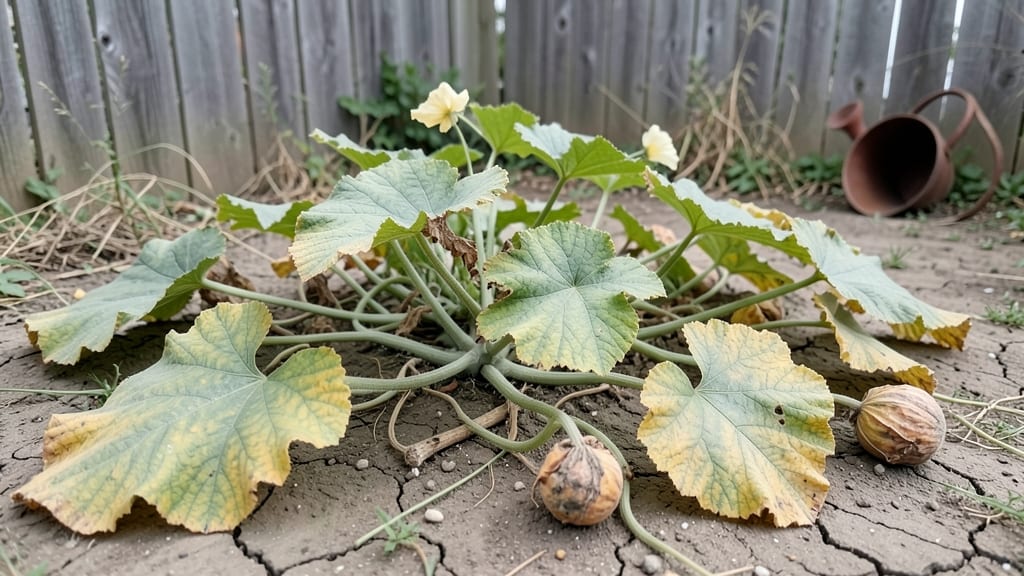
My underwatered pumpkin plant taught me a hard lesson about how fast these thirsty vines can go from lush to limp. 🌱 The moment you spot crispy yellowing leaves and soil that pulls away from the pot edges, it’s time to act—before the whole plant wilts into retirement.
I’ve revived more than a few with these three simple fixes, and you can too, even if you’ve never grown pumpkins before.
The first clue is always the leaves: they start yellowing at the edges before curling up like a sad hand waving for help. Stick your finger an inch into the soil—if it’s dry as a bone, that’s your answer.
Pumpkins need 1-2 inches of water per week, but their sprawling vines drink faster than you’d think, especially in hot weather. Mulching with straw keeps moisture locked in while shading out weeds that steal water.
Here’s the game-changer: deep watering twice a week instead of shallow sprinkles. Soak the soil until water runs out the drainage holes, then let it dry slightly before repeating. Within a week, you’ll see new green leaves unfurling, and those vines will start reaching for the sky again.
The key is consistency—pumpkins hate dry feet but also can’t handle soggy roots, so aim for damp, not drenched.
For long-term peace of mind, invest in a moisture meter or just check soil moisture daily after the first week. Adjust your watering based on rain—if it’s been pouring, skip a day.
Once your plant recovers, it’ll reward you with heavier fruits and fewer yellow leaves all season. No more guesswork, just happy vines and plump pumpkins.
Root Causes Of Water Stress
Underwatered pumpkin plants don’t just happen by accident—they’re usually the result of specific growing conditions gone wrong. Understanding these triggers is the first step to reviving your wilting vines. Let’s break down the real culprits behind water stress in pumpkins, so you can address them before your harvest suffers.
Pumpkins thrive in well-draining but moisture-retentive soil, but sandy or rocky soils can’t hold water long enough for deep-rooted plants. Here’s why this happens:
- Fast-draining soil (common in sandy or gravelly mixes) lets water slip away too quickly, leaving roots thirsty.
- Lack of organic matter (like compost or aged manure) reduces the soil’s ability to absorb and retain moisture.
- Poor water penetration due to compacted or clay-heavy soil, where water pools on the surface instead of soaking in.
💡 Pro Tip: Test your soil by digging 6 inches deep—if it feels dry or crumbly, it’s time to amend with compost or coconut coir to improve water-holding capacity.
Pumpkins have shallow but extensive root systems that spread widely, meaning they need consistent moisture—not just occasional deep soaks. Common mistakes include:
- Skipping midday watering during heatwaves, leading to rapid evaporation.
- Overwatering followed by drought (e.g., heavy rain then a week of neglect), which stresses roots.
- Surface-level watering that wets only the top inch of soil, while roots stretch deeper for hydration.
⏰ Actionable Fix: Water early in the morning (before 10 AM) to reduce evaporation. Use a soaker hose or drip irrigation to deliver water directly to the root zone, ensuring even moisture distribution.
Heat, wind, and humidity levels can accelerate water loss in pumpkin plants, making them more vulnerable to underwatering:
- High temperatures (above 90°F) increase transpiration (water loss through leaves), outpacing absorption.
- Strong winds dry out foliage faster, forcing plants to work harder to pull moisture from the soil.
- Low humidity (common in arid climates) creates a drying effect, similar to leaving a glass of water uncovered.
🌡️ Climate Hack: Mulch heavily with straw or wood chips to retain soil moisture and shield roots from temperature swings. For container-grown pumpkins, move them to a shaded spot during peak heat.
Even with proper watering, compromised roots can’t absorb moisture efficiently. Look for these red flags:
- Root rot (from overwatering) or fungal infections (like Phytophthora) that block water uptake.
- Physical root damage from tilling too close to the plant or gopher activity.
- Crowded roots in small pots, where roots compete for limited water and nutrients.
🔥 Emergency Fix: If roots are healthy but struggling, fertilize with a balanced 10-10-10 to encourage root growth. For containers, repot into a larger planter with fresh soil if roots are circling.
Pumpkin vines spread aggressively, but too many plants in one patch lead to water competition. Here’s how it backfires:
- Shared water sources mean each plant gets less, even if you water generously.
- Shaded lower leaves (from dense foliage) reduce photosynthesis, weakening the plant’s ability to regulate moisture.
- Competition for nutrients in the soil exacerbates water stress.
🌱 Spacing Solution: Space pumpkin plants 4–6 feet apart (or follow seed packet guidelines). If you’re growing in containers, limit to 1–2 plants per 5-gallon pot to avoid resource depletion.
Potted pumpkins dry out 3–5 times faster than in-ground plants. Key issues include:
- Small root volume in containers limits water storage capacity.
- Plastic pots dry out faster than fabric or clay grow bags.
- Poor drainage holes cause waterlogging (which roots can’t recover from) or rapid evaporation.
🏺 Container Care: Use self-watering pots or bury containers partially in the ground to stabilize soil temperature and moisture. Check moisture levels daily in hot weather—stick your finger 2 inches deep; if dry, water immediately.
Revive Your Pumpkin Plant Now
An underwatered pumpkin plant can look like a sad, wilted mess—but the good news is, it’s often an easy fix with the right care. Whether your leaves are crispy, yellowing, or drooping, these targeted solutions will help you bring your plant back to life. Below, we’ve mapped out the most common causes of underwatering and the simplest ways to reverse the damage, plus tips to keep your pumpkin thriving long-term.
If your pumpkin plant’s soil is bone-dry, it’s time for a deep soak. Shallow watering only wets the top layer, leaving roots thirsty. Here’s how to do it right:
- 🔥 Step 1: Check Soil Moisture Stick your finger 2–3 inches into the soil. If it feels dry, it’s time to water. For clay soil, go deeper—up to 4 inches.
- 🍳 Step 2: Water Slowly and Thoroughly Use a watering can, hose, or drip irrigation to deliver water until it runs out of the drainage holes at the bottom of the pot. Aim for 1–2 gallons per plant (adjust based on pot size).
- 👨🍳 Step 3: Let Soil Drain Completely Avoid soggy roots—empty the saucer under the pot after 10–15 minutes to prevent waterlogging.
- ⏰ Step 4: Repeat Every 2–3 Days (or Daily in Heatwaves) Pumpkins need 1–2 inches of water per week, but mulch (like straw or shredded leaves) helps retain moisture.
💡 Pro Tip: Water in the early morning to reduce evaporation and fungal risks. If your plant is in full sun, you may need to water twice daily during extreme heat.
Pumpkins hate inconsistency—too little water stresses them, but too much can drown roots. Follow this simple schedule:
| Condition | Watering Frequency | Best Time to Water |
|---|---|---|
| Potted pumpkin (small pot) | Every 1–2 days | Morning |
| Potted pumpkin (large pot) | Every 2–3 days | Morning or evening |
| In-ground pumpkin | 2–3 times per week (deep soak) | Early morning |
| Extreme heat (90°F+)/drought | Daily (light watering) + mulch | Morning + evening |
🔥 Warning: If your pumpkin’s leaves are crispy and brown (not just yellow), it may be too late for recovery. Focus on preventing future stress.
Compacted or sandy soil drains too fast, leaving roots parched. Try these tweaks:
- 🔧 Upgrade Your Soil Mix Amend heavy clay with perlite or vermiculite (20% mix). For sandy soil, add compost or coconut coir to hold moisture.
- 🌿 Mulch Like a Pro Spread 3–4 inches of organic mulch (straw, wood chips, or grass clippings) around the base (but not touching the stem). This locks in moisture and keeps roots cool.
- 🪴 Choose the Right Container If potted, ensure your container has drainage holes. Terracotta pots dry out faster than plastic—adjust watering accordingly.
💡 Pro Tip: For container pumpkins, use a moisture meter or the "squeeze test"—if soil clumps when pressed, it’s hydrated. If it crumbles, water immediately.
Underwatered plants often lack nutrients because their energy goes into survival, not growth. Give your pumpkin a balanced boost:
- 📊 Use a Liquid Fertilizer Mix 1 tbsp of 10-10-10 or 5-5-5 fertilizer per gallon of water and apply every 2 weeks. Look for formulas with potassium to help recovery.
- 🥗 Add Compost Tea Brew compost tea (1 cup compost + 5 gallons water, steep 24–48 hours) and water your plant with it. This adds beneficial microbes to stressed roots.
- ✨ Avoid Over-Fertilizing Too much salt can burn roots. Always water before fertilizing to dilute salts.
🔥 Quick Fix: If your pumpkin is in shock, skip fertilizer for a week and focus on rehydration first.
Once your plant perks up, lock in its success with these habits:
- 🌡️ Monitor Weather Changes Pumpkins need consistent moisture. Set a reminder to check soil every few days during heatwaves or dry spells.
- 🌱 Prune Damaged Leaves Remove crispy, yellow, or brown leaves to redirect energy to healthy growth. Use clean scissors and snip at the base.
- 🌿 Rotate Your Plant If potted, rotate the container quarter-turns every week to ensure even sunlight exposure (and prevent one-sided wilting).
- 🚰 Invest in a Drip Irrigation System For in-ground pumpkins, a low-flow drip system delivers water directly to roots, reducing waste and stress.
✨ Bonus: Group pumpkins with other thirsty plants (like squash or corn) to create a "watering team"—they’ll all benefit from the same care!
With these fixes, your pumpkin should bounce back within 3–7 days. Keep an eye on soil moisture, and soon you’ll be harvesting plump, healthy fruits instead of sad, wilted leaves. 🎃💦
Frequently asked questions
How do I know if my pumpkin plant is truly underwatered (not overwatered)?
Check the soil first—stick your finger 2-3 inches deep. If it’s dry and crumbly, that’s underwatering. Look for yellowing leaves starting at the edges (not just drooping) and crispy leaf tips. Overwatered plants usually have mushy stems and yellowing leaves from the bottom up, plus foul-smelling soil.
Can I revive a pumpkin plant with completely crispy leaves?
If only the outer leaves are crispy but the center remains green, you can still save it with immediate deep watering and mulching. However, if the entire plant is brown and brittle, it’s likely too late—focus on preventing future stress. Prune back any dead growth to help new leaves emerge.
What’s the best mulch to prevent pumpkin plants from drying out?
Use straw or wood chips—they retain moisture while allowing airflow to prevent rot. Spread 3-4 inches thick around the base (but not touching the stem) to create a moisture barrier. For containers, try coconut coir mulch to help regulate soil moisture.
How often should I water pumpkins in containers vs. in-ground?
Container pumpkins need watering every 1-2 days (check soil daily in heat), while in-ground plants thrive with 2-3 deep waterings per week. Containers dry out faster—use self-watering pots or bury them partially in the ground to stabilize moisture.
Will underwatering stunt my pumpkin’s fruit growth?
Absolutely—water stress forces plants to prioritize survival over fruit production. You’ll see smaller, misshapen pumpkins or even blossom end rot. Consistent moisture (especially during flowering) ensures healthy fruit development. Once recovered, your plant should resume normal growth within 1-2 weeks.