
Pruning
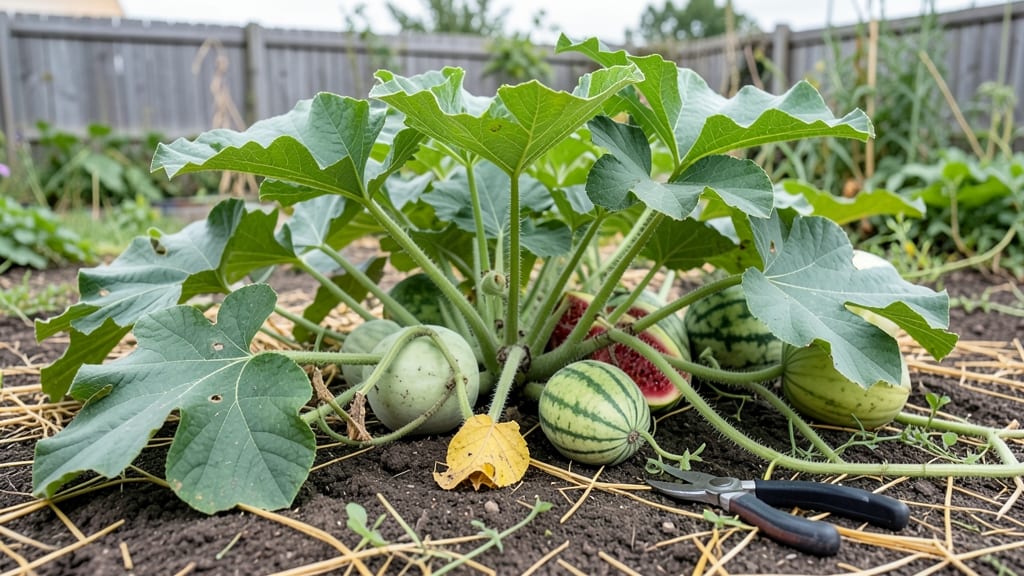
Trimming watermelon plants isn't just about keeping vines tidy—it's the secret to bigger, sweeter fruit that outshines store-bought melons every time. 🌱 I learned this the hard way after watching my first crop produce tiny, seedy melons because I ignored the vines' natural growth habits.
The right cuts redirect energy where it matters most: into fruit development, not endless runners.
The process is simpler than it sounds, and you only need three basic tools: sharp pruning shears, gloves, and a clear morning to work. Start by removing "suckers"—those small shoots growing between the main vine and fruit—when they're about 2-3 inches tall.
This forces the plant to focus its energy on fewer, larger melons instead of spreading thin. Timing matters too: do most pruning in the early morning when plants are hydrated and can recover quickly.
Within 2-3 weeks, you'll notice thicker vines and fewer but stronger fruit stems. Air circulates better, reducing the risk of powdery mildew, and the melons themselves grow 10-20% larger than untrimmed plants.
The first harvest is worth the effort—imagine slicing into a 20-pound heirloom instead of struggling with a 5-pounder. This method works for both bush and vine varieties, though vining types need more aggressive trimming.
Fair warning: over-pruning back too much can stress the plant, so always leave 3-4 main vines per plant. And if you're growing in a small space, skip the pruning entirely—watermelons are forgiving when given room to sprawl.
The key is balance: trim just enough to guide growth, not enough to stunt it. Now grab those shears and let's get to work!
📚 In This Guide
- What you need
- Instructions
- Tips and common mistakes
- Wrapping up and next steps
What you need
- ● Pruning shears or sharp bypass pruners – Choose clean, sterilized tools with sharp blades (4-6 inches long) to avoid crushing stems.
- ● Garden gloves – A pair of durable, cut-resistant gloves (e.g., nitrile-coated) to protect your hands from thorns and sap.
- ● Disinfectant (70% isopropyl alcohol or bleach solution) – 1 part bleach to 9 parts water to sterilize tools between cuts and prevent disease spread.
- ● Rake or hoe – For clearing debris and mulch around the base of plants.
- ● Watering can or hose – To hydrate plants before and after pruning (aim for 1-2 gallons per plant).
- ● Organic mulch (straw, grass clippings, or wood chips) – 2-3 inches thick to retain moisture and suppress weeds.
- ● Hand pruners (smaller than shears) – For delicate trimming of smaller vines or tendrils.
- ● Plant tie or soft twine – To gently support vines if needed (avoid tight binding!).
- ● Compost bin or bag – For disposing of trimmed vines (avoid leaving debris near the plant).
- ● Garden spray bottle with neem oil – 1 tsp neem oil per quart of water to treat cuts and prevent fungal infections.
- ● Notebook or phone – To sketch your plant’s structure before pruning for reference!
How to prune watermelon vines for maximum yield
Think of pruning as sculpting—not cutting for size, but shaping for strength. Here’s how to channel a watermelon’s energy into fewer, larger fruits.
🌿 Step 1: Remove Weak and Crowded Vines Early
Start when vines reach 12-18 inches long, using clean, sharp pruning shears to avoid tearing tissue. Look for thin, leggy growth or vines growing directly downward—they’re energy vampires, stealing resources from fruit development. Snip these back to the main stem, leaving a ½-inch stub to prevent disease entry.
This step is about balance. A healthy watermelon plant should have 3-5 main vines radiating from the central stem. If you see more than that, prioritize keeping the strongest, most upright ones. Here’s the thing—watermelons are heavy feeders, and overcrowded vines lead to small, seedy fruit. You’re not just pruning; you’re directing growth toward fewer, larger melons.
✂️ Step 2: Thin Side Shoots and Suckers
Once flowering begins, focus on secondary shoots (suckers) that emerge from the main vine. These are the small offshoots growing between the main stem and leaf nodes. Remove all but one or two per main vine, cutting at a 45-degree angle just above a leaf node. This encourages the remaining suckers to grow stronger, not weaker.
Watch for male flowers (long stems, no fruit potential) and female flowers (small melon at the base). Male flowers can be pruned entirely—they’re just pollen producers. Female flowers, however, are your priority. If you have more than 3-4 female flowers per vine, thin the weakest ones to leave space for the strongest. You’ll know a female flower is strong when its stem is thick and the melon starts forming within 3-5 days of blooming.
🌱 Step 3: Support and Prune for Airflow
As fruit begins to swell, install trellis supports (if not already in place) to elevate the vines off the ground. This reduces soil-borne diseases and makes pruning easier. Now, focus on leaf management: remove any leaves that shade the fruit or block airflow. Aim to keep at least 6 inches of space between leaves and the melon’s surface. Use your fingers to gently twist off yellowing or diseased leaves—no need for shears here.
This final prune is about fruit health, not just size. Watermelons need sunlight on their rinds to develop that signature color and sweetness. If you see a leaf growing directly over a melon, snip it immediately. And here’s a pro tip: if a vine has more than one melon per 12 inches, thin the smaller one. Watermelons compete for nutrients, and you want that energy going into one champion fruit per vine, not a cluster of underachievers.
Stop pruning 4-6 weeks before your first frost date. At this point, the plant’s energy should be fully committed to ripening existing fruit, not new growth.
Tips & tricks for pruning watermelon plants
Pruning watermelon vines might seem intimidating at first, but these key insights will help you sculpt your plants for maximum yield and health.
Timing is Everything: I can't stress enough how critical the timing is in Step 1. Those 12-18 inches are your golden window—wait too long, and you'll have a tangled mess of vines competing for resources. I've learned the hard way that leggy vines over 24 inches become stubborn energy thieves that never produce quality fruit. Check your plants every 3-4 days during early growth to catch that perfect moment.
Tool Technique: Your pruning shears are your most important tool here, but how you use them matters just as much as the cuts themselves. Always make clean cuts at a 45-degree angle just above a leaf node in Step 2—this prevents water from pooling and causing disease. I've ruined entire plants by leaving jagged cuts that became infection gateways. And remember, those ½-inch stubs in Step 1 aren't just decorative—they're disease barriers that let the plant heal properly.
Flower Identification: Here's what nobody tells you about those flowers in Step 2: male flowers actually have a tiny bud at the base where the flower attaches to the vine, while female flowers have that little watermelon-shaped swelling. This visual cue is your secret weapon for prioritizing which flowers to keep. I've seen gardeners waste energy on weak male flowers while strong female flowers went unnoticed—don't make that mistake. Focus on keeping only the thickest-stemmed female flowers showing melon development within 3-5 days.
Seasonal Awareness: That 4-6 week frost deadline in the final step might seem arbitrary, but it's actually a precise calculation. Watermelons need that final growth push to develop their signature sweetness and color. If you prune too late, you'll end up with underripe fruit. Mark your calendar now—most gardeners count back from their average first frost date to set their pruning cutoff. This timing ensures your plants have enough energy to ripen properly before cold weather sets in.
Pro Tips for Trimming Watermelon Plants
- Pruning watermelon vines might seem intimidating at first, but these key insights will help you sculpt your plants for maximum yield and health.
- Timing is Everything: I can't stress enough how critical the timing is in Step 1.
- Tool Technique: Your pruning shears are your most important tool here, but how you use them matters just as much as the cuts themselves.
Frequently asked questions
Got questions about trimming watermelon plants?
You’re not alone—this task can feel tricky, especially for beginners! Below, we’ve rounded up the most common queries to help you prune like a pro and maximize your harvest.
When is the best time to trim watermelon plants?
Trim your watermelon vines early and often—start when plants are about 12 inches tall (around 4–6 weeks after germination). Focus on removing suckers (those small shoots growing between the main stem and leaves) to redirect energy to fruit production. Avoid heavy trimming after flowering, as this can stress the plant.
Do I really need to remove all suckers? What if I leave a few?
Not all suckers need to go—leave 1–2 strong suckers near the base of the main vine to encourage branching. However, remove any growing above the first 6–8 inches of the main stem, as these compete for nutrients. Think of it like pruning a bush: you want a balanced, productive shape, not a wild tangle!
What if I trim too much? Can I damage the plant?
Over-trimming can stress watermelons, leading to fewer fruits or stunted growth. Never remove more than 1/3 of the plant’s foliage at once. If you’ve already gone overboard, don’t panic—keep an eye on the plant’s health. Reduce watering slightly and fertilize with a balanced mix (like 10-10-10) to help it recover.
Should I trim watermelon plants in hot or humid weather?
Avoid heavy pruning during peak heat (above 90°F) or high humidity, as open wounds can invite disease or pests. Opt for early morning or late afternoon sessions on cooler days. If you must trim in hot conditions, use sterilized pruners and apply a fungicide spray lightly to cuts to prevent infections.
Can I use the same pruning techniques for squash or cucumbers?
While the basics (removing suckers, promoting airflow) apply to many vining plants, watermelons are more sensitive. Squash and cucumbers often benefit from heavier pruning to control sprawl, but watermelons need more foliage to shade and protect developing fruit. Stick to selective trimming—watermelons reward patience!
Still unsure? Drop your question in the comments—we’re happy to help you grow a bountiful harvest!
Wrapping up and next steps
Trimming your watermelon plants isn’t just about keeping them tidy—it’s your secret weapon for bigger, sweeter fruit and a healthier vine! By focusing on removing suckers, pruning runners, and clearing dead leaves, you’re redirecting energy where it matters most: those juicy, ripened melons. 🍉✨
Ready to see the results? Grab your pruners and get started—your future harvest will thank you! Next up: Track your progress by marking pruned spots and observe how your plants thrive over the next few weeks. Happy gardening!