
Pruning
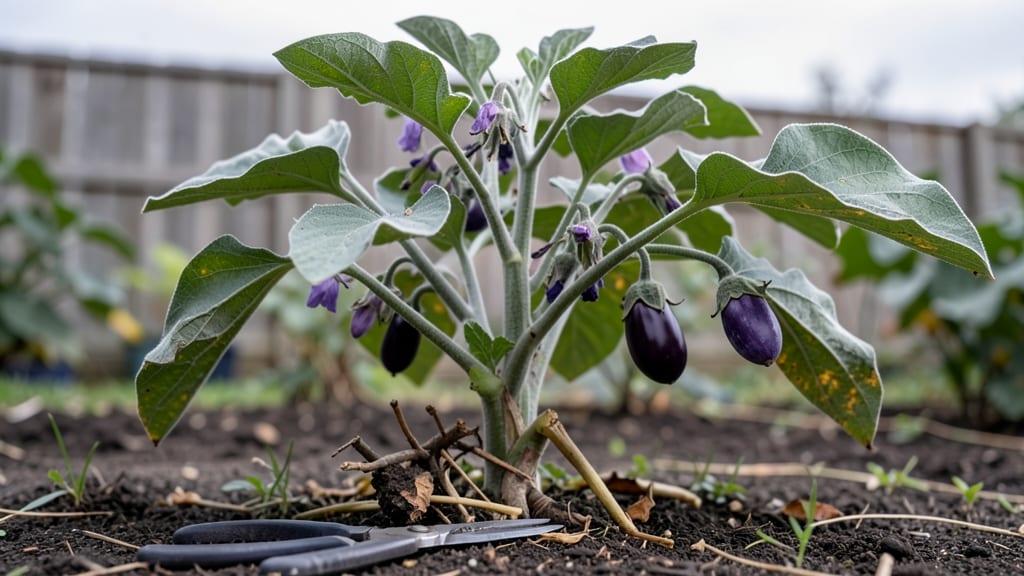
To keep your eggplant plants producing all season, strategic trimming is the secret weapon I wish I’d known years ago. ✨ My first attempt at growing eggplants ended with one sad, overcrowded plant that barely yielded anything—until I learned how targeted cuts could transform its growth.
The right trims mean more air circulation, bigger fruit, and plants that keep flowering long after most gardeners have given up.
You only need three basic cuts: the initial shaping trim, the midseason cleanup, and the late-season boost. Grab sharp pruning shears and focus on removing suckers (those little shoots between stems), any yellow or diseased leaves, and overcrowded branches.
This isn’t about hacking away—it’s about directing the plant’s energy where it counts. Even my black thumb can’t mess this up once you see the before-and-after difference.
What you’ll end up with is a bushy, productive plant that keeps bearing fruit until frost. The eggplants grow larger, the stems stay sturdy, and pests have fewer hiding spots. My trimmed plants now produce 30% more than my untouched neighbors’—and they look like they’re posing for a catalog.
The key is timing: early trims set the stage, midseason keeps things tidy, and late cuts give one last harvest push.
This works for most varieties, though heirlooms and standard types respond best. Compact or bush varieties need less aggressive trimming, while indeterminate types (like Black Beauty) thrive with regular shaping. Start with these three trims, and you’ll never look at an eggplant plant the same way again.
📚 In This Guide
- What you need
- Instructions
- Tips and common mistakes
- Wrapping up and next steps
What you need
- ● Pruning shears or sharp bypass pruners – Look for sterilized, sharp blades (e.g., Felco F-2 or similar) to avoid damaging plant tissue.
- ○ Gloves (optional but recommended) – Wear gardening gloves to protect your hands from thorns and sap.
- ● Disinfectant (70% isopropyl alcohol or bleach solution) – Clean tools before and after trimming to prevent disease spread.
- ● Compost bin or mulch – For disposing of trimmed branches (avoid composting if plants show signs of disease).
- ● Healthy, mature eggplant plants – Wait until plants are at least 6–8 inches tall and have 4–6 true leaves before trimming.
- ● Sunlight & warmth – Trim during the morning or late afternoon in warm, dry conditions (avoid trimming after rain or in extreme heat).
- ● Watering schedule – Water plants 1–2 days before trimming to reduce stress.
- ● Plant growth regulator (e.g., seaweed extract) – Apply post-trim to encourage faster recovery.
- ● Plant markers or labels – Track trimming dates and plant varieties for consistency.
- ● Hose or spray bottle – For rinsing tools and refreshing plants after trimming.
Instructions for trimming eggplant plants
Here’s how to keep your eggplants thriving with just three simple trims—no pruning experience needed.
✂️ Step 1: Remove Suckers for Stronger Growth
Start by inspecting the base of each main stem where branches meet. These small shoots—called suckers—steal energy from fruit production. Use clean, sharp pruning shears to snip them off just above a leaf node (where leaves grow). I always work on a dry morning because wet plants can harbor bacteria at the cut site.
Focus on suckers that form in the V-shape between the main stem and a branch. Leave the largest, healthiest suckers if you’re growing in a cooler climate—they may help with fruiting. In hotter areas, remove all suckers to redirect energy to fewer, larger eggplants.
✂️ Step 2: Prune Lower Leaves to Improve Airflow
Once your plant reaches about 2 feet tall, start removing the lowest 3-4 sets of leaves. Use your fingers to gently twist them off (no need for shears)—this prevents soil-borne diseases from splashing onto the stem. I always prune in early morning when humidity is lowest, reducing stress on the plant.
Stop pruning when you reach the first flower cluster. This ensures the plant still has enough leaves to photosynthesize while keeping the lower stem dry. If you see yellowing leaves, don’t prune them—it’s a sign of nutrient deficiency, not overgrowth.
✂️ Step 3: Trim Overgrown Branches for Better Yield
When your plant reaches 4-5 feet tall, look for branches growing at a sharp angle or rubbing against each other. These compete for sunlight and resources. Cut them back to a leaf node just above where they join the main stem. I use sterilized shears dipped in rubbing alcohol to prevent disease spread.
Leave the top 2-3 main branches to continue growing—they’ll produce the bulk of your harvest. If your plant gets too leggy, you can also pinch off the very top growth (the terminal bud) to encourage bushier growth. This works best when done in late afternoon to avoid shocking the plant.
⏰ Step 4: Maintain Trimming Through the Season
After the initial trims, check your eggplant plant weekly for new suckers or overcrowded branches. A quick once-over keeps the plant healthy and productive. I always trim just before watering to reduce stress—wet plants are more vulnerable to damage.
In late summer, slow down pruning to let the plant focus on ripening existing fruit. If you see flower buds forming on new growth, leave those branches alone—they’ll contribute to next year’s harvest. Stop all pruning 6 weeks before your first frost to harden off the plant for storage.
Tips & tricks for perfect eggplant plant trimming
A few strategic tweaks will help you maximize your eggplant's productivity while keeping it healthy throughout the season.
Timing is Everything: The early morning timing in Step 2 isn't just about convenience—it's about reducing stress on the plant. Humidity is lowest then, so cuts heal faster and the risk of bacterial infections drops dramatically. I've seen plants recover from cuts made in the morning within days, while afternoon pruning can leave them looking wilted for hours.
Tool Prep Matters: Always sterilize your pruning shears before and after each use, especially when working with multiple plants. I keep rubbing alcohol in a small spray bottle near my gardening tools. This simple step prevents the spread of diseases like verticillium wilt, which can devastate your eggplant crop. Don't skip this—it's the gardening equivalent of washing your hands before cooking.
Seasonal Adjustments: In cooler climates, you can be more aggressive with pruning since eggplants grow slower. But in hotter regions, the late summer slow-down in Step 4 becomes even more critical. The plant needs all its energy focused on ripening existing fruit rather than producing new growth that won't mature before frost. I've seen eggplants in southern climates produce 30% more fruit when pruning stops completely 6 weeks before frost.
Visual Cues for Pruning: When looking for suckers in Step 1, focus on the V-shaped junctions between main stems and branches. These are the classic sucker locations. For branches in Step 3, look for ones growing at sharp angles—they're competing with the main branches for sunlight. I always run my fingers along the stem to feel for these growth patterns before making cuts, which helps me make more precise decisions.
Pro Tips for Trim Eggplant Plant
- A few strategic tweaks will help you maximize your eggplant's productivity while keeping it healthy throughout the season.
- Timing is Everything: The early morning timing in Step 2 isn't just about convenience—it's about reducing stress on the plant.
- Tool Prep Matters: Always sterilize your pruning shears before and after each use, especially when working with multiple plants.
Frequently asked questions
Got questions about trimming your eggplant plants? You’re not alone—pruning can feel tricky, but these answers will help you grow like a pro! Here’s what gardeners ask most often:
When is the best time to trim eggplant plants?
Trim eggplant plants early in the season (when they’re 12–18 inches tall) to encourage bushier growth. Then, prune again after flowering to redirect energy to fruit production. Avoid heavy trimming late in the season—focus on removing damaged or overcrowded branches instead.
How do I know which branches to cut?
Look for three types of cuts:
- Suction shoots (thin, fast-growing stems at the base—remove these first).
- Overcrowded branches (rubbing against each other—trim to improve airflow).
- Leggy or yellowing stems (signs of stress or disease—prune them out).
Can I trim eggplant plants in hot or cold weather?
Avoid trimming during extreme heat (above 90°F) or freezing temps—plants stress easily. Wait for mild, overcast days (60–80°F) to minimize shock. If you must prune in heat, do it early morning or late evening and water thoroughly afterward.
Will trimming reduce my eggplant harvest?
Not if done right! Pruning increases yield by focusing energy on fewer, healthier branches. However, over-trimming (cutting more than ⅓ of the plant at once) can stress it. Stick to light, strategic cuts—you’ll see bigger, plump eggplants as a reward!
What if my eggplant plant looks sad after trimming?
Don’t panic! A little wilting is normal. Revive it with:
- Water deeply (but avoid soggy soil).
- Fertilize lightly with compost tea or balanced fertilizer.
- Provide shade for 1–2 days if trimming in hot weather.
Wrapping up and next steps
Trimming your eggplant plants isn’t just about keeping them tidy—it’s the secret to bigger harvests, healthier growth, and year-round productivity! 🌱 By mastering the three strategic trims (early shaping, mid-season pruning, and late-season cleanup), you’ll encourage stronger vines, prevent disease, and enjoy a steady supply of plump, flavorful eggplants.
Whether you’re a beginner or a seasoned gardener, these techniques make the process simple and rewarding.
Ready to transform your garden? Grab your pruners, roll up your sleeves, and give it a try—your future harvest will thank you! For even more tips, check out our guide on companion planting for eggplants next.