
Planting
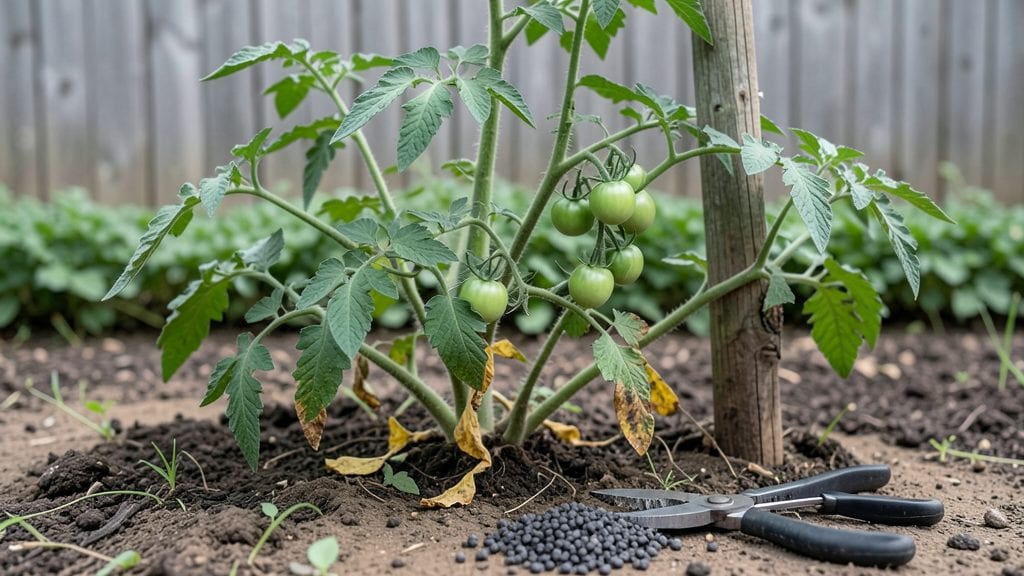
My tomato plants were a sad, droopy mess—until I learned these three simple tricks to revive wilted leaves naturally. 🌱 The fix isn’t complicated, but it’s exactly what most gardeners miss when their plants start struggling midseason.
Instead of panicking, you’ll diagnose the real problem and bring your plants back to full, vibrant life in just a few days.
Wilting in tomatoes usually comes down to three things: water stress, pest damage, or hidden disease. I’ve seen gardeners overwater, underwater, and everything in between—all while missing the obvious signs of aphids or fungal spots hiding on the undersides of leaves.
The good news? Each problem has a targeted solution, and none require harsh chemicals. You’ll need basic supplies you likely already have, like neem oil, pruning shears, and a spray bottle.
By the end of these steps, your plants will perk up with stronger stems and deeper green leaves. You’ll spot new growth within days, and the wilting will stop for good.
The key is acting fast—once you identify the root cause, the fix is straightforward. Let’s get those tomatoes thriving again before the next heatwave hits.
This works for container-grown tomatoes just as well as in-ground plants, and the same principles apply whether you’re dealing with cherry tomatoes or beefsteaks. The only difference? Bigger plants might need slightly more neem oil or a stronger pruning approach—but the core fix remains the same.
Root Causes Behind Wilted Tomato Leaves
Wilted tomato leaves can be frustrating, but understanding the why behind the problem is the first step to a full recovery. Below, we break down the most common culprits—each with a clear scientific explanation and actionable insights to help you diagnose and address the issue.
Tomatoes thrive in well-drained soil, and when roots sit in soggy conditions, they suffocate. Overwatering disrupts oxygen flow, leading to root rot (often caused by Phytophthora fungi or Pythium bacteria). Symptoms include yellowing leaves, wilting, and a foul odor at the base.
- Why it happens: Roots need oxygen to absorb nutrients. Excess water displaces air, triggering anaerobic conditions that weaken the plant.
- Actionable fix: Let the top 1–2 inches of soil dry between waterings. Amend heavy clay soil with compost or perlite to improve drainage.
Tomatoes are drought-tolerant but wilt when soil moisture drops too low. Heatwaves exacerbate the problem by increasing transpiration (water loss through leaves) faster than roots can replenish it.
- Why it happens: Cells lose turgor pressure (the "plumpness" that keeps leaves upright) when water is scarce, causing temporary wilting—even if the plant isn’t dead.
- Actionable fix: Water deeply at the base (1–1.5 inches per week) and mulch to retain moisture. Avoid overhead watering, which evaporates quickly.
A lack of key nutrients—especially potassium, nitrogen, or magnesium—weakens tomato plants, making leaves droop or curl. Deficiencies often appear as:
| Nutrient | Symptom | Cause |
|---|---|---|
| Potassium (K) | Yellowing leaf edges, weak stems | Poor soil or over-fertilizing with nitrogen |
| Nitrogen (N) | Pale, yellow leaves (starting at the bottom) | Exhausted soil or lack of organic matter |
| Magnesium (Mg) | Interveinal yellowing (veins stay green) | Compacted or acidic soil |
Actionable fix: Test soil pH (aim for 6.0–6.8) and amend with compost or a balanced fertilizer (e.g., 5-5-5). For magnesium, use Epsom salt (1 tbsp per gallon of water, sprayed on leaves).
Sap-sucking pests (like aphids, spider mites, or whiteflies) and diseases (e.g., Fusarium wilt) drain a plant’s energy, causing wilting. Look for:
- Sticky residue (honeydew) on leaves = aphids.
- Webbing or tiny yellow dots = spider mites.
- Wilted leaves that don’t recover even after watering = vascular diseases (often fatal).
Actionable fix:
- Blast pests off with water or use neem oil.
- Remove infected plants immediately to prevent spread.
- Rotate crops yearly to avoid soil-borne pathogens.
Tomatoes are sensitive to extreme conditions. Sudden temperature swings, strong winds, or high humidity can cause wilting by disrupting photosynthesis or promoting fungal growth.
- Why it happens: Stress triggers the plant’s abscisic acid hormone, which signals stomata (leaf pores) to close—reducing water uptake.
- Actionable fix:
- Provide shade cloth (30–50%) during heatwaves.
- Use windbreaks (e.g., burlap screens) in exposed areas.
- Space plants 18–24 inches apart for airflow.
Pro Tip: 💡 Not all wilting is permanent! Gently tug a leaf—if it snaps (not bends), the plant is likely dead. If it bounces back, it’s just thirsty or stressed. Act fast to revive it.
Quick Fixes for Wilted Tomato Plants
Reviving your tomato plant doesn’t have to be a mystery—most wilting issues have simple, natural solutions. Below, we’ve mapped out practical fixes for common causes, along with prevention tips to keep your plants thriving.
Whether your tomatoes are drooping from stress, disease, or environmental factors, these steps will help you turn things around fast.
Signs: Yellowing leaves, mushy stems, or soil that stays soggy for days.
How to Fix It:
- 🚰 Stop Watering Immediately
- Let the top 1-2 inches of soil dry out before watering again. Overwatering suffocates roots by cutting off oxygen.
- 🏗️ Improve Drainage
- If your pot lacks drainage holes, repot your tomato into a container with holes. For in-ground plants, amend the soil with perlite or coarse sand to loosen compacted earth.
- 🌱 Prune Damaged Roots (If Needed)
- Gently remove the plant from the soil and trim any black, mushy roots with sterilized scissors. Replant in fresh, well-draining soil.
💡 Prevention Tips:
- Water deeply but infrequently—aim for 1-1.5 inches per week (adjust for rain).
- Use self-watering pots or drip irrigation to avoid soggy soil.
- Choose well-draining soil mixes (e.g., 60% potting soil + 30% compost + 10% perlite).
Signs: Crispy leaf edges, wilting that worsens in the afternoon, or soil pulling away from pot sides.
How to Fix It:
- 💦 Give It a Deep Watering
- Water until it drains from the bottom, then wait 30 minutes to let excess soak in. Repeat if the soil is bone-dry.
- 🌿 Provide Shade During Peaks
- Move potted tomatoes to a shadier spot (like under a 30% shade cloth) for 2-3 hours during the hottest part of the day.
- 🍃 Mulch to Retain Moisture
- Spread 2-3 inches of straw or wood chips around the base (but not touching the stem) to slow evaporation.
💡 Prevention Tips:
- Water in the early morning to reduce evaporation.
- Group plants together to create a microclimate with higher humidity.
- Avoid plastic pots—they overheat roots. Opt for terracotta or fabric pots instead.
Signs: Sticky residue on leaves, tiny webs, or leaves curling upward.
How to Fix It:
- 🚿 Blast Off Pests with Water
- Use a strong spray nozzle to rinse pests from leaves (do this early in the day so leaves dry quickly).
- 🍋 Spray Homemade Pest Control
- Mix 1 tsp neem oil + 1 tsp dish soap + 1 quart water. Spray every 3-4 days until pests vanish.
- 🐝 Introduce Beneficial Insects
- Release ladybugs or lacewings (available at garden centers) to eat pests naturally.
💡 Prevention Tips:
- Inspect new plants before bringing them home.
- Encourage predatory insects by planting marigolds or basil nearby.
- Remove infected leaves immediately to stop the spread.
Signs: Brown spots with yellow halos, white powdery coatings, or wilting in damp conditions.
How to Fix It:
- 🌿 Prune and Dispose of Infected Parts
- Cut off yellow or spotted leaves and dispose of them in the trash (not compost).
- 🍄 Apply Baking Soda Spray
- Mix 1 tbsp baking soda + 1 tsp oil + 1 quart water. Spray every 7-10 days to prevent spores.
- 🌞 Improve Airflow
- Space plants 18-24 inches apart and stake tomatoes to keep foliage off the ground.
💡 Prevention Tips:
- Water at the base (avoid wetting leaves).
- Rotate crops—don’t plant tomatoes in the same spot yearly.
- Use copper fungicide as a preventive spray in humid climates.
Signs: Roots circling the pot, stunted growth, or wilting even when watered.
How to Fix It:
- 🏺 Upgrade to a Larger Pot
- Move your tomato to a container 2-3 inches wider with fresh, nutrient-rich soil.
- 🔪 Gently Loosen Roots
- If roots are tightly bound, tease them apart before replanting to encourage outward growth.
💡 Prevention Tips:
- Repot every 2 years or when roots emerge from drainage holes.
- Choose pots 12+ inches deep for determinate varieties (bush tomatoes) and 18+ inches for indeterminate (vining) types.
Signs: Sudden wilting after a cold snap or strong winds, especially in young plants.
How to Fix It:
- 🏠 Protect from Extreme Conditions
- Use row covers or frost blankets for cold snaps. For wind, stake plants securely or use windbreaks.
- 🌿 Acclimate Gradually
- If moving plants outdoors, harden them off over 7-10 days by exposing them to outdoor conditions slowly.
💡 Prevention Tips:
- Plant after the last frost date in your zone.
- Choose wind-resistant varieties like ‘Solar Fire’ or ‘Mountain Merit’ if you’re in a breezy area.
Final Pro Tip: 🎯 Act fast! The sooner you address wilting, the better your tomato’s chances of recovery. Most plants bounce back within 3-5 days with the right care—so don’t wait! 🍅✨
Frequently asked questions
Why do my tomato leaves suddenly wilt even after watering?
This usually signals root stress from overwatering (causing root rot) or underwatering (dry soil pulling moisture from leaves). Check the soil: if it's soggy, stop watering and improve drainage. If bone-dry, water deeply at the base.
Can I save a tomato plant with brown, crispy leaf edges?
Yes! This often means underwatering or nutrient burn. Water thoroughly until it drains, then mulch with straw to retain moisture. For nutrients, use Epsom salt spray (1 tbsp/gallon) for magnesium deficiency or a balanced fertilizer.
What’s the fastest way to fix aphids causing wilting?
Blast them off with water first, then spray a mix of 1 tsp neem oil + 1 tsp dish soap + 1 quart water. Repeat every 3-4 days until gone. For heavy infestations, release ladybugs as natural predators.
Is wilting always reversible in tomato plants?
Not always—if leaves are brown and crispy (not just wilted), the plant may be dead. Test by gently tugging a leaf: if it snaps (not bends), it’s beyond saving. For wilted-but-flexible leaves, act fast with water/drainage fixes.
How do I prevent wilting in container-grown tomatoes?
Use pots with drainage holes and terracotta material (not plastic). Water deeply 2-3 times weekly (adjust for heat). Add 2-3 inches of mulch and avoid overhead watering to prevent fungal stress.