
Fertilization
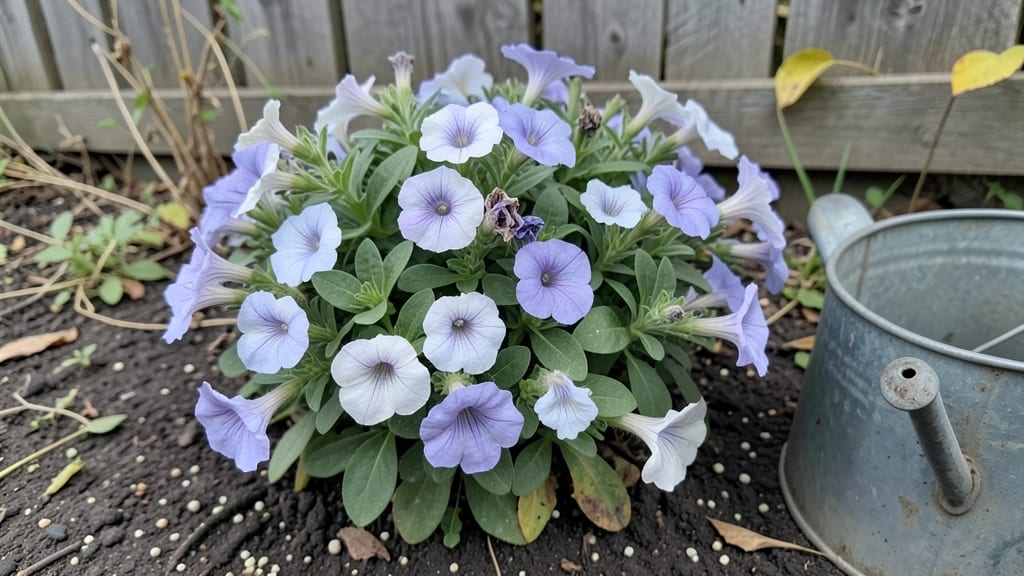
The right petunia plant food turns floppy stems into a nonstop parade of blooms that lasts from June until frost. I learned this the hard way after my first season—my petunias put out a few flowers, then gave up like a tired gardener at the end of a long day.
The fix? A feeding schedule that matches their growth stages, not just a random handful of fertilizer.
Petunias crave balanced nutrition with a little extra phosphorus for those showy flowers, but they’ll burn fast if you overdo it. Start with a 10-10-10 or 5-10-5 fertilizer at planting, then switch to a bloom-boosting formula (like 7-9-5) every 2-3 weeks once buds form.
Organic options—like compost tea or fish emulsion—work too, but they need more frequent applications to keep up with hungry plants.
By mid-summer, you’ll see the difference: stems thicken, leaves stay glossy, and blooms multiply like they’re on a mission. The key is consistency—petunias don’t like feast-or-famine feeding.
Too much fertilizer? Yellow leaves or crispy edges. Too little? Leggy stems and sparse flowers. Get it right, and your petunias will outshine every neighbor’s garden.
This formula works for hanging baskets, window boxes, or in-ground plantings—just adjust watering if containers dry out faster. Once you master it, you’ll never buy petunias from the nursery again. Let’s get those flowers popping!
📚 In This Guide
- What you need
- Instructions
- Tips and common mistakes
- Wrapping up and next steps
What you need
- ● Base Fertilizer: 1 cup of balanced granular fertilizer (e.g., 10-10-10 NPK ratio) or
- ● 1 cup of slow-release organic fertilizer (like bone meal or composted manure)
- ● Water: 1 gallon (for liquid feed) or as needed for soil application
- ● Measuring tools: Kitchen scale or measuring cups/spoons for precision
- ● Garden trowel or small shovel (for soil incorporation)
- ● Watering can or hose with a gentle spray nozzle
- ● Bloom-boosting additives: ½ cup fish emulsion (for extra nitrogen and micronutrients)
- ● 1 tbsp Epsom salt (magnesium for vibrant blooms)
- ● 1 tsp kelp meal (growth hormones and stress relief)
- ● pH testing kit (to ensure soil is in the ideal 6.0–7.0 range)
- ● Glove and mask (if handling granular fertilizers or compost)
- ● Mulch (straw or shredded leaves) (to retain moisture and nutrients)
Step-by-Step instructions for feeding petunias for maximum blooms
Here's how to keep your petunias flowering nonstop with the right feeding schedule and techniques.
Prepare the Soil Before Planting for Nutrient Readiness
Petunias thrive when planted in well-amended soil rich in organic matter. Before adding your petunias, mix the 5 gallons of compost evenly into the top 12 inches of soil in each planting area. This ensures roots have immediate access to nutrients without competing with weeds. I like to work the compost in a few days before planting so it has time to settle and integrate with the native soil.
If your soil feels heavy or clay-like, add 2 gallons of perlite per planting area to improve drainage. Petunias hate soggy roots, and this step prevents future feeding problems caused by poor soil structure. Test the soil moisture after mixing—it should hold together when squeezed but not form a tight clump.
Apply a Slow-Release Fertilizer at Planting Time
Use the 10-10-10 fertilizer (1 cup per plant) mixed into the planting hole before setting your petunia. The balanced ratio supports both foliage and flower development without favoring one over the other. I like to sprinkle half the recommended amount around the root ball and half below it to create a nutrient-rich zone where roots will establish.
Water the planting area thoroughly after adding fertilizer to help it dissolve and distribute evenly. This initial feeding gives petunias a strong start, but don't expect instant blooms—focus on root development first. You'll see the difference in 2-3 weeks when new growth appears thicker and more vibrant.
Feed Weekly with Liquid Bloom Booster During Active Growth
Once your petunias show 3-4 sets of true leaves, switch to the fish emulsion (1 tablespoon per gallon of water) every 7 days. This high-nitrogen formula in early growth stages builds strong stems and leaves, while the phosphorus and potassium later in the season encourage abundant blooms. Always apply in the early morning to avoid leaf burn from evaporation.
Water the soil first to prevent fertilizer from sitting on leaves. I use a watering can with a fine rose attachment to distribute the liquid evenly around the base, avoiding the foliage entirely. You'll notice leaves darkening slightly within 3-5 days—this is normal and indicates healthy uptake.
Shift to a High-Phosphorus Formula When Buds Form
When you see flower buds forming (usually 4-6 weeks after planting), switch to the 5-10-5 fertilizer (1 tablespoon per gallon of water). The extra phosphorus triggers more blooms and keeps existing flowers vibrant longer. Apply this mixture every 10 days during the blooming season to maintain peak performance.
Don't skip this step—petunias respond dramatically to phosphorus. You'll see buds opening faster and flowers lasting 2-3 days longer than before. If you notice buds dropping before opening, your plants need more phosphorus. Reduce nitrogen at this stage to prevent leafy growth at the expense of flowers.
Maintain with Monthly Deep Feeding for Season-Long Color
Every 4 weeks, apply the slow-release granules (1/4 cup per plant) around the base, keeping it 2 inches away from stems. This provides a steady nutrient supply without risk of overfeeding. Water immediately after application to activate the granules and prevent them from sticking to leaves.
Throughout the season, watch for signs of nutrient deficiency: yellowing leaves (nitrogen), sparse blooms (phosphorus), or weak stems (potassium). Adjust your feeding schedule accordingly. With consistent care, your petunias will bloom continuously from spring until frost, creating a nonstop color show in your garden.
Tips & tricks for petunia plant food success
A few simple adjustments can transform your petunias from average to show-stopping. Here's what I've learned after years of trial and error in my garden.
Soil Preparation Matters: Don't rush the soil amendment process in Step 1. Working the 5 gallons of compost into the top 12 inches of soil a few days before planting allows beneficial microbes to activate and creates an ideal environment for root establishment. I've found that adding a handful of mycorrhizal fungi to the compost mix further enhances root development, though this is optional. The key is ensuring your soil holds moisture but doesn't become waterlogged—petunias are particularly sensitive to soggy conditions.
Fertilizer Application Technique: When applying the 10-10-10 fertilizer in Step 2, I recommend using a small hand trowel to create pockets in the soil where you can place the granules. This targeted approach prevents fertilizer from washing away during watering and ensures roots encounter nutrients immediately. For the fish emulsion in Step 3, I've found that mixing it with a bit of cloudy water from my aquarium (if available) enhances its effectiveness—this is completely optional but gives me an extra boost.
Timing is Everything: The 7-day schedule for fish emulsion in Step 3 works best when applied consistently. However, if you notice new growth slowing down, you can safely reduce to every 10 days without harming the plants. When switching to the 5-10-5 fertilizer in Step 4, I always apply it on an overcast day or in the early morning to prevent leaf burn. The 4-week schedule for slow-release granules in Step 5 provides perfect timing for seasonal maintenance—just remember to adjust if you're in a particularly hot or cold climate.
Visual Cues for Healthy Growth: In Step 3, when you see leaves darkening slightly within 3-5 days after applying fish emulsion, that's actually a good sign—the plants are absorbing nutrients efficiently. For Step 4, watch for buds that appear plump and firm rather than shriveled; these will open into the most vibrant blooms. The 2-3 day extension in flower life mentioned in Step 4 becomes especially noticeable when you consistently follow the phosphorus-rich feeding schedule.
Pro Tips for Petunia Plant Food
- A few simple adjustments can transform your petunias from average to show-stopping.
- Soil Preparation Matters: Don't rush the soil amendment process in Step 1.
- Fertilizer Application Technique: When applying the 10-10-10 fertilizer in Step 2, I recommend using a small hand trowel to create pockets in the soil where you can place the granules.
Frequently asked questions
Got questions about keeping your petunias blooming like crazy? We’ve got answers!
Here are the most common queries about petunia plant food—plus expert tips to avoid wilted dreams and maximize those vibrant blooms.
How often should I feed my petunias?
Feed your petunias every 2–4 weeks during the growing season (spring to fall) with a balanced liquid fertilizer (like 10-10-10 or 20-20-20). Once blooms start fading, switch to a low-phosphorus formula (e.g., 5-10-10) to encourage more flowers, not leaves. Pro tip: Always water the soil first to prevent root burn!
Can I overfeed petunias?
Overfeeding—especially with high-nitrogen fertilizers—can burn roots or trigger leafy growth over blooms. Yellowing leaves or wilting? Flush the soil with water and hold off on feeding for 2–3 weeks. Stick to the label’s dosage, and never fertilize in extreme heat or drought.
What’s the best natural petunia plant food?
Skip the chemicals! Try these DIY boosters:
- Compost tea: Brew compost in water for 24 hours, strain, and use as a foliar spray or soil drench.
- Banana peels: Chop and bury near roots (potassium = more blooms!).
- Epsom salt: 1 tablespoon per gallon of water monthly for magnesium (prevents yellowing).
Why aren’t my petunias blooming after fertilizing?
Bloom drought? Check these fixes:
- Too much nitrogen = lush leaves, no flowers. Switch to a phosphorus-rich fertilizer (e.g., 5-10-5).
- Deadheading isn’t happening? Snip spent blooms daily to redirect energy to new flowers.
- Not enough sunlight? Petunias need 6+ hours daily—move them to a sunnier spot!
- Stress (drought, pests, or root issues) halts blooming. Water deeply and inspect for aphids or whiteflies.
Can I use the same fertilizer for petunias and veggies?
Not ideal! Petunias thrive on balanced or phosphorus-heavy formulas, while veggies (like tomatoes) need higher nitrogen early on. Mixing fertilizers can confuse your plants. For containers, use a slow-release granular fertilizer (like Osmocote) to avoid overfeeding. Pro move: Label your containers to track feeding schedules!
Wrapping up and next steps
Choosing the right petunia plant food is your secret weapon for a garden bursting with color! 🌸 Whether you opt for organic compost, balanced synthetic fertilizers, or homemade concoctions, the key is consistency and timing—feed your petunias every 2-3 weeks during their blooming season.
With the right nutrition, your petunias will reward you with show-stopping flowers that last all summer.
Ready to transform your garden? Grab your fertilizer, roll up your sleeves, and give your petunias the love they deserve. Start feeding today—your blooms will thank you! 🌿✨