
Diseases
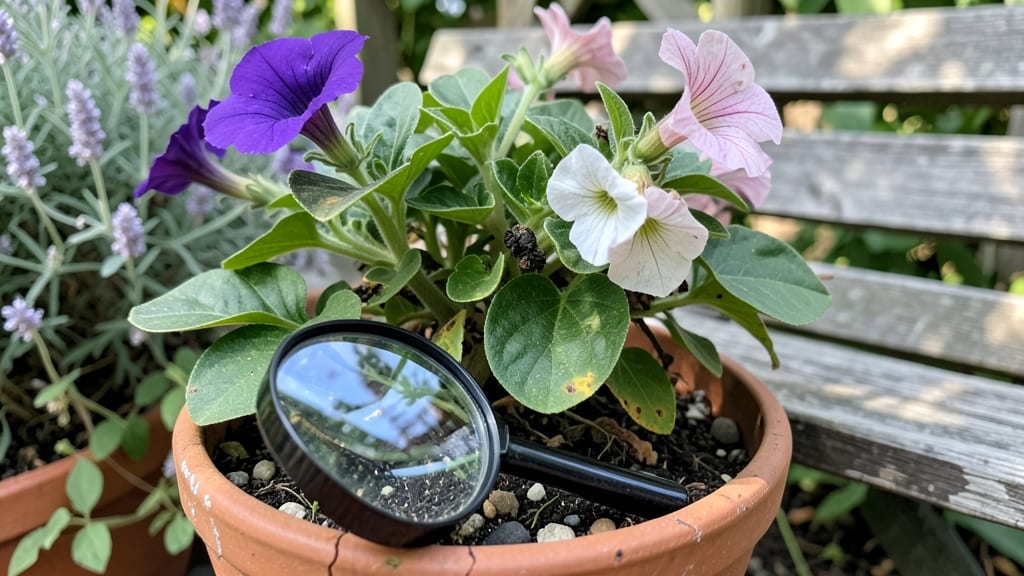
Petunia plant diseases can turn your vibrant summer blooms into a sad, spotted mess if you don't catch them early. 🌿 I've seen entire borders collapse from powdery mildew and bacterial wilt in just a few weeks—until I learned the warning signs and quick fixes that keep petunias thriving all season.
The biggest culprits are fungal infections like powdery mildew (that white dust on leaves) and botrytis blight (brown, mushy stems), plus bacterial wilt that clogs stems and causes sudden collapse.
Most start with poor airflow or overwatering—simple fixes that make all the difference. I'll show you exactly how to spot these early and stop them before they spread.
With the right treatment—neem oil sprays, copper fungicides, or just adjusting your watering—you'll save your plants and keep those cascading blooms looking fresh. The key is acting fast: once disease takes hold, even healthy petunias can't recover. I'll walk you through every step, from diagnosis to prevention.
This works for container petunias, hanging baskets, or in-ground beds—anywhere you grow them. The same principles keep your plants disease-free whether you're dealing with a single pot or a full border. Let's get your petunias back to their best.
Root Causes Of Petunia Struggles
Petunias are resilient, but their health can take a nosedive when environmental or biological factors align just right. Understanding why these diseases strike is the first step to protecting your blooms.
Below, we break down the key culprits—from sneaky pathogens to care mistakes—that turn vibrant petunias into sad, spotted, or wilted plants.
Petunias thrive in well-aerated soil with space to breathe. When roots get cramped—whether from overplanting, thick mulch, or compacted soil—moisture lingers, creating a perfect breeding ground for fungal diseases like Botrytis blight (gray mold) and Fusarium wilt.
- Why it happens:
- Stagnant air traps spores near leaves and stems.
- Excess moisture weakens plant defenses, allowing pathogens to invade through wounds (like pruning cuts).
- High humidity (common in greenhouses or shaded gardens) amplifies spore germination.
- Actionable fix:
- Space petunias 12–18 inches apart to improve airflow.
- Avoid heavy mulch near stems—opt for 2–3 inches of organic mulch (like straw) away from the base.
- Prune regularly to remove crowded or diseased foliage (sterilize shears with rubbing alcohol between cuts).
Petunias despise wet feet—their roots rot when submerged, while drought stress weakens them, making them susceptible to infections.
The most common offenders? - Fungal diseases (Phytophthora, Pythium) thrive in soggy soil. - Bacterial wilts (Ralstonia solanacearum) exploit stressed plants with poor vascular function.
- Why it happens:
- Overwatering (especially overhead) keeps leaves damp for hours, giving fungi like Alternaria a foothold.
- Underwatering triggers osmotic stress, reducing the plant’s ability to fight off invaders.
- Poor drainage in containers or garden beds leads to root asphyxiation.
- Actionable fix:
- Water early in the day (before 10 AM) to allow foliage to dry.
- Use drip irrigation or soaker hoses to avoid wetting leaves.
- Ensure pots have drainage holes and raise them off the ground to prevent waterlogging.
- Avoid letting soil stay soggy—stick your finger 1 inch deep; if damp, wait to water.
Diseases don’t just appear—they hitch a ride on tools, soil, or neighboring plants. Petunias are especially vulnerable to:
- Fungal spores (Septoria leaf spot) from infected seeds, soil, or windborne debris.
- Bacterial infections (Xanthomonas) spread via contaminated pruners, gloves, or even rain splash.
- Why it happens:
- Infected plant debris left in the garden acts as a spore reservoir for years.
- Reusing tools without sterilization transfers pathogens between plants.
- Wind or water splashes spores onto healthy leaves, creating entry points.
- Actionable fix:
- Clean tools with 70% isopropyl alcohol or a 10% bleach solution between plants.
- Remove and destroy infected leaves/debris immediately (don’t compost them!).
- Rotate crops—avoid planting petunias in the same spot yearly (fungi persist in soil).
- Disinfect containers with a 1:9 bleach-water mix before reuse.
Petunias are temperamental—too hot, too cold, or sudden swings weaken their immune system. Heat stress (above 90°F) and cold snaps (below 50°F) create openings for diseases like:
- Powdery mildew (Erysiphe cichoracearum) thrives in warm, humid nights.
- Verticillium wilt spreads faster in stressed plants during temperature fluctuations.
- Why it happens:
- High heat increases transpiration, making leaves more susceptible to fungal spores.
- Cold stress disrupts cell membrane integrity, making plants more vulnerable to bacterial entry.
- Nighttime dew on stressed plants provides ideal conditions for spore germination.
- Actionable fix:
- Provide afternoon shade in hot climates (use shade cloth if temps exceed 90°F).
- Mulch heavily (3–4 inches) to regulate soil temperature.
- Avoid fertilizing during extreme heat—focus on deep watering instead.
- Hardening off seedlings gradually prevents cold shock.
Quick Fixes for Petunia Problems
Reviving your petunias depends on catching issues early and acting fast. Below are targeted solutions for the most common diseases, along with prevention tips to keep your blooms thriving. Think of this as your petunia first-aid kit—simple, effective, and easy to follow!
Fungal infections like powdery mildew, gray mold, and root rot thrive in damp conditions. The good news? They respond well to copper-based fungicides and proper airflow.
🔥 Powdery Mildew: The Fluffy White Threat Fix it:
- Remove infected leaves 🔪—snip off heavily mildewed foliage with clean scissors to stop the spread.
- Spray with neem oil or baking soda mix 🥄 (1 tsp baking soda + 1 quart water + a drop of dish soap).
Reapply every 7–10 days. - Boost airflow ⛵—space plants 12–18 inches apart and prune crowded stems.
Prevent it: ✅ Water at the base (never overhead) to keep leaves dry. ✅ Avoid nighttime watering—fungi love moisture in cool evenings. ✅ Rotate plants every few weeks for even sunlight exposure.
💀 Gray Mold (Botrytis): The Silent Killer
Fix it:
- Prune infected stems 🌱—cut back to healthy tissue (1–2 inches below the lesion).
- Apply a fungicide 💊—copper fungicide or a mix of 1 part hydrogen peroxide (3%) to 10 parts water (spray in the morning).
- Improve drainage 🌧️—ensure pots have drainage holes and use well-aerated soil.
Prevent it: ✅ Space plants widely to reduce humidity around leaves. ✅ Deadhead regularly to prevent trapped moisture. ✅ Avoid mulching too close to stems—keep it 2–3 inches away.
🌱 Root Rot: The Underground Enemy
Fix it:
- Check the roots 👀—healthy roots are firm and white; rotten ones are mushy and brown.
- Repot in fresh soil 🏺—trim away blackened roots, then replant in sterilized potting mix with perlite or sand.
- Hold off on watering 💧—let the soil dry out completely for 2–3 days before resuming.
Prevent it: ✅ Use pots with drainage holes—no exceptions! ✅ Water only when the top inch is dry—stick your finger in the soil to check. ✅ Avoid over-potting—petunias hate soggy feet.
Bacterial infections (like bacterial wilt or leaf spot) spread through water and tools. Copper sprays and sterilization are your best defenses.
💦 Bacterial Leaf Spot: The Spotted Menace
Fix it:
- Remove infected leaves immediately 🚫—don’t compost them; throw them away.
- Spray with copper fungicide 🛡️—follow label instructions (usually every 7–14 days).
- Sterilize pruners 🧼—wipe with rubbing alcohol between cuts.
Prevent it: ✅ Water in the morning so leaves dry quickly. ✅ Avoid overhead sprinklers—use drip irrigation or a watering can with a spout. ✅ Rotate crops if growing petunias in the same spot yearly.
🌡️ Bacterial Wilt: The Sudden Wilting
Fix it:
- Pull up severely infected plants 🚜—this disease is often fatal and spreads fast.
- Disinfect the soil 🔥—solarize the bed (cover with clear plastic for 4–6 weeks) or use a hydrogen peroxide soak (1 part peroxide to 20 parts water).
- Replace contaminated soil if possible—mix in compost or fresh potting mix.
Prevent it: ✅ Buy disease-resistant varieties (look for ‘Wave’ or ‘Mitchell’ petunias). ✅ Rotate planting locations every 2–3 years. ✅ Avoid working with plants when they’re wet—bacteria spreads via tools and hands.
Sometimes, aphids, spider mites, or slugs mimic disease symptoms. Here’s how to tackle them:
🕷️ Slugs & Snails: The Nighttime Chewers
Fix it:
- Set up beer traps 🍺—bury a shallow dish filled with beer; slugs crawl in and drown.
- Use iron phosphate bait 🍽️ (like Sluggo)—safe for pets and plants.
- Handpick at night 🌙 with a flashlight and drop them in soapy water.
Prevent it: ✅ Add copper tape around pots—gives slugs a mild electric shock. ✅ Mulch with coarse material (like pine needles) to deter hiding spots. ✅ Remove hiding spots (boards, rocks) near your petunias.
If your plant is weak but not dead, try these emergency boosts:
- Fertilize lightly 🌱—use a balanced 10-10-10 fertilizer (half-strength) to encourage new growth.
- Trim back 💥—cut stems by ⅓ to promote bushier, healthier regrowth.
- Move to brighter light ☀️—petunias need 6+ hours of sun daily; move them closer to a window or under grow lights if indoors.
- Test your soil 📊—petunias prefer slightly acidic to neutral pH (6.0–7.0).
- Deadhead regularly ✂️—this encourages more blooms and reduces disease buildup.
- Rotate containers 🌀—if growing in pots, turn them weekly for even sunlight exposure.
- Quarantine new plants 🏝️—keep them separate for 2 weeks to spot early signs of trouble.
Remember: The key to happy petunias is consistency. Check your plants weekly for early signs of stress, and act fast—most issues are reversible if caught early! 🌸
Frequently asked questions
What does powdery mildew look like on petunias?
Powdery mildew appears as a white, powdery coating on the upper and lower leaf surfaces, often starting between veins. Over time, the affected areas turn yellow or brown and may curl or distort. The key difference from other diseases is that it looks like dust rather than watery spots or mold.
Can I save a petunia plant with bacterial wilt?
Once bacterial wilt takes hold, the plant is usually beyond saving. Look for sudden wilting (even when soil is moist) and yellowing leaves that start at the bottom. The best course is to remove the infected plant immediately and disinfect the area to prevent spread to other petunias.
How often should I spray my petunias with fungicide?
For prevention, apply a copper-based fungicide every 2-3 weeks during humid seasons or after heavy rain. If treating an active infection, follow the product instructions (usually weekly) until symptoms disappear, then switch to a preventative schedule.
Why do my petunia leaves turn yellow?
Yellowing petunia leaves usually indicate overwatering, nutrient deficiency, or disease. Check the roots first—healthy roots are firm and white. If roots are brown/mushy, you have root rot. If roots are fine but leaves yellow from the bottom up, it may be nitrogen deficiency or bacterial wilt.
Are there petunia varieties that resist diseases?
Yes! Look for disease-resistant hybrids like 'Wave' or 'Mitchell' petunias, which are bred to handle powdery mildew and bacterial wilt better. These varieties often have thicker leaves and stronger stems that resist fungal spores and bacterial invasions more effectively than traditional types.