Diseases
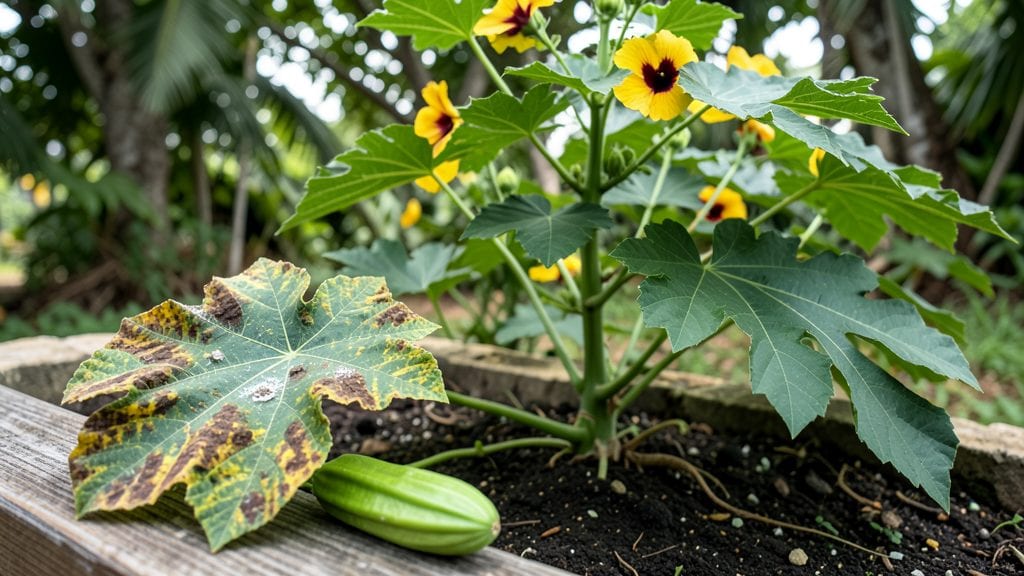
Okra plant diseases can turn a thriving crop into a sad, wilted mess if you don’t catch them early. 🌱 I’ve seen powdery mildew turn glossy green leaves into dusty white sheets—and once it starts, it spreads like wildfire.
The key is knowing what to look for before your plants show symptoms, so you can stop the problem before it ruins your harvest.
Most okra diseases—like bacterial blight or fungal leaf spots—start with too much moisture or poor airflow. My biggest mistake? Ignoring the first signs because I thought it was just heat stress. But once you spot those dark, water-soaked patches or fuzzy white coatings, it’s already too late for quick fixes.
Prevention is easier than cleanup, and it starts with spacing plants properly and avoiding overhead watering.
With the right approach, you can save your okra—even when diseases strike. I’ve pulled plants back from the brink using copper sprays, neem oil, and simple pruning tricks. The goal isn’t perfection; it’s keeping your crop alive long enough to produce those crisp, edible pods.
Let’s get into the tools and steps that actually work for home gardens.
This isn’t just about treating problems—it’s about building resilience in your okra so it fights back. Whether you’re dealing with humid summers or sudden downpours, these strategies adapt to your climate. The first step? Learning to spot trouble before it takes over. Ready to protect your plants?
Root Causes Of Okra Woes
Okra plants, with their vibrant green pods and resilience, can still fall prey to a variety of diseases if conditions aren’t just right. Understanding why these issues arise is the first step to protecting your garden.
Let’s break down the key factors that turn your thriving okra into a struggling one.
Fungal diseases thrive when moisture lingers, and okra’s tropical origins make it especially vulnerable. Here’s why fungi become a problem:
- Excess Moisture & Humidity Fungi like Fusarium and Phytophthora love damp conditions. Overwatering, poor drainage, or heavy morning dew creates the perfect breeding ground. 💡 Pro Tip: Space plants properly (18–24 inches apart) to improve airflow and reduce humidity near the foliage.
- Warm, Stagnant Air Okra grows best in heat, but stagnant, warm air traps spores. Fungal spores spread easily in still, humid environments, leading to target spot or powdery mildew. ✨ Solution: Use a fan on low to circulate air around plants without damaging them.
- Weakened Plant Defenses Stressed okra (from drought, nutrient deficiencies, or transplant shock) has lower resistance to fungi. 🌡️ Watch for: Yellowing leaves or stunted growth—early signs the plant is struggling.
Bacterial diseases like bacterial blight or leaf spot often strike when wounds or splashing water introduce pathogens. Here’s how it happens:
- Rain or Overhead Watering Splashing water from rain or irrigation carries bacteria from soil or infected debris onto leaves, creating entry points. 🔥 Avoid: Watering from above—use drip irrigation or soaker hoses instead.
- Poor Sanitation in the Garden Old plant debris, contaminated tools, or even wild okra plants can harbor bacteria. 🔪 Clean up: Remove infected leaves immediately and sterilize pruners with rubbing alcohol (70% or higher).
- High Nitrogen, Low Potassium Too much nitrogen (common in fresh manure or over-fertilizing) weakens cell walls, making plants more susceptible to bacterial invasion. 📊 Balance it out: Use a 5-10-10 fertilizer (low nitrogen, higher potassium) to strengthen defenses.
Okra isn’t just battling microbes—environmental factors can create the perfect storm for disease:
- Extreme Temperature Swings Sudden heatwaves or cold snaps shock the plant, reducing its ability to fight off pathogens. 🌡️ Ideal range: Keep soil temps between 70–90°F—mulch helps regulate temperature.
- Compacted or Waterlogged Soil Poor drainage prevents roots from absorbing nutrients and oxygen, making okra more prone to root rot (Pythium or Rhizoctonia). 💧 Fix it: Amend soil with compost and ensure raised beds or containers have drainage holes.
- Pests Create Wounds Bugs like aphids or flea beetles chew leaves, creating entry points for bacteria and fungi. 👨🍳 Act fast: Spray with neem oil or introduce beneficial insects (like ladybugs) to control pests before they damage plants.
Sometimes, the problem starts before you even plant:
- Infected Seedlings or Cuttings Buying okra seeds or transplants from unreliable sources may introduce diseases like anthracnose or bacterial wilt. 🎯 Prevent it: Purchase from certified organic or reputable nurseries, or save seeds from healthy plants.
- Cross-Contamination in Soil If the same soil grew infected crops (like tomatoes or peppers) last season, fungal spores may still lurk. 🔥 Rotate crops: Avoid planting okra in the same spot yearly; wait 2–3 years before replanting in the same area.
Key Takeaway: Most okra diseases are preventable with proper spacing, water management, and garden hygiene. By addressing these root causes, you’ll give your okra the best shot at staying healthy and productive!
Quick Fixes for Okra Plant Problems
Okra plants are resilient, but when diseases strike, acting fast is key to saving your crop. Below are practical, step-by-step solutions tailored to the most common fungal and bacterial threats—plus prevention tips to keep your okra thriving.
Whether you're dealing with leaf spots, powdery mildew, or wilting stems, these fixes will help you restore health and boost yields without complicated tools.
Fungi thrive in damp, humid conditions, so early intervention is critical. Here’s how to tackle them:
🔥 Step 1: Prune and Remove Infected Leaves
- What to do: Snip off yellow, brown, or spotted leaves with clean pruning shears (sterilize with rubbing alcohol).
- Why? Removing infected foliage stops spores from spreading to healthy parts of the plant.
- Pro tip: 💡 Drop infected leaves in a sealed bag—don’t compost them!
🍳 Step 2: Apply Fungicidal Sprays (Organic or Chemical)
| Disease | Recommended Treatment | Frequency |
|---|---|---|
| Powdery Mildew | Neem oil spray (1 tsp neem oil + 1 tsp soap + 1 quart water) | Every 7–10 days (preventative) |
| Leaf Spot | Copper fungicide (follow label rates) or baking soda spray (1 tbsp baking soda + 1 tsp oil + 1 gallon water) | At first sign, then weekly |
| Target Spot | Chlorothalonil (synthetic fungicide) or potassium bicarbonate spray | Every 10–14 days |
👨🍳 Step 3: Improve Airflow and Reduce Moisture
- What to do:
- Space plants 12–18 inches apart (if overcrowded, thin them).
- Water early in the morning (avoid overhead sprinkling).
- Use mulch (straw or grass clippings) to keep soil dry but not soggy.
- Why? Fungi love humidity—preventing leaf wetness cuts their growth by 50%.
⏰ Step 4: Rotate Crops and Sterilize Soil
- What to do:
- Plant okra in a different spot next season (avoid the same location for 2+ years).
- Solarize soil in late summer: Cover with clear plastic for 4–6 weeks to kill fungal spores.
- Pro tip: 🌡️ If soil stays cold and wet, opt for raised beds to improve drainage.
Bacteria spread quickly and can kill plants in days. Act fast with these aggressive but effective methods:
🔪 Step 1: Destroy Infected Plants Immediately
- What to do:
- Pull up wilting or oozing-stem plants and burn or trash them (do not compost).
- Avoid handling plants when wet—bacteria spread through wounds.
- Why? Bacterial blight (Xanthomonas) and wilt (Pseudomonas) are highly contagious.
🍎 Step 2: Use Copper-Based Bactericides
- Best options:
- Copper hydroxide (e.g., Kocide 3000) – spray every 7–10 days.
- Bacterial spray (e.g., Serenade Garden) – contains Bacillus subtilis, a natural antagonist.
- How to apply: Spray early morning or late evening (avoid direct sun to prevent leaf burn).
🎯 Step 3: Adjust Watering and Sanitize Tools
- What to do:
- Water at the base (never the leaves) to prevent bacterial splash.
- Disinfect pruners with bleach (1 part bleach : 9 parts water) between cuts.
- Remove lower leaves touching the soil to reduce moisture buildup.
✨ Step 4: Boost Plant Immunity with Nutrients
- What to do:
- Side-dress with compost (rich in phosphorus and potassium).
- Foliar feed with seaweed extract (1 tsp per gallon of water) for stress resistance.
- Why? Healthy plants fight infections better—think of it like giving your okra a vitamin boost!
An ounce of prevention is worth a pound of cure! Follow these long-term strategies to minimize future outbreaks:
- 💡 Choose Resistant Varieties
- Pick okra types like ‘Emerald’ or ‘Clemson Spineless’, bred for disease resistance.
- 🌱 Start with Healthy Seeds/Transplants
- Buy from reputable nurseries or test seeds in a small batch first.
- 🌡️ Monitor Weather and Soil Conditions
- Avoid planting in low-lying areas where water pools.
- Test soil pH (6.0–6.8 is ideal)—acidic soil weakens plants.
- 🔄 Practice Crop Rotation
- Never plant okra, tomatoes, or peppers in the same spot two years in a row.
- 🍃 Use Preventative Sprays Weekly
- Even without visible disease, a neem oil or copper spray every 2 weeks keeps pathogens at bay.
Final Note: If your okra is already severely infected, sometimes the best fix is to pull and replant—don’t risk losing the whole garden! With these steps, your okra should bounce back stronger and produce abundant, disease-free pods for your next harvest. 🚀
Frequently asked questions
What are the first signs of fungal diseases on okra plants?
Look for white powdery coatings (powdery mildew), dark brown spots with yellow halos (leaf spot), or fuzzy gray growth (downy mildew). These often appear on older leaves first. Fungal spores spread fastest in humid conditions, so check undersides of leaves where moisture lingers.
Can I still harvest okra pods if the plant has bacterial blight?
No—never harvest from infected plants. Bacterial blight (Xanthomonas) spreads through sap, contaminating pods and stems. Remove the entire plant immediately and disinfect tools to prevent spread. Healthy pods from unaffected plants are safe to eat.
How often should I apply preventative sprays for okra?
For fungal prevention, spray neem oil or copper fungicide every 7–10 days during humid seasons. For bacterial threats, use copper hydroxide weekly if you’ve had past issues. Always apply early morning or evening to avoid leaf burn from sunlight.
Will mulching help prevent okra diseases?
Organic mulch (straw or grass clippings) keeps soil moist but reduces leaf wetness—cutting fungal growth by 50%. It also regulates soil temperature and suppresses weeds, which harbor pathogens. Just keep mulch 2–3 inches away from stems to prevent rot.
What should I do if my okra plants wilt suddenly?
Sudden wilting often signals bacterial wilt (Pseudomonas) or root rot. Pull the plant and check roots—healthy roots are firm, not mushy. If roots are brown/black, remove the plant immediately. For bacterial wilt, sterilize soil with solarization (clear plastic for 4–6 weeks) before replanting.