
Watering
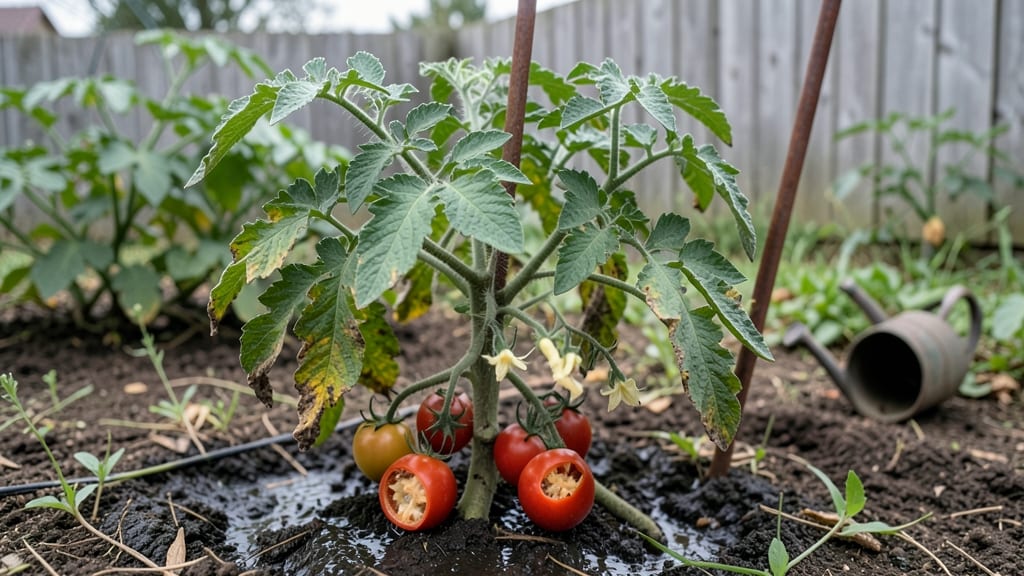
Spot those overwatered tomato plant pictures with limp leaves and split fruit? 🌱 That’s your plant crying for help—and here’s how to revive it fast.
The telltale signs are easy to spot once you know what to look for: leaves that feel soggy, stems with black spots, or fruit that’s rotting at the blossom end.
Here’s the thing—most gardeners overdo it because they think tomatoes need constant moisture. But too much water drowns roots, blocks oxygen, and invites fungal diseases like early blight. The fix starts with checking your soil: stick your finger in—if it’s damp past 2 inches, you’re watering too much.
We’re talking every 2-3 days in summer heat, but less when it rains.
Within 48 hours of adjusting your watering, you’ll see the first signs of recovery: leaves perk up, new growth appears, and those rotten spots stop spreading. The key is balance—tomatoes hate wet feet but also need steady moisture.
I’ll show you how to adjust your routine so your plants stay happy and productive all season.
This works for container tomatoes, raised beds, or in-ground gardens—just tweak the timing based on your soil type. Let’s get those plants back on track before the next harvest slips away.
Root Causes Of Overwatering
When your tomato plants start looking sad—yellowing leaves, mushy stems, or fruit with dark, sunken spots—it’s often a sign of overwatering. But why does this happen? The issue usually stems from a mix of environmental, soil, and human factors that disrupt the plant’s natural balance.
Let’s break down the most common reasons your tomatoes might be getting too much love (and water).
Tomatoes thrive in well-draining soil, but if water can’t escape easily, roots drown in excess moisture. This is especially true for:
- Clay pots or heavy soil: These materials hold water like a sponge, suffocating roots. Without air pockets, oxygen levels drop, and roots suffocate.
- Compacted garden soil: If your garden bed has a high clay content or has been walked on, water pools instead of draining. A simple percolation test (pouring water and measuring drainage time) can reveal the problem.
- No mulch or poor mulching: Mulch helps regulate moisture, but if it’s too thick or made of water-retaining materials (like fresh grass clippings), it traps humidity against the soil.
Actionable fix: Amend heavy soil with perlite, sand, or compost to improve aeration. For containers, use pots with drainage holes and a 50/50 mix of potting soil and perlite.
Tomatoes hate moisture swings—alternating between drought and soggy soil stresses roots. Common mistakes include:
- Watering on a schedule: Rain or not, sticking to a rigid daily/weekly routine can lead to overwatering if the weather changes.
- Light, frequent watering: Shallow watering (like sprinkling) encourages roots to stay near the surface, where they’re more prone to rot when overwatered.
- Ignoring weather forecasts: Heavy rain followed by a sunny day can leave soil saturated longer than expected.
Actionable fix: Use the finger test—stick your index finger 1–2 inches into the soil. Water only if it’s dry. For containers, lift the pot; if it’s heavy, wait.
Root-bound plants or containers that are too small for the plant’s size create a perfect storm for overwatering. Here’s why:
- Limited root space: Roots compete for oxygen in cramped pots, and excess water has nowhere to go.
- No room for expansion: Tomato roots grow aggressively. If they’re confined, they can’t seek out deeper, drier soil layers.
- Fungal growth: Crowded roots trap humidity, promoting diseases like Phytophthora, which thrives in waterlogged conditions.
Actionable fix: Upgrade to a 5-gallon minimum container for dwarf varieties and 7+ gallons for indeterminate tomatoes. Prune roots gently if repotting to encourage outward growth.
Tomatoes are warm-season plants, and cold soil slows water absorption and root activity. When temperatures dip:
- Water evaporates slower: Cool air reduces transpiration (water loss through leaves), so the plant retains moisture longer—even if you haven’t watered.
- Roots go dormant: Below 50°F (10°C), roots struggle to absorb water efficiently, leading to saturation.
- Frost or evening chill: If watered late in the day, moisture lingers on leaves and soil, increasing the risk of fungal infections.
Actionable fix: Water early in the morning to allow foliage to dry before nighttime chill. Use row covers or black plastic mulch to warm soil in early spring.
Overwatering is rarely just about how much you water—it’s about how, when, and where the water goes. By addressing these root causes, you’ll give your tomatoes the balanced moisture they need to flourish (and avoid those sad, mushy pictures!).
How to solve it
Now that you’ve identified the signs of overwatering—wilting leaves, yellowing foliage, or that dreaded blossom end rot—it’s time to take action! 🌱💧 The good news? With the right steps, your tomato plants can bounce back stronger than ever.
Below are targeted solutions based on the root causes of overwatering, along with prevention tips to keep your plants thriving.
Cause: Excessive moisture suffocates roots, leading to rot and nutrient starvation. Fix:
- Pause watering for 2–3 days to let the soil dry out. This breaks the cycle of soggy roots and gives your plant a chance to recover.
- Check soil moisture before watering again: Stick your finger 1–2 inches into the soil. If it’s damp, wait another day.
- Pro tip: 💡 If your plant is severely wilted, trim any blackened or mushy stems with clean scissors to prevent further spread.
Cause: Compacted or heavy soil traps water, creating anaerobic conditions that roots hate. Fix:
- Aerate the soil by gently loosening the top 4–6 inches with a fork or trowel. Avoid damaging roots—just create airflow!
- Add organic matter: Mix in compost, coconut coir, or perlite to improve drainage. Aim for 20–30% of the soil volume.
- Raise containers: If growing in pots, place them on elevated trays or saucers to prevent water pooling at the bottom.
- Pro tip: 🌱 For container gardens, ensure pots have drainage holes—no exceptions!
Cause: Inconsistent watering (too much, too little) stresses plants and invites disease. Fix:
- Water deeply but infrequently: Instead of daily light sprinkles, water once every 2–3 days (or when the top inch of soil is dry).
- Water at the base: Use a soaker hose or drip irrigation to deliver water directly to the roots, avoiding wet foliage (which attracts fungal diseases).
- Morning is best: Water early in the day so leaves dry quickly, reducing humidity-related issues.
- Pro tip: 🔥 Mulch matters! Apply 2–3 inches of straw or wood chips around the base to retain moisture and prevent soil compaction.
Cause: Overwatering flushes out nutrients, leaving plants weak and prone to deficiencies. Fix:
- Flush the soil: Run clean water through the pot or garden bed for 10–15 minutes to leach out excess salts.
- Use a balanced fertilizer: After flushing, apply a low-nitrogen, high-potassium fertilizer (like 5-10-10) to strengthen roots and fruit production.
- Avoid overfeeding: Too much fertilizer can burn roots—stick to half-strength applications every 2–3 weeks.
- Pro tip: 🥗 Compost tea is a gentle, nutrient-rich boost. Brew it at home by steeping compost in water for 24–48 hours and straining before use.
Cause: Ignoring early signs or repeating watering mistakes leads to chronic problems. Fix:
- Track soil moisture: Use a moisture meter or the finger test to avoid guesswork.
- Observe plant cues: Yellowing leaves? Wilting? These are early warnings—adjust before it’s too late.
- Rotate crops: If growing in the same spot yearly, rotate tomato plants to prevent soil-borne diseases.
- Pro tip: ✨ Drip irrigation with a timer takes the guesswork out of watering. Set it to run for 10–15 minutes every other day for consistency.
If your tomato plant is past saving (e.g., blackened stems, no new growth), it’s time to prune or propagate: - Prune aggressively: Cut back to healthy green stems just above a leaf node.
The plant may regrow! - Save cuttings: If the main stem is dead but lower stems are alive, propagate in water to grow new plants. - Start fresh: If all else fails, replace the plant and learn from the experience.
Final Thought: Overwatering is a common mistake, but with these fixes, your tomato plants will be back on track in no time! 🍅✨ The key is patience, observation, and consistency—your future harvests will thank you.
Frequently asked questions
How do I tell if my tomato plant is overwatered vs. underwatered?
Check the soil first: stick your finger 1-2 inches deep. If it's damp, you're likely overwatering. Overwatered plants have yellowing leaves, mushy stems, and often develop blossom end rot on fruit. Underwatered plants have crispy brown edges on leaves and soil that pulls away from pot sides.
Can I save a tomato plant that's been overwatered for a week?
You might still recover it! First, stop watering for 3-4 days to dry out the roots. Prune any blackened stems and repot in fresh, well-draining soil if using containers. For severe cases, propagate healthy cuttings in water. If the entire plant is mushy, it's likely too late—but new growth often appears within 7-10 days if caught early.
What's the best way to fix compacted soil that's causing overwatering?
Loosen the top 4-6 inches of soil with a fork, then mix in 20-30% perlite or compost to improve drainage. For containers, use a 50/50 mix of potting soil and perlite. Add 2-3 inches of straw mulch to regulate moisture without compacting further. This combo prevents waterlogging while keeping roots happy.
Why does my tomato plant look overwatered even though I'm not watering it much?
Check for poor drainage—clay pots or heavy soil hold moisture too long. Also verify if your area had recent rain or if your container lacks drainage holes. Even humid weather can make soil stay damp longer. Use a moisture meter to confirm—if it reads wet when you haven't watered, your soil mix needs aeration.
How often should I water tomato plants in containers vs. garden beds?
Containers dry out faster—water when the top 1 inch of soil is dry (every 1-2 days in summer). Garden beds need deep watering every 2-3 days (or 1 inch per week). Always water at the base, not leaves, to prevent fungal issues. Morning watering gives foliage time to dry before evening humidity sets in.