
Succulent
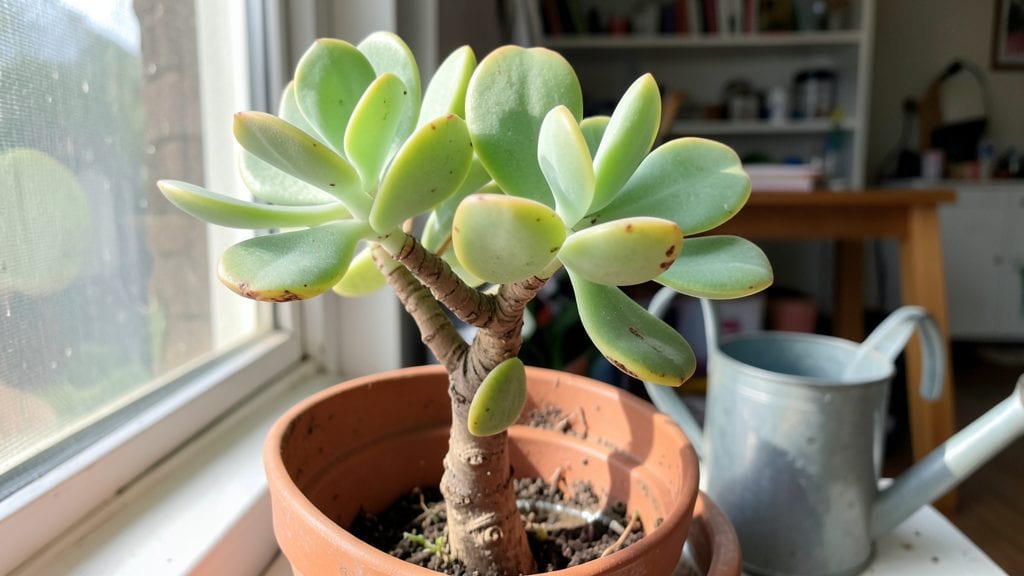
An overwatered jade plant with yellow, mushy leaves is a cry for help—not a death sentence. 🌱 I’ve nursed back more than a few from this exact problem, and the fix is simpler than you’d think. The key? Stopping water stress immediately and giving the roots room to breathe again.
Overwatering happens when soil stays soggy for too long, suffocating roots and inviting rot. You’ll spot it in yellowing leaves that feel squishy (not crisp like healthy ones) and stems that wilt even when the soil is wet.
The good news? Jade plants bounce back fast once you adjust—just trim the damaged parts and let the soil dry completely between waterings.
Within a week, you’ll see new growth pushing through, and those crisp green leaves will return. The secret is matching water to the plant’s needs: only when the top inch of soil feels bone-dry, and using pots with drainage holes.
No more guesswork—just consistent care that keeps your jade thriving for years.
This works for both potted jades and those in mixed containers. The same rules apply whether you’re dealing with a single plant or a collection. Let’s turn that yellow into vibrant green again—step by step.
Root Causes Of Overwatering Jade Plants
Your jade plant’s yellowing leaves or mushy stems aren’t just random bad luck—they’re usually a cry for help from a plant that’s drowning in its own pot. Jade plants (Crassula ovata) are drought-tolerant succulents, meaning they’ve evolved to store water in their thick leaves and stems.
When you overwater them, you disrupt their natural survival mechanisms, leading to stress, rot, and even death. Let’s break down the real reasons this happens—and how to fix them before it’s too late.
Succulents like jade plants hate soggy roots because their roots are adapted to aerated soil that allows excess water to escape quickly. When drainage is lacking, water pools at the bottom of the pot, suffocating the roots and cutting off oxygen. Here’s why it’s a problem:
- Clogged pots: Small drainage holes or pots without holes trap water like a sink with no drain. Even "breathable" pots (like terracotta) can fail if the soil compacts over time.
- Heavy or clay soil: Regular potting mix retains moisture for too long. Jade plants thrive in gritty, fast-draining mixes (like cactus/succulent soil with perlite or pumice).
- No cache pot: Placing your jade plant on a saucer or tray without a cache pot (a layer of gravel or pebbles below the soil) means water just sits there, never evaporating.
Pro Tip: 💡 Test your drainage by filling the pot with water and timing how long it takes to drain. If it’s still wet after 10–15 minutes, your setup is failing.
Many plant owners fall into the trap of watering by calendar—every Monday, every two weeks, or "when it looks dry." But jade plants don’t follow your schedule; they follow their own moisture needs. Overwatering happens when:
- You ignore the "soak-and-dry" method: Jade plants need water only when the top 1–2 inches of soil are completely dry. Sticking your finger in the soil is the only reliable way to check.
- Seasonal changes confuse you: In winter, jade plants enter dormancy and need far less water (sometimes as little as once a month). Yet many people keep watering like it’s summer.
- Humidity or temperature shifts: High humidity (like in bathrooms or kitchens) slows evaporation, keeping soil wet longer. Low light also reduces a plant’s ability to process water efficiently.
Pro Tip: ⏰ Use the "finger test" religiously. If the soil feels damp below the top layer, wait. If it’s bone-dry, water thoroughly—but only until it drains from the bottom.
Jade plants are masters of water conservation, but the wrong container or soil can turn them into water sponges. Here’s how:
| Problem | Why It Causes Overwatering |
|---|---|
| Too-large pots | Extra soil holds moisture for weeks, even if the plant only uses a fraction of it. A pot that’s too big (more than 1–2 inches wider than the root ball) is a recipe for rot. |
| Compacted or old soil | Over time, potting mix breaks down, losing its air pockets. This makes it retain water like a sponge, suffocating roots. |
| No aeration | Soil without perlite, sand, or bark holds water against the roots, creating anaerobic conditions (no oxygen), which leads to fungal growth. |
Pro Tip: 🌡️ Refresh your soil every 1–2 years or mix in fresh cactus/succulent soil to improve aeration. If repotting, choose a container only slightly larger than the current root ball.
Sometimes, overwatering isn’t your fault—it’s your plant’s environment playing tricks on you. Jade plants are sensitive to:
- Cold or drafty spots: Cold roots (below 50°F/10°C) can’t absorb water efficiently, leading to waterlogging in the soil.
- Low light + high humidity: In dim conditions, jade plants transpire less (lose water slower), so the soil stays damp longer. Pair that with humidity, and you’ve got a perfect storm for rot.
- Frequent misting or humidity trays: Jade plants hate moisture on their leaves. Mist or humidity can increase soil moisture levels indirectly by raising ambient humidity around the pot.
Pro Tip: 🎯 Move your jade plant to a bright, indirect spot (like an east-facing window) and avoid misting. If humidity is an issue, use a hygrometer to monitor levels—keep it below 40% for optimal health.
Revive Your Jade Plant Now
Overwatering can feel like a death sentence for your jade plant, but don’t panic—these simple, science-backed solutions will help you nurse it back to health. Below, we’ve mapped out the most common signs of overwatering (like yellow leaves, mushy stems, or root rot) to quick fixes and long-term prevention strategies.
Let’s get your succulent thriving again!
If your jade plant’s leaves are turning yellow but the stems are still firm, it’s likely suffering from overwatering or poor drainage. Here’s how to turn things around:
- 🔥 Stop Watering Immediately
- Let the soil dry out completely before watering again. Jade plants store water in their leaves, so they don’t need frequent hydration.
- 🍳 Repot in Fresh, Well-Draining Soil
- Remove the plant from its pot and gently shake off excess soil to inspect the roots.
- If you see healthy white roots, repot in a cactus/succulent mix (add perlite or pumice for extra drainage).
- Pro Tip: 💡 Avoid garden soil—it retains too much moisture and suffocates roots.
- 👨🍳 Trim the Damaged Leaves
- Use sterilized scissors to snip off yellow or mushy leaves at the base.
- Warning: ⚠️ Don’t trim more than 1/3 of the plant at once to avoid shocking it.
- 🥘 Place in Bright, Indirect Light
- Move your jade to a south or west-facing window (or under grow lights if natural light is limited).
- Light Check: 🌡️ If leaves are pale or stretching, it needs more light.
If the stem is soft, squishy, or the plant feels unusually heavy, root rot has likely set in. Act fast:
- 🔪 Remove the Plant and Inspect Roots
- Gently pull the plant from the pot and rinse the roots under cool water to see the damage.
- Healthy roots = firm and white.
- Rotten roots = black, mushy, or smell foul.
- 🛡️ Prune the Rotten Parts
- Use sterilized pruning shears to cut away all black/mushy roots and stems.
- Safety First: 🧴 Wear gloves—rotten roots can be slimy and unpleasant.
- 🌡️ Let It Dry Out (24-48 Hours)
- Place the trimmed plant in a shady, dry spot to allow any remaining moisture to evaporate.
- 🌱 Repot in Sterile Soil
- Use a clean pot with drainage holes and fresh cactus/succulent mix.
- Prevention Tip: ✨ Add a handful of coarse sand or perlite to improve airflow.
- 💧 Water Sparingly (If At All)
- Wait 5-7 days before watering—only add moisture when the soil is completely dry.
- Sign of Success: 🎯 If new growth appears in 2-4 weeks, you’re on the right track!
Now that your jade is on the mend, keep these habits to avoid repeat disasters:
| Mistake | Fix It Like This |
|---|---|
| Watering on a schedule | Water only when the top 2 inches of soil are dry (stick your finger in!). |
| No drainage holes | Repot in a container with holes—no exceptions! |
| Overcrowded pot | Upgrade to a pot 1-2 inches larger (only when roots outgrow the current one). |
| Using regular potting mix | Switch to a gritty, fast-draining mix (e.g., 50% cactus soil + 50% perlite). |
| Low humidity | Jade plants love dry air—avoid misting and keep away from humid spots. |
💡 Bonus Pro Tip: If your jade plant is severely damaged, consider propagating healthy cuttings to save the species! Just let the stems dry for a day, then place them in dry soil—roots will grow in a few weeks.
With these steps, your jade plant will bounce back stronger than ever. Stay patient, and soon you’ll be admiring its plump, vibrant leaves again!
Frequently asked questions
Why do my jade plant leaves turn yellow when overwatered?
Yellow leaves signal the plant is drowning—excess water blocks oxygen to the roots, causing stress. The leaves turn yellow because the plant can't process nutrients properly. Check if the soil feels soggy or the stems are soft; these are clear signs of overwatering.
Can an overwatered jade plant recover?
With immediate action, most overwatered jades bounce back. Start by stopping watering, repotting in fresh, gritty soil, and trimming damaged leaves. Place it in bright, indirect light and wait until the soil is completely dry before watering again. Within weeks, you'll see new growth.
How often should I water my jade plant to prevent overwatering?
Water only when the top 1-2 inches of soil are bone-dry—usually every 2-3 weeks in summer and once a month in winter. Stick your finger in the soil to check moisture levels. Jade plants store water in their leaves, so they prefer drought over soggy conditions.
What's the best pot for a jade plant to avoid overwatering?
Use a pot with drainage holes and a gritty, well-draining soil mix. Terracotta pots help wick away moisture, but any container with holes works. Avoid decorative cache pots without drainage—water gets trapped, leading to root rot. A pot only 1-2 inches larger than the root ball is ideal.
My jade plant has mushy stems—is it too late to save it?
Not necessarily! If only the stems are mushy but the roots are still firm and white, you can trim the damaged parts and repot in fresh soil. Let it dry out completely for 48 hours before watering lightly. If roots are black and smelly, you may need to propagate healthy cuttings instead.