
Pruning
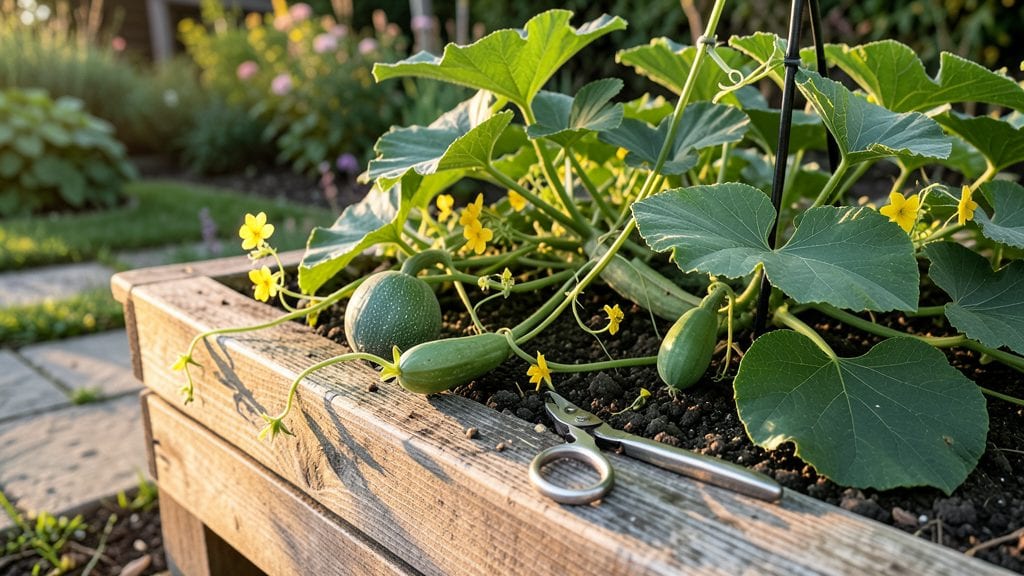
Pruning cantaloupe plants might seem counterintuitive—after all, why cut back a vine that’s already loaded with flowers? 🌱 But I’ve found that strategic pruning can double your harvest by directing energy where it matters most: the fruit.
The key is timing and technique, and I’ll show you exactly how to do it without stressing the plant.
You’ll need sharp pruners, clean gloves, and a sunny morning to work. Focus on removing the first few flowers that appear—this might sound crazy, but it forces the plant to put energy into stronger vines and later blooms.
Cantaloupes don’t need pruning, but if you skip it, you’ll end up with small, underripe fruit instead of the sweet, heavy melons you’re after.
After pruning, watch for new growth within 5-7 days. The plant should bounce back with thicker stems and more robust runners, setting the stage for bigger fruit. Avoid cutting more than one-third of the plant at once, and always trim just above a leaf node to encourage healthy regrowth.
This method works best in zones 4-10, but the principles apply anywhere cantaloupes thrive. Once you’ve mastered the basics, you can experiment with shaping the plant for even better air circulation—just don’t go overboard. Ready to grow melons that’ll make your neighbors jealous?
📚 In This Guide
- What you need
- Instructions
- Tips and common mistakes
- Wrapping up and next steps
What you need
- ● Pruning shears or secateurs: Choose bypass pruners (sharp, clean blades) for precise cuts—avoid anvil pruners, which can crush stems. Size: 5-7 inches (13-18 cm) for easy handling.
- ● Gloves: Heavy-duty gardening gloves (e.g., mechanics-style) to protect against thorns and blisters. Material: Nitrile-coated for durability.
- ● Disinfectant (70% isopropyl alcohol or bleach solution): Clean tools between cuts to prevent disease spread. Ratio: 1 part bleach to 9 parts water.
- ● Sharpie or marker: For labeling pruned sections if you’re experimenting with training methods.
- ● Watering can or hose: To hydrate plants post-pruning (aim for 1-2 gallons per plant if soil is dry).
- ● Mulch (straw or shredded leaves): 2-3 inches thick to retain moisture and protect roots after pruning.
- ● Hand pruners (smaller than shears): For tight spaces or delicate trimming.
- ● Knee pads: If you’re kneeling frequently—your back will thank you!
- ● Plant growth regulator (e.g., hydrogen peroxide 3%): Spray cuts to reduce infection risk (dilute to 1:9 ratio with water).
- ● Notebook & pen: Track pruning dates and plant responses for future reference.
- ● Sunhat & sunscreen: Because even cantaloupe lovers need to stay safe under the sun! ☀️
Step-by-step instructions for pruning cantaloupe plants
Here’s how to shape your vines for stronger growth and sweeter fruit—no guesswork involved.
✂️ Step 1: Identify and Remove Weak or Damaged Growth
Start by inspecting your cantaloupe vines for any stems that are thin, yellowed, or showing signs of disease. These weak shoots compete for nutrients but rarely produce fruit. Use clean, sharp pruning shears to snip them off at the base, just above a leaf node where new growth can emerge. I always work in the morning when the vines are dry—this reduces the risk of spreading fungal spores.
Look for vines that are growing toward the center of the plant or crossing over others. These tangled stems create poor airflow, which invites pests and disease. Cut them back to the main stem or a strong lateral branch. You’ll see healthier growth within days as energy redirects to the remaining vines.
✂️ Step 2: Prune for Better Airflow and Fruit Production
Cantaloupes thrive when they have space to breathe. Focus on the main vine and its strongest lateral branches—these are the ones that will bear the most fruit. Remove any side shoots that emerge from the main stem within the first 12-18 inches of growth. These early lateral branches often produce small, poor-quality fruit and drain energy from the plant.
Leave only 2-3 strong lateral branches per main vine, spacing them evenly along the stem. These will become your primary fruit producers. If you see a lateral branch with a flower or small fruit forming, keep it—otherwise, prune it back to encourage the plant to focus on fewer, larger fruits. You’ll notice thicker vines and larger leaves within a week of pruning.
✂️ Step 3: Maintain and Prune Throughout the Growing Season
As your cantaloupe plants mature, keep pruning to remove any suckers (small shoots that grow between the main stem and lateral branches). These suckers steal energy from your main vines. Pinch them off early in the season before they grow more than 2-3 inches long. This ensures your plant puts all its effort into developing fruit rather than extra foliage.
Once flowers appear, reduce pruning to avoid stressing the plant. Focus only on removing dead or diseased leaves and any vines that are growing away from the main plant. Water deeply after pruning to help the plant recover. You’ll see the difference in fruit size and sweetness—pruned plants consistently produce larger, more flavorful cantaloupes.
Tips & tricks for perfect cantaloupe pruning
Here's how to avoid common mistakes and get the most out of your cantaloupe plants with these proven strategies.
Timing is Everything: I can't emphasize enough how important morning pruning is. The vines are dry and firm, which makes cutting cleaner and reduces the risk of spreading disease. If you must prune later in the day, wait until the dew has evaporated completely. Also, avoid pruning when the plants are wet from rain or watering—this creates perfect conditions for fungal infections. The morning light also helps you spot problems more easily.
Tool Selection Matters: Never use dull or dirty pruning shears—they can tear stems and introduce bacteria. I keep a dedicated pair of sharp pruning shears just for cantaloupe plants, and I clean them with rubbing alcohol between uses. For suckers (those small shoots between main stems), I often use my fingers to pinch them off quickly. This saves time and prevents accidental damage to larger stems.
Visual Cues for Healthy Growth: In Step 2, when you're deciding which lateral branches to keep, look for these signs of strong growth: vibrant green leaves, stems that feel firm to the touch, and branches growing outward rather than inward. The ideal branches should be spaced about 12-18 inches apart along the main vine. If you're unsure, remember that fewer, stronger branches always produce better fruit than many weak ones.
Post-Pruning Care: After you've finished pruning, give your plants a deep watering—about 1-2 inches of water at the base. This helps the plant recover and prevents shock. I also like to add a balanced fertilizer (like 10-10-10) to the water to give the plant a little boost. The key is to let the plant adjust for 24-48 hours before doing any more heavy pruning or fertilizing.
Pro Tips for Prune Cantaloupe Plants
- Here's how to avoid common mistakes and get the most out of your cantaloupe plants with these proven strategies.
- Timing is Everything: I can't emphasize enough how important morning pruning is.
- Tool Selection Matters: Never use dull or dirty pruning shears—they can tear stems and introduce bacteria.
Frequently asked questions
Got questions about pruning cantaloupe plants? You’re not alone! Here are some of the most common concerns—and their answers—to help you grow healthier vines and juicier melons.
When is the best time to prune cantaloupe plants?
Prune early in the season (when plants are 3–4 inches tall) to encourage stronger growth. Avoid pruning during flowering or fruiting, as this can stress the plant. Focus on removing suckers (side shoots) in the morning when the plant is hydrated.
How much should I prune cantaloupe plants?
Leave the main vine intact but remove all suckers (small shoots growing from the stem). For bush varieties, trim excess leaves to improve airflow—just don’t cut more than 20% of the foliage at once. Over-pruning can reduce fruit production.
What if I don’t prune my cantaloupe plants?
Unpruned plants may produce smaller, fewer melons because energy is split between too many vines. Without pruning, diseases (like powdery mildew) also spread faster due to poor airflow. Think of pruning as a way to feed your best fruits!
Can I prune cantaloupe plants too late in the season?
Yes! Avoid pruning after flowering (when vines are 6+ feet long), as it can stunt fruit development. If you miss early pruning, focus on removing yellow or diseased leaves instead—just don’t cut back more than 10% of the plant.
Do I need special tools to prune cantaloupe?
Nope! Use clean, sharp pruning shears or scissors (disinfect with rubbing alcohol between cuts). For small suckers, your fingers work fine. Just avoid tearing stems—make clean cuts just above a leaf node to encourage regrowth.
Wrapping up and next steps
Pruning your cantaloupe plants might feel like a small task, but it’s a game-changer for bigger, sweeter fruit! 🌱 By removing excess vines, improving airflow, and directing energy to the melons, you’ll be rewarded with a bountiful harvest.
Now that you’ve got the know-how, it’s time to roll up your sleeves and give your plants the care they deserve.
Ready to take the next step? Monitor your plants weekly, adjust your pruning as needed, and watch your cantaloupe vines thrive. Happy gardening—your future harvest will thank you! 🍉✨