
Pests
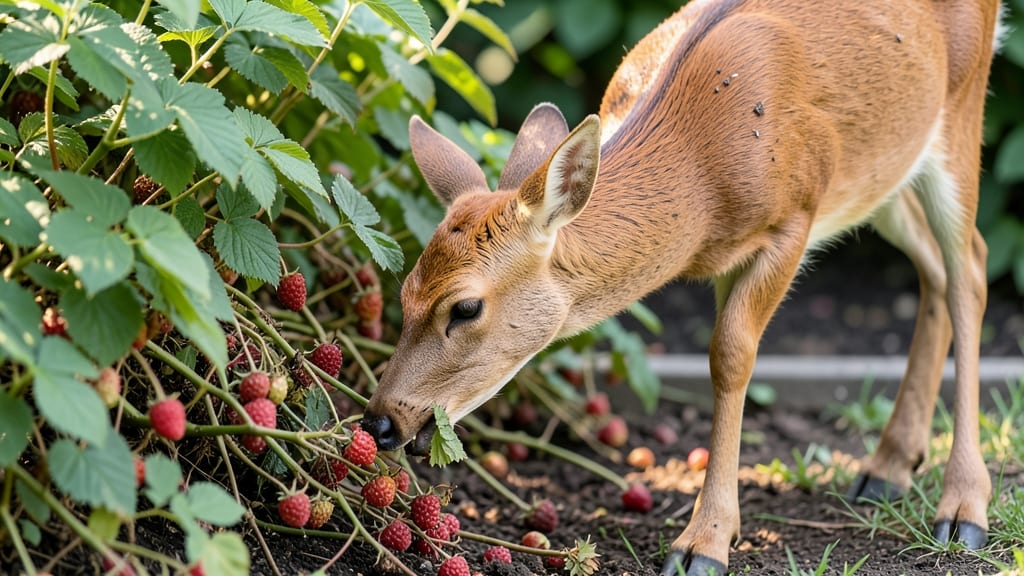
Deer eat raspberry plants voraciously, especially the young shoots, leaves, and ripe berries, which they seek out most aggressively during late spring through early fall when natural food sources dwindle. Unchecked browsing can severely limit plant vigor and fruit production, forcing gardeners to take proactive measures.
Raspberry plants rank high on deer menus because their tender foliage and sweet berries offer easy, nutrient-rich meals. 🌿 These browsers rely on their sharp senses to locate lush vegetation, and raspberries—with their high moisture content and soft stems—are irresistible.
The damage often starts at dawn or dusk when deer feel safest, and repeated grazing can leave bushes stunted or completely defoliated, reducing both yield and plant health.
Gardeners dealing with this issue often find that physical barriers like fencing or mesh netting provide the most reliable protection, though repellent sprays (especially those containing garlic or hot peppers) can also deter deer when reapplied regularly.
Companion planting with strongly scented herbs like rosemary or lavender sometimes helps, though it’s less effective than mechanical solutions.
💡 In This Article
- Why Deer Target Raspberry Bushes in Gardens
- Effective Deer-Repellent Strategies for Raspberry Patches
Why deer target raspberry bushes in gardens
Raspberry bushes become a deer buffet primarily because their tender growth and sweet berries offer an irresistible combination of nutrition and accessibility. 🌱 Deer have evolved to seek out plants with high moisture content—like raspberries—which provide essential hydration, especially during dry summer months.
The leaves contain about 85-90% water when young, making them a hydrating snack compared to drier garden plants. Additionally, the soft, pliable stems require minimal chewing, saving energy for deer that may travel several miles nightly in search of food.
The ripe berries are another major draw, packing natural sugars that deer can detect even from 50-100 feet away using their keen sense of smell (up to 1,000 times more sensitive than humans').
A single raspberry cluster contains roughly 5-8% sugar content, which is comparable to a ripe apple—an energy-rich reward for browsers. What's more, the plant's growth habit—spreading canes with thornless tips—makes it easier for deer to feed without risking injury, unlike brambles or roses that might deter them.
Timing plays a critical role in deer feeding patterns.
These creatures are crepuscular, meaning they're most active during dawn and dusk when temperatures are cooler and predators are less active. 🌅 During late spring and summer (May through August), when raspberries are in peak growth, deer will spend up to 3-4 hours per night grazing in gardens.
The new shoots emerging in spring are particularly vulnerable, as they contain higher nitrogen levels (a key protein source) that make them even more appealing than mature foliage.
Here's what makes raspberries uniquely vulnerable compared to other garden plants:
- Height advantage: Most raspberry varieties grow 4-6 feet tall, placing foliage at deer browsing height (typically 18-36 inches off the ground)
- Thorn placement: While raspberries have thorns, they're concentrated on the main canes—not the tender tips or berry-laden branches
- Regrowth pattern: When deer nibble, raspberries respond by producing more lateral shoots, which deer then target even more aggressively
The chemical composition of raspberries also plays a role.
Their leaves contain salicylic acid (similar to aspirin), which deer metabolize easily, and the berries lack the bitter compounds found in many other garden plants that would deter browsers. 🍓 This chemical profile, combined with the plant's growth habit, creates what wildlife biologists call a "preferred forage species"—one that deer will consistently choose over less palatable options when available.
What most gardeners don't realize is how deer learn from each other. A single deer finding a raspberry patch will often lead to others discovering it within 24-48 hours, creating what's called a "deer trail" to the most productive feeding sites.
This herd behavior means that once one plant is discovered, an entire garden can become a high-risk area without proper protection.