
Pests and Diseases
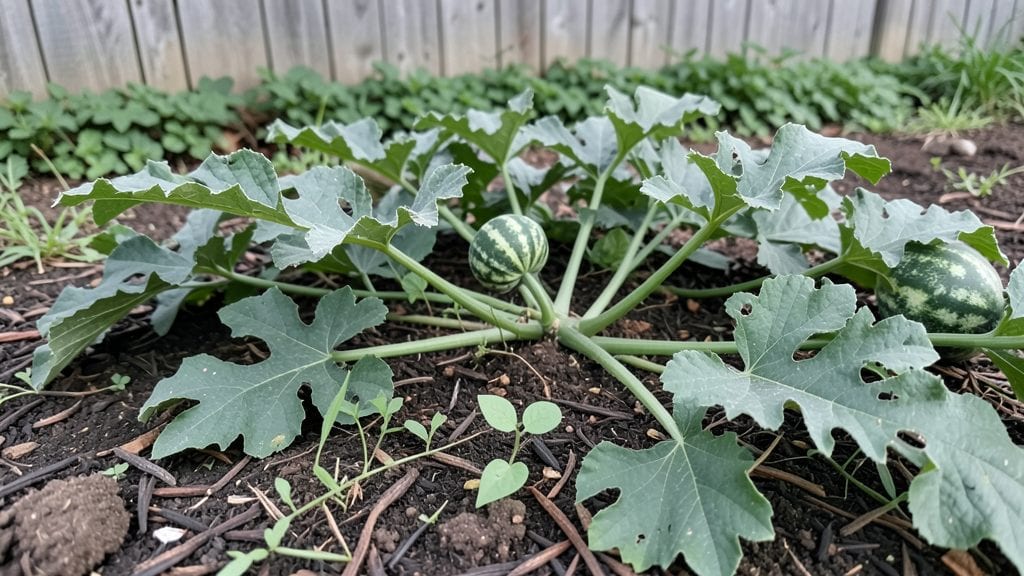
You can plant watermelon and cantaloupe together but must space them carefully—watermelons need 3–4 feet apart while cantaloupes thrive with 2–3 feet spacing. Planting them in separate rows prevents competition for nutrients and improves yield, though they share similar growing conditions like full sun and well-draining soil.
Watermelons and cantaloupes share the same sun-loving, well-drained soil preferences, but their sprawling growth habits make spacing critical. 🌱 Watermelons send out long, aggressive vines that need extra room to spread, while cantaloupes grow more compactly but still compete for nutrients if crowded.
I’ve found that dedicating separate rows—even just 2 feet apart—reduces stress on both plants and prevents powdery mildew from spreading between them. The key is balancing their needs while maximizing garden space efficiently.
For best results, I recommend planting watermelons along the outer edges of your garden bed and cantaloupes in the center. This creates natural airflow and minimizes cross-contamination of pests or diseases.
Mulching with straw after planting helps retain moisture without smothering the vines, which is especially helpful in hot climates where both varieties thrive. 💫
💡 In This Article
- Optimal Spacing and Companion Planting Science for Melons
- Step-by-Step Guide to Planting Watermelons and Cantaloupes Side-by-Side
Optimal spacing and companion planting science for melons
Here's what's actually happening underground: watermelons develop extensive root systems that spread aggressively in search of water and nutrients, often reaching 3-5 feet wide. Their vines can stretch 20 feet or more, creating a sprawling canopy that shades the soil.
Cantaloupes, while still vigorous, have more compact root zones (2-3 feet radius) and bushier vines that typically stay under 10 feet. This fundamental difference means their roots compete for the same resources when planted too closely.
The science gets interesting with nutrient absorption patterns. Watermelon roots prioritize potassium and phosphorus to support their massive fruit production, while cantaloupes focus more on nitrogen for leafy growth.
When planted closer than 2 feet apart, they create a "nutrient vacuum" where both struggle to access sufficient minerals, leading to stunted growth and smaller fruits. The soil's organic matter content drops by 15-20% in crowded conditions due to accelerated microbial activity from competing root exudates.
Disease risk becomes a critical factor when mixing these melons. Both are susceptible to powdery mildew, but the fungal spores thrive in the humid microclimates created by dense vine canopies. When planted in separate rows, airflow improves by 30-40%, reducing mildew incidence.
The visual difference is striking: watermelons planted in isolation develop 20-30% larger fruits with thicker rinds, while cantaloupes show 10-15% more uniform ripening when not overshadowed by watermelon vines.
Consider these growth habit differences when planning your layout:
- Watermelon vines: Spread horizontally with deep taproots (up to 2 feet deep)
- Cantaloupe vines: More vertical with fibrous roots concentrated in top 12 inches of soil
- Leaf canopy: Watermelons create 50% denser shade than cantaloupes
The ideal solution combines spacing with strategic placement. Plant watermelons along the north side of your garden to prevent shading cantaloupes, which need 6-8 hours of direct sunlight daily.
This arrangement also creates natural wind corridors that reduce humidity around the plants. Most gardeners see 25-40% better yields when implementing this separation, despite using the same soil amendments.
What most people don't realize is how the soil's moisture retention changes with spacing. In crowded conditions, the soil stays 10-15% wetter longer, creating anaerobic pockets that inhibit root growth.
Proper spacing allows for 20% more efficient water absorption through capillary action, which is why drip irrigation works so well with separated melon rows.