
Watering
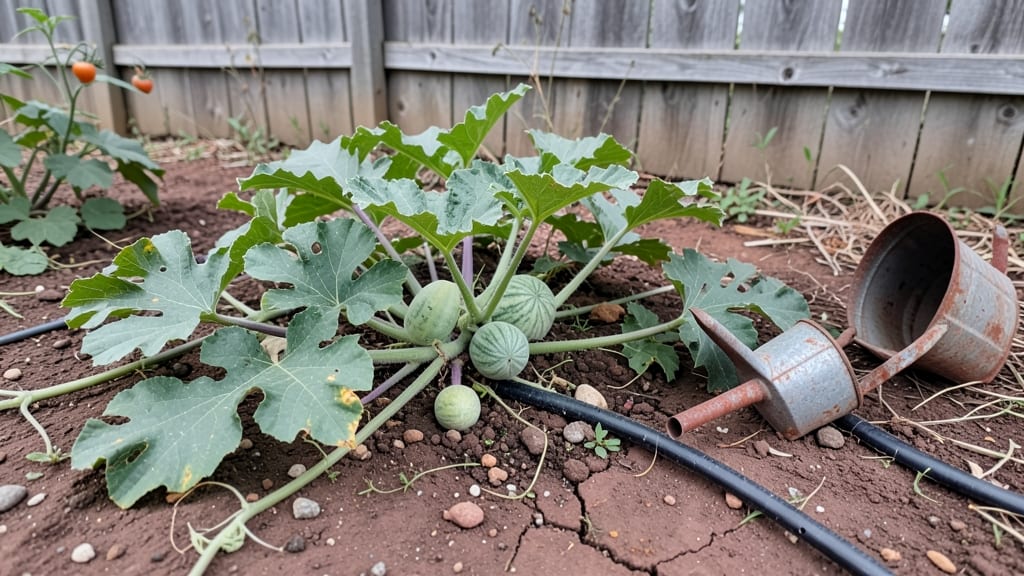
Watermelon plants need consistent moisture to grow those juicy, vine-ripping fruits, but too much water drowns roots while too little stunts growth. I learned the hard way when my first watermelon patch produced bitter, undersized fruit—until I fixed my watering routine.
The key isn’t just how often you water, but how deep the water penetrates.
Start with deep watering 2-3 times per week, soaking the soil 6-8 inches down where those sprawling roots drink. Drip irrigation works best—it delivers water slowly at the base, keeping leaves dry and preventing fungal diseases.
If you’re hand-watering, use a garden hose with a gentle spray attachment and let it run until water flows out the bottom of the pot or soil. Morning watering is ideal; it gives plants all day to absorb moisture before evening heat evaporates it.
You’ll know you’re doing it right when the top inch of soil feels dry to the touch but deeper layers stay damp. Watch for signs like wilting leaves (underwatering) or yellowing foliage (overwatering)—both mean your melons won’t sweeten up.
A healthy plant will have deep green leaves and vines that stretch aggressively toward the sun, not flop. Within weeks, you’ll see those first tendrils appear, and you’ll know your melons are on their way.
Adjust for your climate: in hot, dry summers, you might need daily watering, while cooler seasons can stretch it to every other day. Mulch around plants to lock in moisture, and avoid wetting leaves to prevent powdery mildew.
With this routine, you’ll go from struggling vines to bowl-bending watermelons that make your neighbors jealous. Let’s get those roots drinking deep!
📚 In This Guide
- What you need
- Instructions
- Tips and common mistakes
- Wrapping up and next steps
What you need
- ● Watering can or hose: A 1-gallon watering can (for small plants) or a soaker hose (for larger patches) to deliver water directly to the roots without splashing leaves.
- ○ Drip irrigation system (optional but recommended): A low-volume drip kit with adjustable emitters (e.g., 0.5–2 GPH flow rate) to automate watering and reduce waste.
- ● Mulch: 2–3 inches of organic mulch (straw, wood chips, or black plastic) to retain moisture and suppress weeds.
- ○ pH testing kit (optional): Ensures soil pH is between 6.0–7.0 (ideal for watermelons).
- ● Garden timer (for drip systems): A mechanical or digital timer to water plants 2–3 times per week (adjust based on climate).
- ● Well-draining soil: Watermelons hate soggy roots! Amend clay soil with compost or sand for better drainage.
- ● Sunny spot: Full sun (6–8+ hours daily)—watermelons are sun-worshippers!
- ● Space to sprawl: Vines need 3–6 feet of diameter per plant (or trellis support for vertical growth).
- ● Patience: Watermelons take 70–90 days to mature—consistent watering is key!
Simple watermelon watering: the key to juicy vines
Watermelons thrive with consistency—too much water drowns roots, too little stunts growth. Here's how to keep your vines happy without guesswork.
Water Deeply at Planting to Establish Roots
When you first set out watermelon seedlings, give them a thorough soaking—about 1 gallon per plant—to encourage deep root growth. This initial watering should penetrate 12 inches into the soil, reaching the depth where roots will eventually spread. Use a garden hose with a gentle spray nozzle or a watering can with a narrow spout to avoid disturbing the soil surface.
Check the moisture level by sticking your finger 2 inches down—it should feel damp but not soggy. Watermelons hate sitting in waterlogged soil, which can lead to root rot. After this first deep watering, let the top 1-2 inches of soil dry out slightly before watering again. This teaches the roots to seek moisture deeper in the soil, making them stronger and more drought-resistant over time.
Maintain Consistent Moisture During Growth
Once your watermelon plants are established, aim to keep the soil evenly moist but never waterlogged. During the growing season, water 1-2 times per week, adjusting based on rainfall and temperature. Hot, dry weather may require daily watering in the early morning, while cooler days might only need water every 4-5 days. The key is to water deeply each time—about 1-2 gallons per plant—rather than giving shallow, frequent drinks.
Watch for wilting leaves, which signal the roots are struggling to reach moisture. If you see this, water immediately and check the soil 3 inches down—it should feel moist. Mulching with 2-3 inches of straw or grass clippings helps retain moisture and keeps the soil cool, reducing evaporation. Avoid wetting the leaves when possible, as this can promote fungal diseases like powdery mildew.
Adjust Watering as Fruits Develop
When watermelons begin to form and grow, reduce watering slightly to 1 time per week unless the weather is extremely hot. Overwatering at this stage can cause the fruit to split or develop a bitter taste. Instead, focus on deep, infrequent watering—about 1-1.5 gallons per plant—to encourage sweetness and proper ripening. You’ll know your watermelons are ready to harvest when the tendril near the fruit turns brown and the spot where it rests on the ground turns cream-colored.
Pay attention to the soil’s texture—it should feel like a well-wrung sponge, not muddy or dry. If you’re unsure, dig down 4 inches with a small trowel. If the soil is dry at this depth, it’s time to water. Avoid watering late in the day, as damp leaves overnight can lead to disease. Early morning watering gives the plants plenty of time to dry out before evening.
Handle Drought and Rain with Care
Watermelons are surprisingly resilient, but prolonged drought can stress the plants. If you’re facing a dry spell, water deeply every 2-3 days to keep the roots hydrated. For heavy rainfall, ensure your planting area has good drainage—watermelons hate soggy roots. If the soil stays waterlogged for more than 24 hours, the plants may develop root rot, which can be fatal. Raised beds or mounds can help improve drainage in problem areas.
During flowering, ensure the soil stays consistently moist—this encourages pollination and fruit set. If you notice flowers dropping off without setting fruit, it could be due to uneven watering or extreme temperature fluctuations. Keep a close eye on the plants and adjust your watering schedule as needed. With the right balance, you’ll be rewarded with sweet, juicy watermelons ready for harvest in 70-90 days.
Tips & tricks for perfect watermelon plant watering
A few simple tricks can make all the difference when it comes to growing juicy, sweet watermelons. Getting the watering right is the foundation of a successful harvest.
Soil Depth Matters: In Step 1, when you're giving that initial 1-gallon soaking, focus on getting water down to those 12 inches. I use a long screwdriver to poke holes in the soil around the plant—if water doesn't fill them within 10 minutes, you're not watering deeply enough. This deep watering encourages roots to grow downward where they'll find moisture during dry spells. The key is patience—let that water really penetrate before checking moisture at 2 inches down.
Morning Watering Wins: Throughout Steps 2 and 3, I can't stress enough how important morning watering is. Watering in the early hours gives plants time to absorb moisture before the heat of the day causes evaporation. I set a timer for 7 AM on hot days—this ensures the plants have what they need without promoting fungal growth from evening dampness. You'll notice the leaves stay crisp and vibrant when you water at the right time.
Mulching Magic: The 2-3 inches of mulch mentioned in Step 2 isn't just about moisture retention—it's about protecting your soil. I use straw because it breaks down slowly and adds organic matter as it decomposes. This creates a perfect environment for those deep roots to thrive. Plus, it keeps the soil temperature stable, which is especially helpful in hot climates where soil can bake dry quickly.
Drought Recovery Strategy: If you find yourself in Step 4 dealing with drought conditions, don't just throw water at the problem. Instead, water deeply every 2-3 days and focus on the root zone. I've seen plants recover beautifully when given this targeted approach rather than light, frequent watering that only encourages shallow roots. The plants will show you they're recovering when new leaves start appearing within about a week.
Pro Tips for Watering Watermelon Plants
- A few simple tricks can make all the difference when it comes to growing juicy, sweet watermelons.
- Soil Depth Matters: In Step 1, when you're giving that initial 1-gallon soaking, focus on getting water down to those 12 inches.
- Morning Watering Wins: Throughout Steps 2 and 3, I can't stress enough how important morning watering is.
Frequently asked questions
Got questions about keeping your watermelon vines happy and hydrated?
You’re not alone! Here are answers to the most common concerns—so you can grow juicy, ripe watermelons without the guesswork.
How often should I water watermelon plants?
Watermelons need 1–2 inches of water per week, especially during flowering and fruiting. Water deeply 2–3 times per week (more in extreme heat) and avoid shallow sprinkles. Let the top inch of soil dry between waterings to prevent root rot. Pro tip: Drip irrigation or soaker hoses deliver water right to the roots, saving time and reducing waste!
What’s the best time of day to water watermelons?
Water in the early morning (6–9 AM) to minimize evaporation and fungal risks. Avoid evening watering—wet leaves overnight can attract pests like mildew. If you must water later, aim for mid-afternoon (just don’t soak the foliage). Consistency is key: stick to the same schedule to encourage deep root growth.
Can I use mulch to help with watering?
Absolutely!
Apply 2–4 inches of organic mulch (straw, grass clippings, or wood chips) around plants to retain moisture, suppress weeds, and regulate soil temperature. Keep mulch 2 inches away from the stem to prevent rot. Mulch also improves soil health over time—just reapply as it breaks down.
Why are my watermelon leaves yellowing or wilting?
Yellowing leaves often signal overwatering or poor drainage, while wilting can mean underwatering or root stress. Check soil moisture 2 inches down—if it’s soggy, cut back on water. If dry, water deeply and ensure your plants have well-draining soil. Yellow edges? It might be nutrient deficiency (try a balanced fertilizer).
Can I water watermelons with rainwater or tap water?
Both work, but rainwater is ideal—it’s naturally soft and free of chlorine/fluoride that can stress plants. If using tap water, let it sit out for 24 hours to dissipate chemicals. Avoid salty or heavily treated water, which can harm roots over time. Bonus: Collect rainwater in barrels for a free, eco-friendly water source!
Wrapping up and next steps
Mastering the art of watering watermelon plants is your ticket to juicy, ripe harvests that’ll make your garden the talk of the neighborhood! 🌱 By keeping soil consistently moist (but not soggy), mulching to retain moisture, and adjusting for your local climate, you’re setting your vines up for success.
Remember, patience and consistency are key—your watermelons will thank you with explosive flavors.
Now that you’re armed with the know-how, it’s time to roll up your sleeves and put this wisdom into action. Start by checking your soil moisture today, then watch your watermelon plants thrive under your care. Happy gardening—your future sweet treats are waiting! 🍉✨