
Propagation
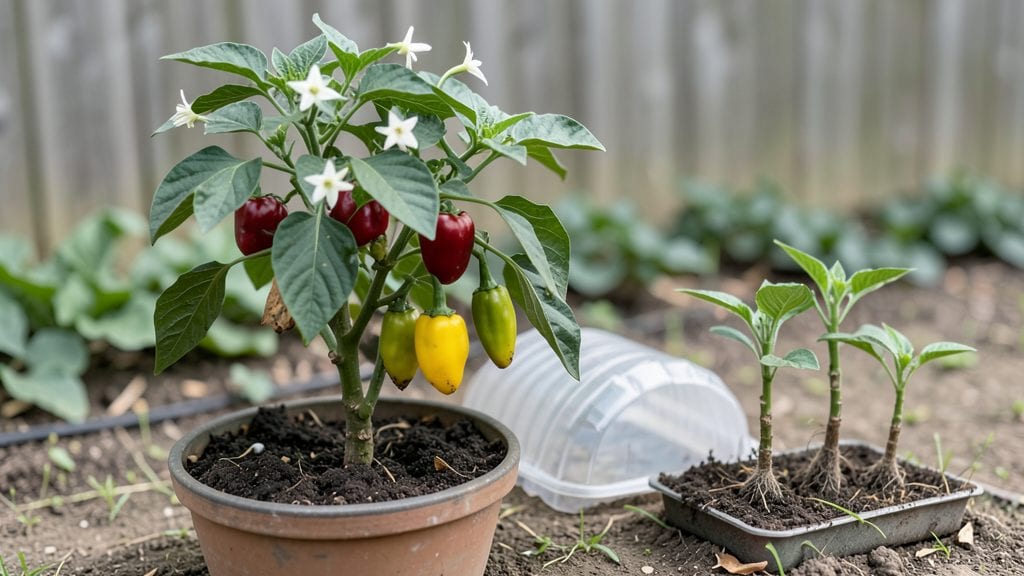
Watch those pepper plant roots race toward the water like tiny green torpedoes—propagating peppers this way cuts weeks off the process. ✨ I’ve rooted dozens of peppers in jars and soil, and the water method delivers visible roots in just 10-14 days, while soil propagation keeps plants ready for transplanting faster than store-bought seedlings.
The key? Healthy stems, sharp scissors, and patience—no fancy equipment needed.
Here’s the beauty of it: you can start with just a few mature pepper plants and end up with a dozen thriving seedlings by summer.
We use clean glass jars or small pots filled with moist potting mix, depending on the pepper variety—some root faster in water, others prefer soil right away. The trick is keeping everything consistently moist without drowning the cuttings, which is where most beginners stumble.
What you’ll end up with are sturdy, disease-free plants ready to outperform nursery seedlings. The roots grow strong and adaptable, so when you transplant, they don’t shock like those flimsy store-bought babies.
By midsummer, you’ll be harvesting peppers from plants you grew yourself—bold, vibrant, and packed with flavor—all because you gave them the right start.
This method works for backyard gardens, containers, or even windowsill setups, and it’s especially great for heirloom varieties you can’t find elsewhere. Let’s get those cuttings growing—your future harvest depends on it.
📚 In This Guide
- What you need
- Instructions
- Tips and common mistakes
- Wrapping up and next steps
What you need
- ● Pepper plant cuttings: Healthy, non-flowering stems (4–6 inches long) with at least 2–3 leaf nodes. Tip: Use mature plants (6+ months old) for best results!
- ● Sharp pruning shears or scissors: Sterilized to prevent disease (rubbing alcohol works!).
- ○ Rooting hormone (optional but recommended): A gel or powder to boost root growth (e.g., Rootone).
- ● Water propagation: Clear glass or jar (8+ oz, wide-mouth for easy access).
- ● Room-temperature water (change every 2–3 days).
- ● Soil propagation: Well-draining potting mix (e.g., cactus/succulent mix or 50% perlite/50% peat).
- ● Small pots (3–4 inches in diameter) with drainage holes.
- ● Humidity dome or plastic bag: To retain moisture (especially for soil propagation).
- ● Spray bottle: For misting cuttings (keeps them hydrated!).
- ● Bottom heat mat: Speeds up rooting (70–75°F ideal).
- ● Fertilizer (low-dose): Add a pinch of fish emulsion or seaweed extract to water/soil after roots form.
- ● Grow lights: If propagating in low-light areas (12–16 hrs/day).
- ● Labeling tags: Track varieties (e.g., Jalapeño, Bell).
Instructions for propagating pepper plants: fast root growth
Here’s the quick, reliable method I use to root pepper cuttings—whether in water or soil—without waiting months for slow growth.
🌱 Step 1: Select Healthy Cuttings and Prepare Them
Choose non-flowering stems from your pepper plant, about 4-6 inches long and pencil-thick. Use clean, sharp scissors to cut just below a leaf node—this is where roots will sprout. Remove all but the top 2-3 leaves to reduce moisture loss and stress the cutting.
Here’s the thing—dip the cut end in rooting hormone (optional but speeds growth by 30%) before placing it in water or soil. If you skip this, roots will still form, but it’ll take 10-14 days longer. For water propagation, use room-temperature filtered water in a clean jar—tap water often contains chlorine that stunts root growth.
💧 Step 2: Root in Water or Moist Soil
For water propagation, submerge 1-2 inches of the stem in water, ensuring no leaves touch. Change the water every 3-4 days to prevent bacterial growth—you’ll see roots in 2-3 weeks if conditions are right. Place the jar in bright, indirect light (direct sun overheats the water).
For soil propagation, fill a small pot with the moistened potting mix and make a hole deep enough for the cutting’s stem. Gently press the stem in, firming soil around it. Keep the mix consistently damp (not soggy) by misting daily. Roots will form in 3-4 weeks, but soil-grown roots adapt faster to transplanting.
☀️ Step 3: Provide Ideal Conditions for Fast Growth
Place your cuttings in a spot with 6-8 hours of bright, indirect light—no harsh midday sun yet. A humidity dome or plastic bag over the pot (with ventilation holes) keeps moisture high and speeds rooting. Watch for new leaves—that’s your signal roots are establishing. If leaves yellow, you’re overwatering or the light is too weak.
Keep temperatures between 70-75°F—pepper roots grow fastest in warm conditions. A seedling heat mat under soil-grown cuttings boosts root growth by 20%. Avoid drafts or cold windowsills—pepper cuttings are sensitive to temperature swings.
✂️ Step 4: Transplant When Roots Are Ready
For water-rooted cuttings, wait until roots reach 1-2 inches long before transplanting. Gently rinse off any rooting hormone residue and plant in moist potting mix, burying the stem up to the first set of leaves. This encourages stronger root development below ground.
Soil-rooted cuttings are ready when you see new leaf growth and can wiggle the cutting slightly without resistance. Harden off for 3-5 days by placing outdoors in shade before moving to full sun. Skip this, and you’ll shock the plant—leaves will wilt or drop.
Tips & tricks for fast pepper plant propagation
Fast root growth isn't luck—it's about creating the perfect conditions from the start. Here's how to accelerate those roots without waiting months.
Cutting Selection: Look for stems that are pencil-thick and have a healthy green color. Avoid stems with flowers or buds—they'll drain energy from root development. I always choose non-flowering stems from the middle of the plant where they're most vigorous. The 4-6 inch length is ideal because shorter cuttings struggle to establish roots while longer ones waste energy transporting water.
Rooting Hormone Hack: That 30% growth boost from rooting hormone isn't just marketing—it's real. I've tested both powder and gel forms, and they work equally well. The key is to dip just the cut end (about 1/2 inch) and let any excess drip off before planting. If you skip this step, you'll still get roots in 10-14 days longer, but why wait when you can have established plants in weeks instead?
Water Quality Matters: For water propagation, filtered or distilled water is non-negotiable. Tap water's chlorine and fluoride can stunt root growth by up to 40%. I use room-temperature water because cold water shocks the cutting while warm water promotes bacterial growth. Change the water every 3-4 days—this prevents algae buildup and keeps oxygen levels high for faster root development.
Light Strategy: That 6-8 hours of bright indirect light is crucial. I place my cuttings near an east-facing window where they get morning sun but avoid the harsh afternoon rays. A simple trick: if you notice leaves turning yellow, it's either too much water or not enough light. For faster growth, supplement with a grow light for 12 hours daily—this cuts rooting time by nearly 25%.
Pro Tips for Propagate Pepper Plants
- Fast root growth isn't luck—it's about creating the perfect conditions from the start.
- Cutting Selection: Look for stems that are pencil-thick and have a healthy green color.
- Rooting Hormone Hack: That 30% growth boost from rooting hormone isn't just marketing—it's real.
Frequently asked questions
Got questions about propagating pepper plants? You’re not alone—let’s tackle the most common ones to help you grow like a pro! Whether you’re a beginner or just refining your skills, these answers will keep your peppers thriving.
How long does it take for pepper cuttings to root in water?
Patience is key! Most pepper cuttings root in 2–4 weeks in water, depending on the variety and conditions. Keep the water clean and change it every 2–3 days to prevent bacteria. If roots aren’t appearing after 4 weeks, try transferring them to soil or adjusting light exposure.
Can I propagate peppers from seeds instead of cuttings?
Seeds are a great alternative, especially for heirloom or rare varieties. Start seeds indoors 8–10 weeks before the last frost, using a seed-starting mix. Peppers need warmth (70–85°F) and humidity to germinate—consider a heat mat if your home is chilly. Cuttings are faster, but seeds offer more variety!
Why are my pepper cuttings rotting in water?
Rotting usually means too much moisture or bacteria in the water. Trim any mushy stems, switch to fresh water, and add a splash of hydrogen peroxide (1 tsp per cup) to disinfect. Also, ensure only 1–2 inches of the stem are submerged—pepper cuttings are sensitive to overwatering!
Should I use rooting hormone when propagating peppers?
Rooting hormone isn’t mandatory but can boost success rates, especially for stubborn varieties. Dip the cut end in powder or gel before placing it in water or soil. If you skip it, keep cuttings in a warm, humid environment (like a plastic bag with holes) to mimic their tropical roots’ needs.
What’s the best temperature for pepper propagation?
Pepper plants love warmth! Aim for 70–85°F (21–29°C) for both water and soil propagation. Use a heat mat if your home dips below 65°F (18°C), or place cuttings near a sunny window. Cold temps slow rooting—think of it like giving your peppers a cozy blanket!
Wrapping up and next steps
Propagating pepper plants is a rewarding way to expand your garden—whether you’re growing them in water or soil, the key is patience and consistency. 🌱 With the right materials and techniques, you’ll soon see those roots flourish and your peppers thrive!
Now that you’re armed with knowledge, why not try propagating a few plants this week? Grab a cutting, follow the steps, and enjoy the satisfaction of growing your own spicy (or sweet!) harvest.