
Trees
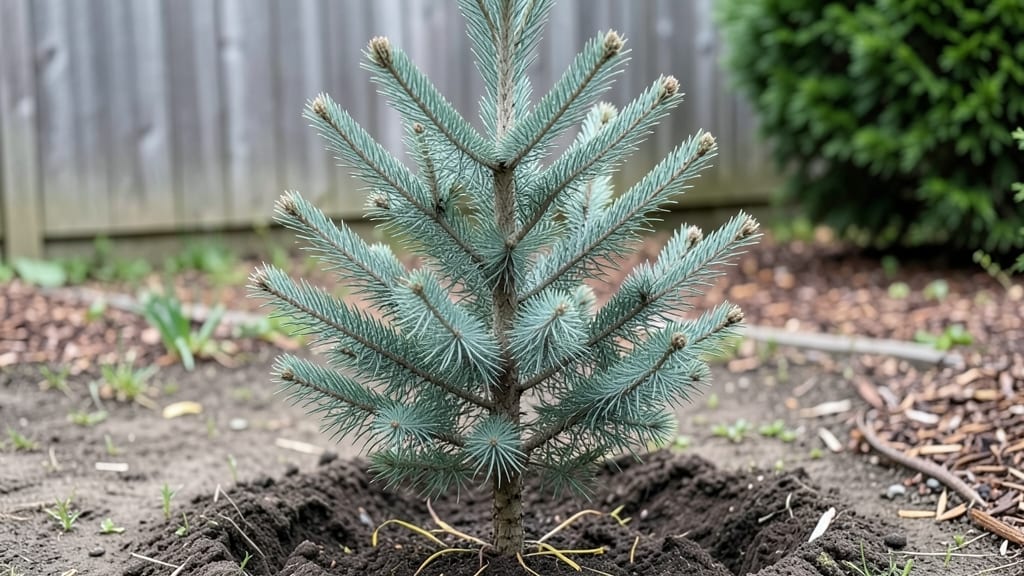
Planting evergreen trees the right way means fast roots that hold soil and privacy in place within three years. ✨ I learned this after my first attempt—digging too shallow and watering inconsistently—left a struggling cedar that took five years to fill out.
The secret isn’t just the hole; it’s the soil prep, root care, and follow-through that turns a sapling into a sturdy screen.
You’ll need basic tools—a shovel, gloves, and a 5-gallon bucket of water—plus a soil test kit if your yard’s clay-heavy or sandy. Evergreens like pine, spruce, and arborvitae thrive when planted in early fall or late winter, giving roots time to establish before summer heat.
My biggest mistake? Skipping the root flare check—now I always scrape back soil until I see the roots flare slightly above the hole’s edge.
After planting, you’ll see bright green needles within weeks if the soil stays moist but not soggy. Mulch keeps roots cool in summer and warm in winter, while weekly deep watering (1–2 gallons per tree) prevents transplant shock.
By year three, that sapling will cast shade, block wind, and look like it’s always been there.
Works for urban backyards, rural windbreaks, or privacy screens—just adjust spacing by species. Pines need 10–15 feet apart, while arborvitae can huddle 3–4 feet for a hedge. Here’s how to nail it the first time.
📚 In This Guide
- What you need
- Instructions
- Tips and common mistakes
- Wrapping up and next steps
What you need
- ● Evergreen tree saplings: Choose 3–5 healthy, bare-root or container-grown trees (species like Thuja, Juniperus, or Picea work great). Quantity depends on your desired density (e.g., 1 tree per 3–6 feet for a hedge).
- ● Shovel or spade: A digging shovel (18–24" wide) for planting holes and a transplant spade for moving saplings.
- ● Measuring tape or ruler: To ensure proper spacing (typically 3–6 feet apart for hedges, 10–15 feet apart for specimen trees).
- ● Garden gloves: Heavy-duty, waterproof gloves to protect your hands from thorns or rough bark.
- ● Pruning shears: Bypass pruners (sharp and clean) for trimming roots or shaping young trees.
- ● Mulch: 3–4 inches of organic mulch (pine straw, wood chips, or shredded bark) to retain moisture and suppress weeds.
- ● Watering can or hose with nozzle: A gentle spray nozzle for deep watering without disturbing soil.
- ○ Tree stakes (optional but recommended): 1–2 stakes per sapling (2–4 feet tall) to support young trees in windy areas.
- ● Staking straps or soft ties: T-tree or rubberized straps to secure stakes without damaging bark.
- ● Well-draining soil: Evergreens hate soggy roots! Amend clay soil with compost or sand if needed.
- ● Sunlight exposure: Most evergreens thrive in full sun (6+ hours/day), but some tolerate partial shade (check your species!).
- ● Space to grow: Account for mature tree width (e.g., Thuja occidentalis can reach 10–15 feet wide!).
- ● pH level: Ideal range: 5.0–7.0 (test soil with a pH kit if unsure).
- ● 🔥 Buy locally! Native evergreens adapt better to your climate—ask at a nursery for region-specific recommendations.
- ● 🌡️ Plant in early spring or fall: Avoid extreme heat or frost for the first 30 days of growth.
- ● ✨ Fertilize lightly: Use a slow-release, acid-loving fertilizer (like 10-10-10) only in the first year.
Step-by-Step instructions for planting evergreen trees
Here's how to establish evergreens with rapid root growth for quick privacy—no waiting years for shade or screens.
🌱 Step 1: Choose the Right Time and Location
Plant evergreens in early fall or late winter when soil is workable but not frozen. This timing lets roots establish before summer heat stress. Select a spot with 6+ hours of sunlight daily—most evergreens need full sun for dense growth. Avoid low-lying areas where cold air pools, as evergreens struggle with frost damage.
Test soil drainage by digging a 12-inch deep hole. If water pools after 30 minutes, amend the site with 2-3 inches of compost mixed into the top 6 inches of native soil. Evergreens hate soggy roots, and poor drainage is the #1 reason they fail. I always check drainage first—no exceptions.
🪴 Step 2: Dig and Prepare the Planting Hole
Dig a hole twice as wide as the root ball but only as deep—never deeper—than the container. Loosen the sides of the hole with a spade to encourage root spread. The extra width gives roots room to expand without circling, which strangles growth. I use a shovel with a rounded edge for clean, even sides.
Remove the tree from its container and gently loosen any circling roots with your fingers. If roots are tightly bound, score the root ball with a knife to encourage outward growth. Place the tree in the hole so the top of the root ball sits 1-2 inches above ground level. Evergreens settle over time, and planting too deep suffocates the trunk.
💧 Step 3: Backfill and Water for Immediate Root Contact
Fill the hole with native soil (no amendments here—too much fertilizer burns new roots). Press firmly around the edges to eliminate air pockets, but don’t compact the soil. Water deeply until moisture reaches 12 inches down, then let it drain completely. This first watering signals roots to grow outward instead of circling.
Add 2-3 inches of mulch (wood chips or pine straw) over the root zone, keeping it 6 inches away from the trunk. Mulch retains moisture and regulates soil temperature, but too close to the trunk invites rot. Water again after mulching to settle everything. You’ll know it’s right when the soil feels damp but not soggy 4 inches down.
☀️ Step 4: Stake and Protect for Fast Establishment
Install two stakes on opposite sides of the tree, 3-4 inches from the trunk, and tie with soft fabric strips (never wire—it cuts bark). Staking prevents wind rock, which disrupts root growth. Leave the top 6 inches of the trunk unstaked so the tree grows upright naturally. Remove stakes after 12 months to avoid girdling.
Install tree guards (wire mesh or commercial wraps) to deter deer and rabbits, which browse young evergreens to the ground. Secure guards tightly but loosely enough to allow the tree to sway slightly in wind—this strengthens stems. Check guards monthly for damage, especially in winter when animals seek shelter.
⏰ Step 5: Maintain for Rapid Growth
Water once weekly during the first growing season, delivering 10-15 gallons per tree to encourage deep rooting. Let the soil dry slightly between waterings—evergreens hate soggy feet but need consistent moisture. After 3 years, roots will spread 3 feet beyond the planting hole, creating a dense screen.
Apply balanced fertilizer (10-10-10) at half strength in early spring only. Over-fertilizing stresses young trees and attracts pests. Prune only to remove dead branches—never shape young evergreens. The goal is fast root establishment, not aesthetic perfection. You’ll see new growth at branch tips by late spring, signaling strong root development.
Tips & tricks for planting evergreen trees
Here's what I've learned from years of trial and error to help your evergreens establish quickly and thrive for that year-round privacy you're after.
Timing is Everything: The early fall or late winter planting window isn't just a suggestion—it's critical for fast root establishment. In Step 1, when you're choosing your timing, remember that cooler temperatures reduce moisture loss while allowing roots to grow steadily. I've seen evergreens planted in summer struggle with heat stress and poor root development, so don't be tempted to plant outside these windows. The 30-minute drainage test in Step 1 becomes even more important in fall when heavy rains can make soil waterlogged.
Root Ball Preparation Pays Off: In Step 2, when you're loosening those circling roots, think of it as giving your tree a head start. I've found that scoring tightly bound root balls with a knife creates micro-fractures that encourage outward root growth immediately. The goal is to mimic natural root spread, not just transplant the root ball as-is. And that 1-2 inch elevation above ground level? It's not just about settling—it prevents that dreaded "trunk suffocation" that happens when trees are planted too deep.
Watering Wisdom: That first deep watering in Step 3 isn't just about hydration—it's about signaling your evergreen's roots to grow outward rather than circling. I've seen too many newly planted trees with roots growing in tight circles because they weren't given this initial deep watering. The 12-inch moisture depth target might seem aggressive, but remember: you're not just watering the roots you see, you're encouraging roots to grow where they need to go. After mulching, check that 4-inch soil dampness—this is your gauge for proper moisture without soggy conditions.
Staking Strategy: The stakes in Step 4 aren't just for show—they prevent wind rock that can disrupt newly forming roots. But here's the secret: those soft fabric strips should be snug but adjustable. I've had stakes cut into bark when tied too tightly, and that's an open invitation for disease. And yes, you'll need to remember to remove them after 12 months—set a reminder now, because forgetting is the #1 reason stakes become permanent fixtures.
Pro Tips for Planting Evergreen Trees
- Here's what I've learned from years of trial and error to help your evergreens establish quickly and thrive for that year-round privacy you're after.
- Timing is Everything: The early fall or late winter planting window isn't just a suggestion—it's critical for fast root establishment.
- Root Ball Preparation Pays Off: In Step 2, when you're loosening those circling roots, think of it as giving your tree a head start.
Frequently asked questions
Got questions about planting evergreen trees for fast roots and year-round privacy? You’re not alone! Here are some of the most common concerns—plus straightforward answers to help you get started with confidence.
What’s the best time of year to plant evergreen trees for fastest growth?
Plant evergreens in early spring or fall (4–6 weeks before the first frost) for the fastest root establishment. Avoid extreme heat or cold—spring lets roots grow before summer stress, while fall gives them time to settle before winter. Just water deeply after planting to kickstart growth!
Can I plant evergreens in winter? What are the risks?
Winter planting is possible in mild climates, but frozen or waterlogged soil can stunt roots. If you must plant, choose a dormant, bare-root sapling and protect it with mulch. In cold regions, wait until spring—evergreens planted in winter may struggle with desiccation (drying out) or frost damage.
How close can I plant evergreens to my house or fence for privacy?
Keep evergreens 3–5 feet away from foundations and 2–3 feet from fences to avoid root competition or structural issues. For fast privacy, opt for columnar varieties (like ‘Emerald Green’ arborvitae) or thuja—they grow tightly and won’t overcrowd. Always check mature width in your tree’s tag!
How often should I water newly planted evergreens?
Water 2–3 times per week for the first year, giving 1–2 inches of water per session (deep soak, not light sprinkles). Evergreens have shallow roots, so mulch 3 inches deep to retain moisture. Reduce watering in winter unless it’s unusually dry or windy.
What if my evergreen turns brown after planting? Is it dead?
Brown needles are often normal stress from transplant shock—especially in new growth. If only the tips brown, prune them and increase water. If entire branches die, check for root rot (soggy soil) or dehydration (crispy needles). Give it time; healthy roots = new growth in spring!
Are there fast-growing evergreens that don’t need much maintenance?
Yes! Try ‘Green Giant’ arborvitae (3–5 ft/year) or ‘Leyland Cypress’ (3–4 ft/year) for speed. For low-maintenance, choose thuja occidentalis ‘Smaragd’—it’s disease-resistant and thrives in partial shade. Just prune lightly in spring to shape!
Wrapping up and next steps
Planting evergreen trees is a rewarding way to transform your outdoor space into a lush, private haven—fast! With the right species, soil prep, and care, you can enjoy year-round greenery and privacy in just three years.
Whether you’re a beginner or a seasoned gardener, these hardy trees thrive with minimal fuss, offering beauty and functionality for decades.
Ready to take the next step? Pick your favorite evergreen, gather your tools, and start planting today! Your future self—and your neighbors—will thank you. 🌲✨