Watering
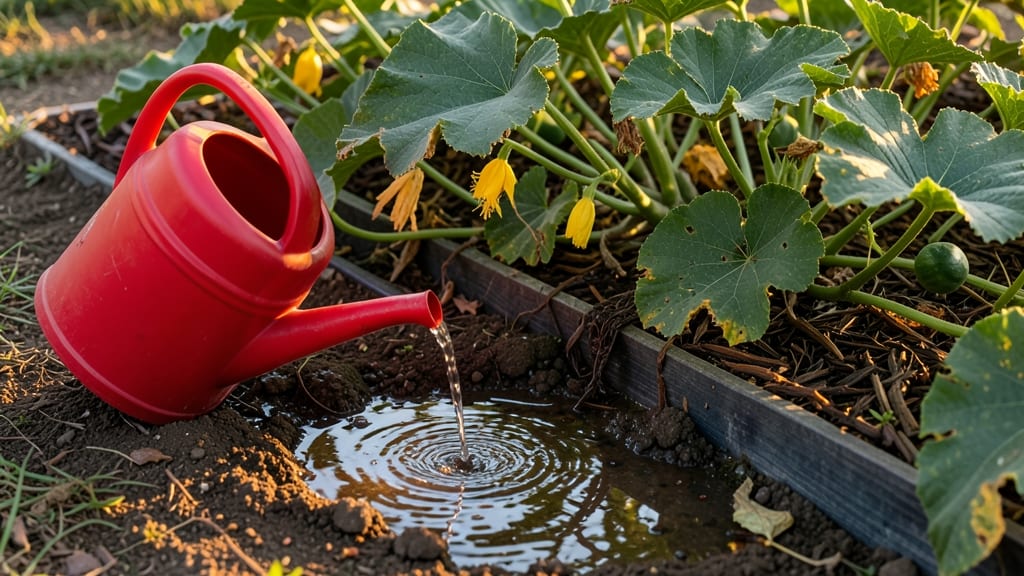
Overwatering squash plants turns your garden into a swamp—yellowing leaves, mushy stems, and fruit that never ripens. 🌱 I’ve watched healthy vines collapse from too much water, and the fix isn’t just cutting back.
It’s about understanding when the soil’s too wet, how to adjust your watering, and what to do when the damage is already done.
The first sign is always the leaves: bright yellow patches on lower foliage that spread upward. Then comes the rot—soft, blackened stems at the base where water pools. Squash roots need air too, and soggy soil suffocates them faster than you’d think.
Most gardeners overcorrect by watering less, but that’s only half the battle. Drainage matters just as much.
You can save your plants by adjusting your routine—watering only when the top inch of soil is dry, mounding soil around stems to improve airflow, and pruning the worst-affected leaves.
Within a week, new growth should appear, and the yellowing slows. The key is consistency: squash thrives on deep, infrequent watering, not daily sips.
Prevention starts with the right soil mix—amend heavy clay with compost or sand—and choosing well-draining containers if you’re growing in pots. Mulch helps too, keeping moisture steady without drowning the roots. Once you master the balance, your squash vines will reward you with bushy growth and plump fruit all season.
The Hidden Triggers Behind Squash Stress
When your squash plants start showing signs of distress—like yellowing leaves, wilted vines, or mushy fruit—overwatering is often the silent villain. But why does this happen? The issue usually stems from a mix of environmental, soil, and human factors that disrupt the plant’s delicate balance.
Let’s break down the root causes (pun intended) so you can fix the problem before it spreads.
Squash plants thrive in well-draining soil, but if your garden or containers retain too much moisture, their roots suffocate. Here’s why:
- Compacted soil: Heavy clay or tightly packed dirt blocks oxygen flow to roots, forcing them to gasp for air like a swimmer in quicksand. Without oxygen, roots can’t absorb nutrients efficiently, leading to yellowing leaves—a classic sign of anoxia (oxygen deprivation).
- Lack of organic matter: Soil rich in compost or peat helps create air pockets, but if it’s mostly dirt or sand, water pools around roots instead of draining away. Over time, this creates a waterlogged environment where harmful bacteria and fungi (like Pythium) thrive.
- Improper container drainage: Pots without drainage holes act like bathtubs for your squash. Even if you water lightly, excess moisture sits at the bottom, rotting roots within days. Pro tip: Always check for drainage holes before planting!
💡 Fix it: Amend heavy soil with perlite, vermiculite, or coconut coir. For containers, use a mix of potting soil and sand (or a pre-made "fast-draining" blend).
You might think squash plants—especially vining varieties like zucchini or butternut—need constant hydration. But too much, too often, throws their systems into chaos. Here’s how:
- Frequent shallow watering: Light sprinkles every day encourage roots to stay near the surface, where they dry out quickly. When you water again, the topsoil gets soggy, while deeper roots remain parched. This yoyo moisture cycle stresses plants and weakens their structure.
- Ignoring weather conditions: Watering on a schedule (e.g., every morning) doesn’t account for rain, humidity, or temperature. A sudden downpour followed by a cloudy day can drown roots if you stick to the routine. 🌡️ Rule of thumb: Water when the top 1–2 inches of soil feel dry.
- Heavy evening watering: Plants need time to dry out overnight. If soil stays damp in the cool, humid air, fungal spores (like downy mildew) multiply rapidly, causing yellowing leaves and stunted growth.
💡 Fix it: Water deeply but infrequently—aim for 1–1.5 inches per week, including rain. Use a moisture meter or the "knuckle test" (stick your finger in the soil) to gauge when it’s time to water. Early morning is best!
When squash roots sit in wet conditions for too long, they become a buffet for pathogens. Here’s how overwatering paves the way:
- Bacterial soft rot (Erwinia spp.): Warm, waterlogged soil creates the perfect breeding ground for bacteria that break down root cell walls. Infected roots turn black and mushy, cutting off the plant’s water and nutrient supply. Yellowing leaves follow as the plant starves.
- Pythium and Phytophthora (water molds): These fungi thrive in saturated soil and clog root pores, preventing water uptake. Infected plants wilt even when soil is moist—a condition called physiological drought.
- Powdery mildew: While not a root issue, overwatering creates humid conditions that spread this fungal disease above ground. White powdery patches on leaves block sunlight, turning them yellow as the plant struggles to photosynthesize.
💡 Fix it: Improve airflow with proper spacing (squash needs 3–5 feet between plants). If rot is suspected, remove affected plants immediately and treat soil with a copper fungicide or neem oil. For prevention, rotate crops yearly and avoid watering foliage.
Overwatering doesn’t just drown roots—it leaches away essential nutrients, leaving your squash malnourished. Here’s the science:
| Nutrient | Role in Squash | What Happens When Washed Out? |
|---|---|---|
| Nitrogen (N) | Leaf and vine growth | Yellowing older leaves (first sign of deficiency) |
| Potassium (K) | Root health and disease resistance | Weak stems, yellowing edges of leaves, fruit rot |
| Magnesium (Mg) | Chlorophyll production | Interveinal yellowing (veins stay green) |
Waterlogged soil also reduces beneficial microbes that help break down nutrients into plant-available forms. Without these helpers, even fertilized soil can’t support healthy growth.
💡 Fix it: Test your soil’s pH (ideal: 6.0–6.8 for squash). Add a balanced organic fertilizer (like 5-5-5) or compost tea to replenish nutrients. For containers, flush soil with water every few months to remove salt buildup from tap water.
Fixing Overwatered Squash Plants
Now that you know the signs and causes of overwatering, let’s roll up our sleeves and get your squash plants back on track! The good news?
Most damage from excess water is reversible if you act quickly. Below, we’ve matched common causes to practical fixes—plus tips to keep your plants thriving long-term.
If your squash plants are drowning in moisture, the first step is to cut back on watering immediately. Squash plants (like zucchini, pumpkins, and butternut squash) prefer consistent moisture but hate soggy roots.
🔥 Step 1: Pause Watering & Let Soil Dry
- Stop watering for 2–3 days to allow the soil to dry out slightly.
This helps prevent root rot and fungal diseases. - Check soil moisture by sticking your finger 1–2 inches deep—if it’s damp, wait another day. - Avoid watering in the evening—wet leaves at night encourage mildew. Morning watering (before 10 AM) is ideal.
🍳 Step 2: Improve Drainage Fast Poor drainage is a top culprit.
Fix it with these quick tweaks: - Add compost or perlite to heavy clay soil to loosen it up. - Raise garden beds slightly (or use containers with drainage holes) if your yard floods easily. - Create "watering trenches"—dig shallow furrows around plants to channel excess water away.
👨🍳 Step 3: Mulch to Regulate Moisture
A 2–3 inch layer of mulch (straw, wood chips, or shredded leaves) helps:
- Retain moisture (so you don’t overwater by accident).
- Prevent soil splashing onto leaves (reducing disease risk).
- Keep roots cool in hot weather.
If leaves are yellowing but stems are still firm, your plants may just need a boost to recover.
🔥 Step 1: Prune Damaged Foliage
- Snip off yellow or mushy leaves with clean scissors to redirect energy to healthy growth.
- Avoid pruning more than 20% of the plant at once—this can stress it further.
🥘 Step 2: Fertilize Gently Overwatered plants often lack nutrients.
Use a balanced, water-soluble fertilizer (like 10-10-10) diluted to half strength to avoid burning roots. - Best time to feed: After a light watering session (not on soggy soil). - Organic option: Mix in compost tea or fish emulsion for a gentle nutrient boost.
⏰ Step 3: Monitor Recovery
- Healthy new growth should appear in 5–7 days.
- If yellowing persists, check for pests (like squash vine borers) or nutrient deficiencies (like nitrogen).
Once your squash plants bounce back, keep them happy with these long-term strategies:
💡 Tip 1: Water Deeply but Infrequently
- Deep watering (1–2 inches per week) encourages strong roots.
- Use a moisture meter or the "squeeze test"—grab a handful of soil; if it crumbles, it’s dry enough.
🔥 Tip 2: Choose the Right Containers
If growing in pots:
- Use fabric grow bags (better drainage than plastic).
- Ensure pots have drainage holes—no exceptions!
- Size matters: Minimum 5-gallon pots for squash vines.
🎯 Tip 3: Plant in Well-Draining Soil
- Avoid compacted or clay-heavy soil—amend with sand, peat moss, or coconut coir.
- Test your soil’s pH (ideal: 6.0–6.8 for squash). A simple DIY pH kit works great.
✨ Tip 4: Watch the Weather
- After heavy rain, skip watering for 2–3 days.
- Use a rain gauge to track how much water your plants actually need.
If your squash plants show these red flags, they may not recover:
- Black, mushy stems (root rot has taken over).
- Wilted leaves that stay droopy even after watering stops.
- Foul-smelling soil (a sign of bacterial infection).
In these cases, remove the plant to prevent spreading disease, and disinfect your tools with rubbing alcohol. Start fresh with new seedlings in well-draining soil!
With these fixes, your squash plants should perk up in no time. Consistency is key—once you adjust your watering habits, you’ll enjoy a bountiful harvest without the guesswork! 🎉🍠
Frequently asked questions
How do I know if my squash plants are overwatered vs. underwatered?
Overwatered squash show yellowing leaves (especially lower ones), mushy stems, and wilting despite wet soil. Underwatered plants have crispy brown edges, dry soil pulling away, and leaves that droop but perk up when watered. Stick your finger 1–2 inches deep—if it’s damp, you’re overwatering.
Can I save squash plants with root rot from overwatering?
Early root rot (soft stems, yellow leaves) can recover if you stop watering immediately, improve drainage, and prune damaged foliage. But if stems turn black and mushy with a foul smell, the plant is likely beyond saving. Remove it to prevent spreading disease to healthy plants.
What’s the best way to test soil moisture for squash?
Use the finger test: Stick your index finger 1–2 inches deep into the soil. If it feels damp, wait to water. For precision, try a moisture meter (under $10) or the squeeze test—grab a handful; if it crumbles, it’s dry enough. Avoid watering if soil is still cool and moist.
Why do my squash leaves turn yellow after heavy rain?
Heavy rain can waterlog soil, suffocating roots and washing away nutrients like nitrogen. Yellowing often occurs because roots can’t absorb moisture or oxygen. Let soil dry out for 2–3 days after rain, and avoid watering until the top 1–2 inches feel dry. Mulch helps prevent this.
Are there squash varieties that handle wetter soil better?
Most squash varieties struggle with soggy soil, but bush varieties (like Eight Ball zucchini) adapt slightly better than vining types. For containers, choose compact varieties (e.g., Patio Star pumpkin) and ensure pots have drainage holes. Raised beds also improve drainage for all squash types.