
Watering
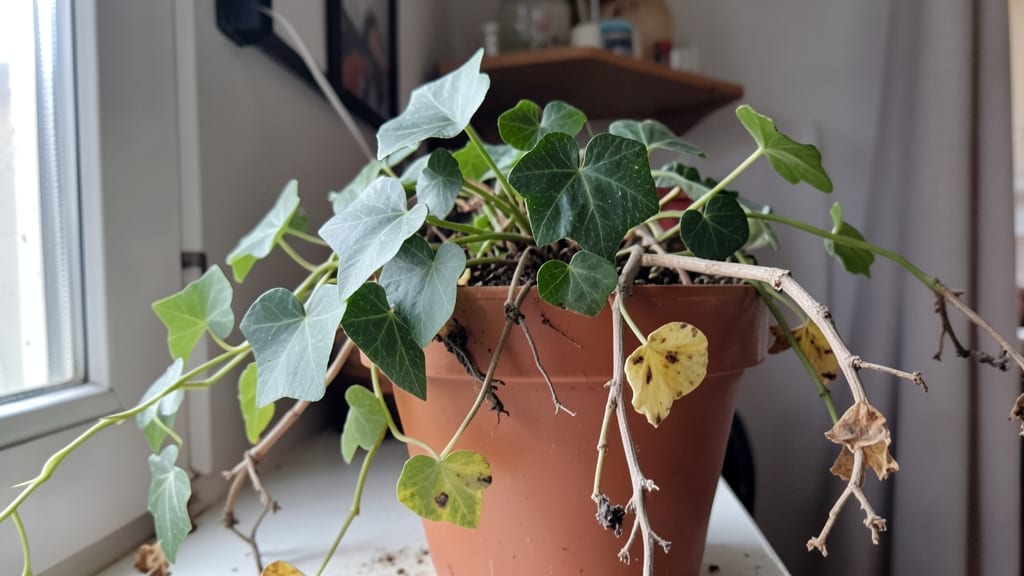
That sad, droopy look isn’t just wilting—it’s your overwatered ivy plant crying out for a rescue, and the fix is simpler than you’d think. 🌿 I’ve nursed back more soggy ivy roots than I’d like to admit, and the fix is... simpler than you’d think: stop watering, improve drainage, and give the roots a chance to breathe.
The first step is always the hardest—waiting—but it’s the only way to save your plant.
Here’s the thing—ivy roots rot when they’re constantly wet, even if the soil looks dry on top. Yellowing leaves, blackened stems at the base, and a musty smell are your warning signs. The good news? With the right adjustments, you’ll see fresh growth within 2-3 weeks.
Start by moving the plant to a pot with drainage holes or a spot where water can escape, and only water again when the top inch of soil feels dry.
Once you’ve stopped the drowning, keep it simple: water deeply but only every 1-2 weeks in normal conditions, less in winter. Ivy’s thick vines store moisture, so it’s more drought-tolerant than most people realize.
Your plant will bounce back with shiny new leaves and that classic ivy resilience—proof that even the most neglected plants can make a comeback.
This works for both English ivy and Hedera varieties, whether you’re growing it indoors or outdoors. The key is patience—ivy doesn’t need constant moisture, just consistent care. Once you’ve got the rhythm, you’ll never overwater again (and neither will your neighbors’ plants).
Root of the Problem
Overwatering your ivy plant—whether it’s the classic Hedera helix or a trailing variety like English Ivy—isn’t just about giving it too much H₂O. It’s a cascade of environmental and care mistakes that suffocate its roots and disrupt its natural balance.
Let’s break down the real culprits behind soggy soil and wilting vines, so you can fix the issue at its source.
Ivy plants thrive in well-draining soil because their roots hate sitting in waterlogged conditions. When drainage fails, excess moisture triggers: - Oxygen starvation: Roots need air to breathe.
Compacted or clay-heavy soil traps water, forcing roots to suffocate, leading to root rot (a fungal infection caused by Phytophthora or Pythium). - Nutrient leaching: Overwatering flushes out essential minerals like nitrogen, phosphorus, and potassium, which ivy relies on for lush growth. - Toxic buildup: Salts and chemicals from tap water or fertilizers accumulate in saturated soil, poisoning the roots over time.
💡 Pro Tip: Test your soil’s drainage by filling a pot with water, then timing how long it takes to drain. If it holds water for more than 30 minutes, repot with a chalky, gritty mix (like 60% potting soil + 30% perlite + 10% orchid bark).
Not all containers are created equal.
Here’s how your pot might be sabotaging your ivy: - Terracotta pots: While breathable, they dry out fast—but if they’re glazed on the inside, water pools at the base, creating a damp, anaerobic zone. - Plastic pots: Retain moisture like a sponge, keeping roots in a permanent swamp unless you’re vigilant about watering. - No drainage holes: Even the best soil can’t save a plant if water has nowhere to escape.
Roots drown, and the plant signals distress with yellowing leaves or mushy stems.
⚠️ Warning Sign: If your ivy’s soil smells sour or like rotten eggs, it’s a red flag for anaerobic conditions. Repot immediately into a terracotta or fabric pot with holes and sterilized soil.
Ivy plants are adaptable, but extreme environments throw their moisture balance off: - Cold roots: If your ivy sits in a drafty spot (like near an AC vent or uninsulated window), the soil stays colder, slowing evaporation and prolonging dampness. - High humidity: While ivy loves moisture in the air, humid climates + overwatering = double trouble.
The plant can’t "sweat out" excess moisture, leading to bacterial leaf spot or powdery mildew.
🌡️ Fix It: Keep ivy in 60–70°F (15–21°C) ranges and 40–50% humidity. A pebble tray with water (not touching the pot) can help regulate humidity without drowning roots.
Even well-draining soil can’t handle a rigid routine. Ivy’s water needs fluctuate based on: - Season: In winter, growth slows, so roots need half the water they do in spring/summer. - Light levels: Low light = less evaporation = soil stays wet longer.
A north-facing ivy may need water every 10–14 days, while a sunlit one might dry out in 5–7 days. - Pot size: A small pot dries out faster than a large one, but a big pot holds moisture longer—leading to root rot in the center.
⏰ Rule of Thumb: Stick your finger 1–2 inches into the soil. If it’s dry, water; if damp, wait. Use a moisture meter for precision.
Too much fertilizer (especially high-nitrogen or synthetic blends) forces ivy to grow faster than its roots can handle.
The result? - Salinity buildup: Excess salts burn root tips, reducing the plant’s ability to absorb water efficiently. - Weak root structure: Soft, spindly roots can’t support the plant, leading to top-heavy collapse and waterlogging stress.
💡 Fix: Switch to a balanced, organic fertilizer (like fish emulsion) and flush the soil every 2 months with plain water to leach out salts.
Soggy soil isn’t just a water issue—it’s an open invitation for: - Fungal infections: Rhizoctonia or Fusarium thrive in wet conditions, causing root rot and stem lesions. - Pests: Scale insects and mealybugs love damp, stressed plants.
They sap nutrients, weakening the ivy’s ability to recover from overwatering.
🚨 Spot the Signs: Check for sticky residue (honeydew), white cottony patches, or black sooty mold on leaves. Treat with neem oil or insecticidal soap if infested.
Revive Your Ivy Plant Now
If your ivy plant’s leaves are drooping, yellowing, or falling off due to overwatering, don’t panic—it’s often reversible with the right care! The key is to correct the watering habits, improve drainage, and help your plant recover without stress.
Below, we’ll break down the most common causes of overwatering and the easy, actionable fixes to bring your ivy back to life. Plus, we’ll share pro tips to keep it thriving long-term.
Cause: Waterlogged roots from frequent or heavy watering suffocate the plant, cutting off oxygen and nutrients. Solution:
- Pause watering for 3–5 days to let the soil dry out. Ivy plants prefer moderate moisture, not soggy conditions.
- Check the soil before watering again: Stick your finger 1–2 inches deep. If it’s damp, wait another day.
- Pro Tip: 🌡️ If the soil smells musty or feels cold and clammy, your plant is in distress—act fast!
Cause: Poor drainage traps excess water, leading to root rot. Ivy plants hate “wet feet”! Solution:
- Repot if needed: If your pot lacks drainage holes, transfer your ivy to one with holes (or add a layer of pebbles at the bottom as a temporary fix).
- Use well-draining soil: Mix potting soil with perlite, sand, or orchid bark (20–30%) to improve aeration.
- Empty saucers after watering: Never let your plant sit in standing water—this is a common overwatering trap!
Cause: Overwatering weakens leaves, causing them to turn yellow, brown, or crispy. Solution:
- Snip off dead or mushy leaves with clean scissors to redirect the plant’s energy to healthy growth.
- Focus on yellowing leaves—they’re often the first sign of stress. Trim them at the base to prevent further nutrient drain.
- Pro Tip: ✨ If more than 50% of the plant is affected, don’t worry—new growth will emerge once the roots recover!
Cause: Stagnant air and low light slow recovery by trapping humidity around the plant. Solution:
- Move to brighter, indirect light (e.g., near a window but not in direct sun). Ivy thrives in medium to bright indirect light.
- Increase airflow: Place a small fan nearby (on low) to gently circulate air, or open a window occasionally.
- Avoid cramped spaces: If your ivy is in a tight corner, relocate it to a roomier spot.
Cause: If overwatering persists, roots may rot, turning black and mushy. Solution:
- Gently remove the plant from its pot and inspect the roots. Healthy roots are firm and white; rotten roots are slimy and dark.
- Trim rotten roots with sterilized scissors, then dust the cuts with cinnamon or fungicide to prevent infection.
- Repot in fresh, dry soil and hold off on watering for a full week to let the roots recover.
Now that your plant is on the mend, keep these habits to avoid future overwatering: - Water only when the top 1–2 inches of soil are dry (test with your finger!). - Use the “thumb test”: Press your thumb into the soil—if it feels damp, wait. - Choose the right pot: Terracotta pots dry out faster than plastic, making them ideal for ivy. - Monitor humidity: Ivy prefers moderate humidity.
Mist leaves occasionally (but avoid soggy conditions!). - Seasonal adjustments: Reduce watering in winter when growth slows.
With these steps, your ivy should bounce back in 2–4 weeks, showing fresh green leaves and perky vines. Remember, ivy is resilient—it’s all about correcting the damage and adjusting care moving forward. Happy repotting! 🌿💚
Frequently asked questions
How do I know if my ivy plant is truly overwatered?
Check for these key signs: yellowing leaves (especially lower ones), drooping vines, and soil that smells sour or feels cold and damp. Another clue? The leaves may develop brown edges or crispy spots. If you gently tug on the plant and it slides out easily, the roots are likely rotting from excess moisture.
Can I save my ivy if the stems are mushy and black?
Yes, but act fast! Trim away all blackened, mushy stems with sterilized scissors, then repot in fresh, well-draining soil (mix potting soil with perlite). Hold off on watering for 5-7 days to let the roots recover. New growth should appear in 2-3 weeks if the root system isn't completely destroyed.
Why does my ivy need less water in winter?
Ivy growth slows dramatically in winter due to reduced light and cooler temperatures. The roots absorb moisture more slowly, so they need half the water they do in spring/summer. Water only when the top 2 inches of soil are completely dry—usually every 2-3 weeks indoors.
Is it better to underwater than overwater ivy?
For ivy, underwatering is less risky than overwatering. While it may wilt slightly when thirsty, it recovers quickly once watered. Overwatering causes irreversible root rot. The key is balance: water when the top inch feels dry, but never let the plant sit in soggy soil.
How can I fix my ivy's drainage without repotting?
Add a 2-inch layer of perlite or coarse sand on top of the existing soil to improve aeration. For pots without drainage holes, place the pot on a tray of pebbles (not touching the bottom) to allow excess water to evaporate. Water less frequently until you can repot.