
Pruning
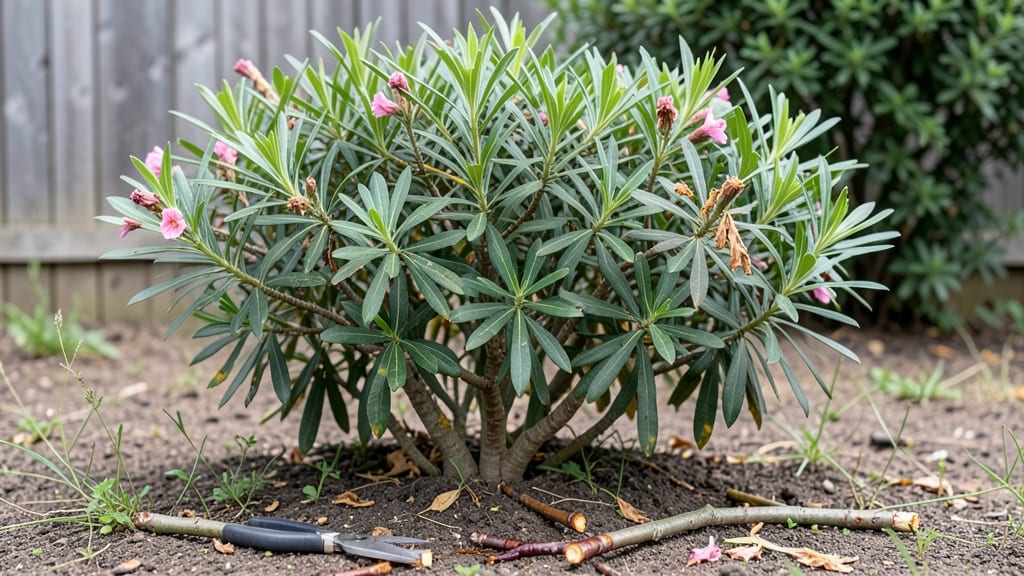
Pruning oleander plants transforms leggy vines into thriving, bushy shrubs covered in fragrant blooms—if you do it right. I learned the hard way that timing and technique matter more than enthusiasm, especially with this toxic beauty that rewards patience.
The best time to trim is right after the last frost, when new growth starts pushing out, but before summer heat stresses the plant. One wrong cut can set you back a whole season, so I’ll show you exactly where to snip for maximum blooms and minimal stress.
You only need three tools: sharp bypass pruners for clean cuts, a pair of gloves (oleander sap isn’t just toxic—it’s sticky), and a bucket for clippings. The real secret? Cutting back to the nearest leaf node at a 45-degree angle—this encourages branching instead of long, bare stems.
I’ve seen oleanders go from sad, straggly sticks to 6-foot-tall blooming powerhouses in just one growing season using this method. And yes, you can shape it into a hedge or let it grow wild—it’s that versatile.
What you’ll end up with is a plant that bursts with pink, white, or red flowers from late spring through fall, plus dense foliage that blocks unsightly views. The key is pruning lightly in early summer to maintain shape and doing a heavy trim in late winter to rejuvenate.
Just avoid cutting into old wood—oleanders hate it when you force them to regrow from scratch. The result? A plant that looks like it belongs in a tropical paradise, not your backyard.
This method works for both container-grown oleanders and those planted in the ground, though potted plants need more frequent trims to control size. And if you’ve ever struggled with oleander pruning, this is the year you’ll finally get it right.
Let’s get those shears sharpened—your plant’s about to look like a million bucks.
📚 In This Guide
- What you need
- Instructions
- Tips and common mistakes
- Wrapping up and next steps
What you need
- ● Sharp bypass pruners – 1 pair (clean, rust-free, and capable of cutting through ½-inch stems). Pro tip: Disinfect with rubbing alcohol between cuts to prevent disease spread! 💡
- ● Long-handled loppers – 1 pair (for thicker branches, 1½–2 inches in diameter). Look for bypass blades to avoid crushing stems.
- ● Pruning saw – 1 (for stubborn, woody branches over 2 inches thick). Opt for a bow or curved blade for precision.
- ● Heavy-duty gloves – 1 pair (oleander sap can irritate skin; choose nitrile-coated gloves for grip and protection).
- ● Safety goggles – 1 pair (to shield eyes from debris, especially when sawing).
- ● Disinfectant (rubbing alcohol or 10% bleach solution) – small bottle (for sterilizing tools).
- ● Trash bags or compost bin – 1–2 (for clippings; do not compost—oleander is toxic!).
- ● Pole pruner – If your oleander is tall (6+ feet), this extends your reach without a ladder! 🌳
- ● Ladder (stable, 6–10 ft) – For hard-to-reach branches (ensure it’s non-slip and secured).
- ● Hose or spray bottle – To clean sap off tools and skin post-pruning.
- ○ Plant growth regulator (optional) – If overgrowth is severe, a 1–2% solution can help control new shoots.
Instructions for oleander plant pruning
Here's how to revitalize your oleander with precise cuts that encourage fuller growth and more flowers.
Assess and Prepare for Pruning
Start by examining your oleander for dead, diseased, or crossing branches. I like to prune on a dry, sunny morning when the plant is actively growing—this minimizes stress and lets you see the structure clearly. Remove any branches that are brown, mushy, or showing signs of pests like holes or webbing. These won't recover and will only drain energy from healthy growth.
Gather your tools: clean, sharp pruning shears for larger branches and small bypass pruners for finer cuts. Wipe the blades with rubbing alcohol before you start—oleander sap can gum up dull tools quickly. Wear long sleeves and gloves; the milky sap is toxic if it touches skin or gets into cuts.
Trim for Shape and Airflow
Begin by cutting back any branches that are rubbing against each other or growing inward. Oleanders bloom best when they have good airflow, so aim to create an open, rounded shape. Make your cuts just above a leaf node or bud, at a 45-degree angle, to encourage new growth from that point. Avoid leaving stubs—this can invite disease.
For shaping, focus on the outer branches first. I usually trim back the tips of the longest branches by about one-third to encourage bushier growth. If your oleander is leggy, cut back the top growth more aggressively—this forces energy into lower branches and creates a fuller plant. Watch for where the leaves are thickest; these areas will produce the most flowers.
Encourage Blooms and Maintain Health
After shaping, look for branches that haven't bloomed well in the past. These are often the oldest or most shaded stems. Cut them back by half to stimulate new flowering shoots. Oleanders bloom on new wood, so pruning in late winter or early spring—just as buds begin to swell—gives them time to develop fresh growth before the blooming season.
Finish by removing any suckers or water sprouts at the base of the plant. These are fast-growing, weak stems that steal energy from the main structure. Once you're done, step back and admire your work—you should see a balanced, open shape with room for airflow. Water deeply after pruning to help the plant recover, but avoid overwatering for the next few days.
Tips & tricks for perfect oleander pruning
Revitalizing your oleander with the right cuts makes all the difference between a leggy, sparse plant and one bursting with lush foliage and vibrant blooms.
Tool Prep Matters: Before you begin, take an extra five minutes to sharpen your pruning shears and wipe them with rubbing alcohol. Dull blades tear plant tissue instead of making clean cuts, which can stress your oleander and invite disease. I always keep a small bottle of rubbing alcohol in my gardening toolkit specifically for this purpose—it's a game-changer for keeping tools ready for any plant.
The 45-Degree Angle Secret: When making your cuts in Step 2, visualize a small slice of pizza—your cut should mimic that same angled shape. This angle prevents water from pooling on the cut surface, which could lead to rot. The angle also creates a natural shield that protects the cut from direct sunlight, helping the plant heal faster. Remember, you're not just cutting branches—you're shaping the plant's future growth pattern.
Pruning Timing is Critical: While the instructions suggest late winter or early spring, I've found that pruning just after the first flush of new growth appears in spring gives even better results. This timing allows the plant to recover quickly and puts all its energy into producing fresh, flowering shoots for the upcoming season. If you miss this window, late summer pruning can still work, but you'll likely sacrifice some of the year's blooms.
Sucker Control Strategy: Those pesky suckers at the base of your oleander? Don't just yank them out—use clean pruning shears to make a precise cut at the base. This prevents damage to the main stem and reduces the chance of disease entering through torn tissue. I make it a habit to check for new suckers every few weeks during the growing season, removing them as soon as I spot them to maintain the plant's energy focus on the main structure.
Pro Tips for Oleander Plant Pruning
- Revitalizing your oleander with the right cuts makes all the difference between a leggy, sparse plant and one bursting with lush foliage and vibrant blooms.
- Tool Prep Matters: Before you begin, take an extra five minutes to sharpen your pruning shears and wipe them with rubbing alcohol.
- The 45-Degree Angle Secret: When making your cuts in Step 2, visualize a small slice of pizza—your cut should mimic that same angled shape.
Frequently asked questions
Got questions about oleander pruning?
You’re not alone! Here are answers to the most common concerns—from timing to tools and troubleshooting—to keep your oleander thriving.
When is the best time to prune oleander?
Prune oleander after flowering (late spring to early summer) to encourage new growth and blooms. Avoid heavy cuts in fall or winter—oleander is semi-dormant then and may struggle to recover. Light shaping in early spring is fine, but wait until warm weather to avoid frost damage.
Can I use regular shears or do I need specialty tools?
For small jobs, clean, sharp bypass pruners work great! For thicker stems (over ½ inch), use loppers or a pruning saw. Disinfect tools with rubbing alcohol between cuts to prevent disease. Never use hedge trimmers—they tear leaves and damage stems.
What if my oleander looks sad after pruning?
Yellowing leaves or sparse growth? You might’ve pruned too much at once. Oleander is resilient but prefers gradual shaping. If stems are bare or leggy, focus on selective trimming—cut back only ⅓ of the plant’s height per session. Overwatering post-prune can also stress it; let soil dry slightly between waterings.
Will pruning kill my oleander’s flowers?
Not if done right! Prune after blooms fade to preserve next year’s flowers. If you must prune during flowering, trim spent blooms only—avoid heavy cuts. Oleander blooms on new wood, so light, strategic pruning actually boosts future blooms by promoting bushier growth.
Are there alternatives to pruning for shaping oleander?
Yes! For a natural look, try pinching (removing the tip of new growth) to encourage branching. You can also braid or weave stems (common in tropical landscaping) to train growth without cutting. Just avoid heavy pruning—oleander grows best with minimal intervention.
Wrapping up and next steps
Pruning your oleander isn’t just about keeping it tidy—it’s the secret to vibrant blooms, lush foliage, and a stronger plant! 🌸 By following the right timing, tools, and techniques, you’ll encourage healthy growth and prevent pests or disease.
Whether you’re trimming for shape, size, or rejuvenation, a little effort now means stunning results all season long.
Ready to give your oleander the TLC it deserves? Grab your pruners and start trimming today! For extra confidence, watch a quick video tutorial or join a gardening forum to share your progress. Happy pruning—your oleander will thank you with bountiful beauty! 🌿✨