
Pests and Diseases
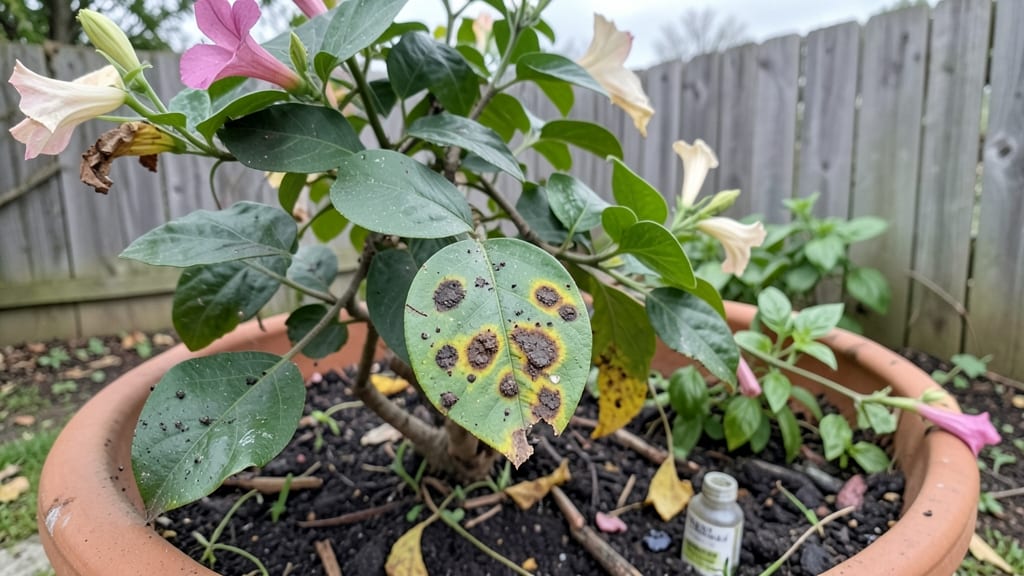
Mandevilla plant diseases can turn your vibrant tropical climber into a sad, spotted mess if you don’t act fast. I’ve seen healthy vines go from lush green to brown and wilted in just weeks—until I learned the early signs of fungal infections, bacterial rot, and stress-related issues.
The key is catching problems before they spread, and I’ll show you exactly what to look for.
Most issues start with environmental stress—too much moisture, poor airflow, or sudden temperature swings. Fungal spots often appear as dark, greasy patches on leaves, while bacterial infections cause yellowing and oozing stems.
Even overwatering or compacted soil can trigger decline, and once symptoms show, the plant fights back harder than you’d expect. The good news? Most problems respond well to quick fixes once you know what to do.
You’ll learn to prune infected areas, apply organic fungicides like neem oil, and adjust care routines to prevent future outbreaks. Within days, you’ll see new growth pushing through, and your mandevilla will bounce back stronger than ever. The secret is acting early—before the disease takes over.
This works for both potted and in-ground mandevillas, no matter your climate. Let’s get your plants back to their showstopping best before summer heat makes things worse.
Root Causes Of Mandevilla Struggles
Mandevillas are stunning tropical vines, but their lush foliage and vibrant blooms can quickly fade if diseases take hold. Understanding why these issues arise is the first step to prevention. Let’s break down the key culprits behind Mandevilla plant diseases—and how environmental and biological factors set the stage for trouble.
Mandevillas thrive in warm, humid conditions, but excessive moisture without airflow creates the perfect breeding ground for fungal pathogens like Phytophthora and Botrytis. Here’s why it happens:
- Stagnant air prevents water evaporation, keeping leaves damp longer. Fungal spores latch onto wet surfaces, germinate, and spread rapidly.
- Overcrowded plants block airflow, trapping humidity near foliage. This is especially risky in greenhouses or containers where plants are packed tightly.
- Poor drainage in pots or soil leads to waterlogging. Roots suffocate, weakening the plant’s defenses, while excess surface moisture invites fungal infections.
💡 Pro Tip: Space Mandevillas at least 12–18 inches apart and prune to improve airflow. Use well-draining soil mixes (like cactus or orchid blends) and elevate pots to prevent water pooling.
Fungal diseases like Alternaria leaf spot or Powdery Mildew don’t just appear out of nowhere—they’re often dormant in the environment, waiting for the right conditions to strike. Here’s how:
- Contaminated tools or soil: Fungal spores can survive in old potting mix, garden tools, or even mulch from previous seasons. Reusing infected materials spreads the problem.
- Spores from neighboring plants: Wind or splashing water can carry spores from infected host plants (like tomatoes or impatiens) to your Mandevilla.
- Stress weakens defenses: Drought, nutrient deficiencies, or temperature swings make plants more susceptible to fungal invasion.
🔥 Action Step: Sterilize pruners with rubbing alcohol between cuts, avoid overhead watering, and quarantine new plants for 2 weeks to spot early signs of disease.
While pests like aphids, mealybugs, or spider mites are annoying on their own, they also damage plant tissues, creating entry points for bacterial and fungal infections. Here’s the connection:
- Physical damage: Insect feeding creates wounds where pathogens can invade. For example, aphids excrete honeydew, which fosters sooty mold—a fungal growth that smothers leaves.
- Virus vectors: Some pests (like whiteflies) transmit viruses (e.g., Tomato Mosaic Virus) that stunt growth and weaken immunity.
- Stress from infestations: A heavily infested Mandevilla diverts energy to recovery, leaving it vulnerable to secondary infections.
🎯 Prevention Tip: Inspect leaves regularly (especially undersides) for pests. Use neem oil or insecticidal soap before outbreaks, and remove heavily infested foliage immediately.
Mandevillas are tropical—they hate extremes. Sudden temperature drops, cold drafts, or inconsistent watering disrupt their biological processes, making them easy targets for disease. Key triggers:
| Stress Factor | How It Weakens the Plant | Resulting Disease Risk |
|---|---|---|
| Cold snaps (<40°F) | Slows metabolism; cells rupture from frost | Bacterial leaf spot, root rot |
| Overwatering | Drowns roots; oxygen deprivation | Phytophthora root rot, stem canker |
| Underwatering | Leaf scorch; nutrient transport halts | Powdery mildew (stressed plants attract spores) |
| Hard water buildup | Salt crusts block root uptake | Fungal infections from weakened roots |
🌡️ Climate Control Tip: Keep Mandevillas in consistent 60–85°F zones. Use mulch to regulate soil temp, and water deeply but infrequently (let the top 1–2 inches dry between sessions).
By addressing these root causes—airflow, spores, pests, and stress—you’ll slash the risk of Mandevilla diseases before they take hold. Next, we’ll dive into how to spot these issues early so you can act fast.
Quick Fixes for Mandevilla Woes
Reviving your Mandevilla plant starts with identifying the root of the problem—whether it’s fungal infections, bacterial blights, or pest invasions. Below are practical, step-by-step solutions tailored to each issue, plus prevention tips to keep your plant thriving. Let’s get your Mandevilla back to its vibrant best!
🔥 Treat Powdery Mildew
Powdery mildew turns leaves into a ghostly white canvas? Act fast—this fungus thrives in humid, low-light conditions.
- 🍳 Prune the Problem Areas Snip off severely infected leaves with clean, sharp pruners. Dispose of them in the trash (not compost) to prevent spread.
- 👨🍳 Spray with Fungicide Use a copper-based fungicide (like Copper Soap) or a neem oil solution (1 tsp neem oil + 1 quart water + a drop of dish soap). Spray both sides of leaves thoroughly. Repeat every 7–10 days until symptoms fade.
- 🌡️ Boost Airflow & Light Move your Mandevilla to a sunnier spot (but avoid scorching afternoon sun) and space plants 2–3 feet apart to improve airflow.
✨ Prevention Tip: Water early in the morning so leaves dry quickly. Avoid overhead watering—use a drip irrigation system or water at the base.
🍄 Battling Leaf Spot Diseases
Brown or black spots with yellow halos? That’s leaf spot, often caused by Alternaria or Septoria fungi.
- 🔪 Remove Infected Leaves Cut off spotted leaves immediately. Sterilize pruners with rubbing alcohol between cuts.
- 🥘 Apply a Protective Fungicide Mix 1 tbsp baking soda + 1 quart water + a few drops of dish soap. Spray once a week for 2–3 weeks. For severe cases, switch to a systemic fungicide like Myclobutanil.
- 🌿 Adjust Watering Habits Water only when the top inch of soil is dry. Use well-draining soil (amend with perlite or sand) to prevent soggy roots.
💡 Pro Tip: Mulch around the base (2–3 inches of organic mulch) to keep soil moist but not waterlogged.
If your Mandevilla leaves look oily, yellow, or have water-soaked spots, bacteria like Xanthomonas or Pseudomonas might be to blame.
- 🚫 Isolate the Plant Move the infected Mandevilla away from healthy plants to prevent spread. Do not compost diseased foliage.
- 🧼 Clean with Antibacterial Spray Mix 1 tsp hydrogen peroxide (3%) + 1 quart water. Spray every 3–4 days until new growth appears. For stubborn cases, use a copper fungicide (bacteria can be tricky!).
- 🌞 Improve Growing Conditions Bacteria love wet leaves and poor airflow. Ensure your Mandevilla gets:
- 6+ hours of sunlight daily
- Well-draining soil (avoid clay-heavy mixes)
- Space between plants (at least 18 inches apart)
🎯 Prevention Tip: Sterilize pruners and pots with bleach solution (1 part bleach to 9 parts water) before reuse.
🕷️ Mealybugs: The Fluffy Invaders
Cottony white clusters on stems or undersides of leaves? Mealybugs are sucking the life out of your Mandevilla.
- 🧼 Wipe Them Away Dampen a cotton swab with rubbing alcohol (70% isopropyl) and gently dab each mealybug. Repeat daily until gone.
- 🍋 Spray with Soapy Water Mix 1 tsp mild dish soap + 1 quart water. Spray directly on pests (avoid overspraying leaves). Reapply every 3–5 days.
- 🌿 Introduce Beneficial Insects Release ladybugs or Cryptolaemus beetles (available at garden centers) to eat mealybugs naturally.
💡 Pro Tip: Neem oil (1 tsp + 1 quart water) disrupts their life cycle—spray weekly as a preventative.
🕸️ Spider Mites: The Tiny Web Weavers
Tiny red dots and fine webbing on leaves? Spider mites thrive in dry, dusty conditions.
- 💦 Blast Them Off Spray leaves with water to knock mites off. Repeat every 2–3 days for a week.
- 🍎 Use a Miticide Spray Mix 1 tbsp vegetable oil + 1 tsp dish soap + 1 quart water. Spray both sides of leaves until fully coated. Repeat every 5 days.
- 🌡️ Increase Humidity Spider mites hate humidity! Place a humidifier nearby or mist leaves daily. A pebble tray with water under the pot also helps.
✨ Prevention Tip: Dust leaves weekly with a damp cloth to remove mites before they multiply.
If your plant is weak from disease or pests, give it a full recovery boost:
- 🌞 Light Check: Ensure bright, indirect light (south or west-facing windows are ideal).
- 💧 Water Wisely: Water when the top 1–2 inches of soil are dry—never let it sit in water.
- 🌱 Fertilize Lightly: Use a balanced liquid fertilizer (10-10-10) once a month in spring/summer. Stop fertilizing in fall/winter.
- 🪴 Repot if Needed: If roots are crowded or rotting, repot into fresh, well-draining soil with perlite or orchid bark.
Final Thought: Most Mandevilla diseases and pests are preventable with proactive care. Once you spot the issue, act fast—prune, treat, and adjust conditions to give your plant the fighting chance it deserves! 🌟
Frequently asked questions about Mandevilla plant diseases
What are the most common diseases affecting Mandevilla plants?
Mandevillas typically battle powdery mildew (white, powdery patches), leaf spot diseases (dark spots with yellow halos), and root rot (wilting, mushy stems). Bacterial issues like Xanthomonas also cause oily yellow spots. These problems thrive in humid, poorly ventilated conditions.
How do I tell if my Mandevilla has a fungal infection vs. bacterial infection?
Fungal infections show up as powdery white coatings (powdery mildew) or dark, dry spots (leaf spot). Bacterial infections, however, create water-soaked, oily lesions that often ooze. Check for yellowing around spots—fungal spots usually have clear halos, while bacterial spots blend into the leaf.
Can I save a Mandevilla with root rot?
Yes, but act fast! Remove the plant from its pot, trim away mushy, black roots with sterilized scissors, and repot in fresh, well-draining soil with perlite. Water lightly and place in bright, indirect light while it recovers. If over 50% of roots are rotted, propagation from healthy cuttings may be your best bet.
Why does my Mandevilla keep getting powdery mildew even after treatment?
Powdery mildew often returns if humidity stays high or airflow is poor. Increase spacing between plants, avoid overhead watering, and use a fan on low near the plant. Reapply fungicide every 7–10 days and consider a systemic fungicide like Myclobutanil for stubborn cases.
Are there organic ways to prevent Mandevilla diseases?
Use neem oil (1 tsp per quart of water) as a preventative spray monthly, and apply baking soda solution (1 tbsp baking soda + 1 quart water) weekly. Improve airflow by pruning crowded growth, and always sterilize tools with rubbing alcohol between cuts to prevent spreading spores.