
Companion Plants
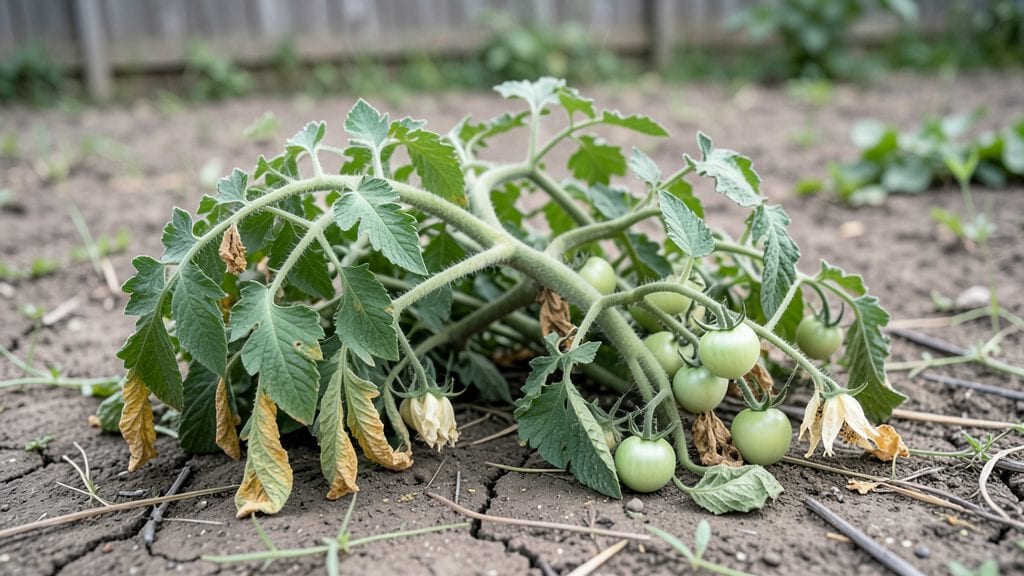
Your limp tomato plants aren’t a death sentence—they’re just asking for help. 🌱 I’ve nursed back more than my share of floppy vines, and the secret lies in three simple but critical steps that turn sad stems into sturdy, fruit-loaded bushes.
The key? Pinpointing whether your plants are thirsty, drowning, or fighting something unseen.
Most limp plants fall into one of three camps: underwatered (crispy leaves, dry soil), overwatered (soggy roots, yellowing foliage), or struggling with pests/disease (spots, wilting despite water). I’ve seen gardeners fix all three in under an hour—no fancy tools required.
Start by checking the soil: if it’s bone-dry two inches down, water deeply. If it’s muddy, hold off and improve drainage. For pests or disease, prune the worst spots and apply neem oil or a baking soda spray.
Within a week, you’ll notice new vigor—deep green leaves, stronger stems, and even the promise of more tomatoes. The best part? These fixes work whether you’re growing in pots or the ground, and they prevent future flops.
Think of it as a reset button for your plants, one that pays off in heavy harvests.
Here’s the twist: prevention is easier than rescue. Next time, we’ll cover how to keep your tomatoes standing tall all season—without the drama. For now, grab your watering can and let’s get those vines perking up.
Root Causes of Floppy Vines
Understanding why your tomato plants are wilting or drooping starts with identifying the hidden stressors at play. These plants aren’t just "being lazy"—they’re signaling distress through limp stems, yellowing leaves, or stunted growth.
Let’s break down the science behind the most common culprits, so you can diagnose (and fix!) the issue before it’s too late.
Tomatoes are thirsty, but too much water can suffocate their roots—literally. When soil stays soggy for days, oxygen can’t reach the roots, leading to root rot (Fusarium or Phytophthora fungi) or anaerobic stress.
This causes the plant to wilt as it struggles to absorb nutrients, even if the soil feels damp.
How to spot it:
- Soil smells like wet socks or mold.
- Leaves turn yellow (especially lower ones) while stems stay limp.
- Roots appear mushy or black when checked.
Why it happens:
- Compacted or clay-heavy soil holds excess moisture.
- Overzealous watering (e.g., daily light showers instead of deep, infrequent watering).
- Lack of drainage—containers without holes or garden beds with hardpan layers.
Tomatoes love warmth, but intense heat + direct sun can scorch leaves and stems, causing them to wilt midday before perking up in the evening. This isn’t just wilting—it’s osmotic stress, where the plant loses water faster than it can replace it through its roots.
How to spot it:
- Leaves curl upward or develop white/yellow patches (sunburn).
- Wilting peaks around 11 AM–3 PM but recovers at night.
- Fruit may develop blossom-end rot (black, sunken spots) due to uneven water uptake.
Why it happens:
- Sudden temperature spikes (e.g., 90°F+ without acclimation).
- Reflective surfaces (light-colored pavement, metal) magnifying heat.
- Thin or hairy leaves (common in heirloom varieties) are more prone to sun damage.
Limp stems can also mean your tomatoes are starving for essential nutrients. While nitrogen (for leaves) gets the most attention, potassium and calcium are critical for structural strength and water regulation. Without them, stems weaken, and plants collapse under their own weight—or the weight of fruit!
Key deficiencies to check:
| Nutrient | Symptoms | Why It Causes Limpness |
|---|---|---|
| Potassium (K) | Yellowing leaf edges ("scorch"), weak stems | Potassium helps osmoregulation—without it, cells can’t hold water properly. |
| Calcium (Ca) | Blossom-end rot, crispy stems, stunted growth | Calcium strengthens cell walls; deficiency leads to soft, brittle stems. |
| Magnesium (Mg) | Yellowing between leaf veins ("interveinal chlorosis") | Magnesium is central to chlorophyll production; stressed plants wilt faster. |
Why it happens:
- Poor soil testing—many garden soils lack micronutrients like magnesium or boron.
- Over-fertilizing with nitrogen (e.g., too much blood meal) at the expense of other nutrients.
- Competition from weeds or overcrowded plants depleting nutrients faster than roots can absorb them.
Hidden sap-suckers (like aphids, spider mites, or whiteflies) or root-feeding pests (grubs, nematodes) can severely weaken tomato plants. These critters don’t just eat leaves—they disrupt the plant’s vascular system, preventing water and nutrients from traveling where they’re needed.
Common culprits:
- Aphids/whiteflies: Cluster on undersides of leaves, injecting toxins that cause wilting and curling.
- Nematodes: Microscopic worms that chew on roots, reducing water uptake by up to 50%.
- Fungal infections (e.g., early blight): Clog root hairs with mycelium, making absorption inefficient.
Why it happens:
- Weakened plants (from overwatering or poor soil) attract pests.
- Monoculture gardening (planting tomatoes in the same spot yearly) builds up pest populations.
- Ignoring early signs (e.g., sticky residue from aphids or yellowing leaves from nematodes).
Even healthy tomatoes can flop if they’re physically constrained or lack structural support. As vines grow heavier with fruit, unsturdy stakes, trellises, or cages can’t handle the weight, causing stems to bend or snap under pressure.
How to spot it:
- Stems kink or bend at odd angles (not uniform wilting).
- Fruit touches the ground or drags on soil (risk of rot).
- No leaf discoloration or pest signs—just droop from sheer weight.
Why it happens:
- Using flimsy stakes (e.g., bamboo that sways in wind).
- Not pruning suckers—extra growth strains the main stem.
- Planting too close together, forcing vines to compete for space.
Tomatoes are tropical plants—they hate sudden cold snaps, frost, or drying winds. Cold stress causes cell membranes to rupture, while wind increases transpiration (water loss) faster than roots can replenish it.
How to spot it:
- Sudden wilting after a cold front (even if temps stay above freezing).
- Leaves feel crispy or papery to the touch.
- Wilting is uniform across the plant, not just one stem.
Why it happens:
- Early/late season planting without hardening off seedlings.
- Exposed garden beds with no windbreaks (e.g., fences, shrubs).
- Nighttime temps dropping below 50°F (tomatoes prefer 60–85°F).
Revive Your Tomato Plants Now
Limp tomato plants don’t mean the end of your harvest—just a call for action! Whether your vines are wilting from thirst, stress, or disease, these practical, step-by-step fixes will get them back on track.
Below, we’ve mapped the most common causes to easy solutions, plus prevention tips to keep your plants thriving all season.
Signs: Yellowing leaves, mushy stems, or soil that stays soggy for days.
How to Fix It: 🔥 Stop watering immediately—let the top 1–2 inches of soil dry out before watering again. 🍳 Improve drainage by mixing compost or perlite into heavy clay soil. If potted, add a layer of gravel to the bottom. 👨🍳 Repot if needed—if roots are rotting, move the plant to a container with fresh, well-draining soil. ⏰ Water deeply but less often—tomatoes prefer 1–1.5 inches per week, delivered at the base (not overhead).
Prevention Tips:
- Use a moisture meter to avoid guesswork.
- Mulch with straw or grass clippings to retain moisture without over-saturating roots.
- Avoid watering at night—wet foliage encourages fungal diseases.
Signs: Drooping leaves that perk up in the evening, crispy edges, or dry soil pulling away from pot sides.
How to Fix It: 💡 Give them shade—use shade cloth (30–50%) during peak sun (10 AM–4 PM). 🌡️ Water at the roots—soak the soil until water runs out the drainage holes (pots) or seeps 6 inches deep (ground). 🔥 Mist leaves lightly in extreme heat (early morning only) to cool them down. ✨ Prune lower leaves to improve airflow and reduce water loss.
Prevention Tips:
- Water in the early morning to reduce evaporation.
- Group plants together to create a microclimate with shared moisture.
- Use drip irrigation for consistent, slow watering.
Signs: Yellow spots with dark borders, white powdery coatings, or limp leaves that stay wilted.
How to Fix It: 🔪 Remove infected leaves immediately—snip them off with sterilized scissors (don’t compost them!). 🍳 Apply a fungicide—use neem oil, copper spray, or baking soda mix (1 tsp baking soda + 1 quart water + a drop of dish soap). 👨🍳 Space plants wider—aim for 18–24 inches apart to improve airflow. ⏰ Water at the base only—avoid overhead sprinklers, which spread spores.
Prevention Tips:
- Rotate crops—don’t plant tomatoes in the same spot yearly.
- Plant resistant varieties like ‘Mountain Merit’ or ‘Defiant PhR’.
- Add companion plants like basil, marigolds, or garlic to deter fungi naturally.
Signs: Sticky residue (honeydew), tiny webs, or chewed leaves with limp, curled foliage.
How to Fix It: 💡 Blast pests off with a strong spray of water (early morning). 🌡️ Use insecticidal soap—spray undersides of leaves where pests hide. 🔥 Introduce beneficial insects—ladybugs or lacewings eat aphids naturally. ✨ Apply diatomaceous earth (food-grade) around the base for crawling pests.
Prevention Tips:
- Inspect new plants before bringing them home.
- Encourage predators like praying mantises or birds with a small water source.
- Avoid broad-spectrum pesticides—they kill good bugs too!
Signs: Slow growth, yellowing leaves, or roots circling the pot’s edge.
How to Fix It: 🍳 Gently loosen roots if repotting—trim any that are tightly coiled. 👨🍳 Upgrade the pot—choose one 2–4 inches larger with drainage holes. ⏰ Water lightly for a week post-transplant to reduce stress. 🔥 Fertilize lightly with a balanced 10-10-10 after 2 weeks.
Prevention Tips:
- Repot every 2–3 years for container tomatoes.
- Use self-watering pots to reduce shock from inconsistent care.
- Hardening off seedlings (acclimating to outdoor conditions) prevents shock.
Pro Tip: 💡 Check the soil pH—tomatoes thrive in 6.0–6.8. Test with a kit and amend with lime (to raise pH) or sulfur (to lower it) if needed.
With these fixes, your tomato plants should bounce back in 3–7 days—just give them TLC, and you’ll be on your way to a bountiful harvest! 🍅🌿
Frequently asked questions
Why do my tomato plants suddenly droop even after watering?
This usually signals root stress from overwatering, heat exhaustion, or pests. Check the soil first—if it's soggy, you're drowning the roots. If dry, the plant may be suffering from osmotic stress (losing water faster than roots can absorb it). Look for pests like aphids or signs of fungal infection (yellow spots) on leaves.
Can I save tomato plants with mushy stems?
Mushy stems often mean root rot from overwatering or poor drainage. Trim away the worst damage with sterilized scissors, then repot in fresh, well-draining soil. Hold off on watering for 3–5 days to let roots recover. If the rot is severe, the plant may not survive—but act fast to save others!
How do I tell if limpness is from pests vs. disease?
Pests (like aphids or spider mites) leave visible signs: sticky residue, tiny webs, or chewed leaves. Disease (e.g., early blight) shows as yellow/brown spots with dark borders. Check leaf undersides and stems—pests cluster there, while disease spreads uniformly.
Will pruning help limp tomato plants recover?
Yes! Prune 1/3 of the foliage to reduce water loss and improve airflow. Focus on yellow or diseased leaves first. Avoid heavy pruning in extreme heat—wait until morning or cooler weather. This forces energy into root recovery and strengthens remaining stems.
How long does it take for tomato plants to perk up after fixes?
With proper care, you’ll see improvement in 3–7 days. Mild cases (underwatering, heat stress) recover fastest. Severe root rot or pest infestations may take 2–3 weeks—be patient and monitor soil moisture closely. Consistent TLC (watering, pruning, shade) speeds up recovery!