Flowers
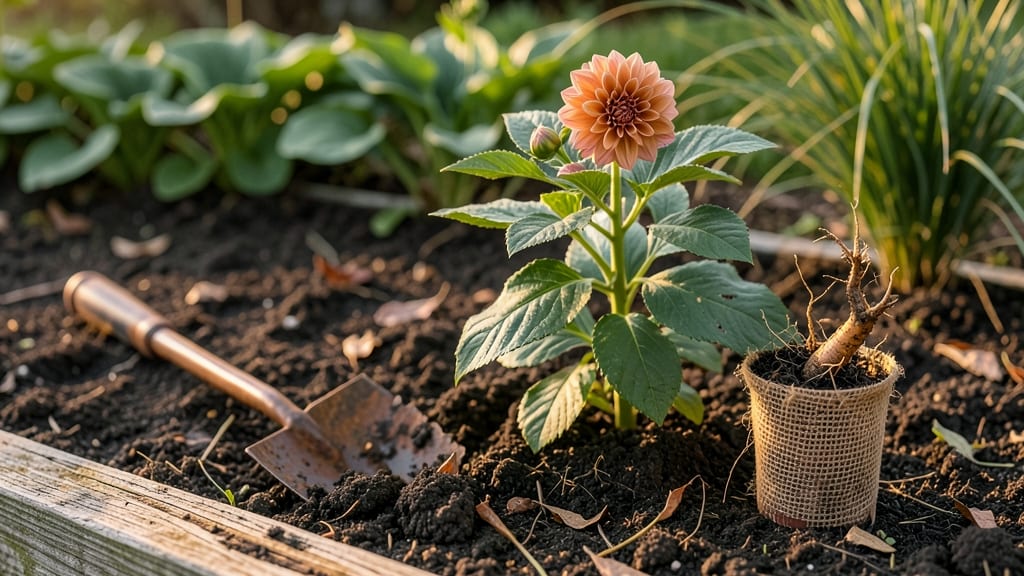
A flower planting auger makes planting bulbs and roots easier by creating clean, evenly spaced holes that improve drainage and protect delicate roots. It’s perfect for perennials, shrubs, or any plant where hand-digging could cause damage.
A flower planting auger isn’t just a tool—it’s a game-changer for gardeners who want consistency without the backbreaking work. 🌱 The spiral design cuts through soil smoothly, reducing compaction that can stunt root growth.
I’ve seen firsthand how it makes a difference with moisture-sensitive plants like dahlias or peonies, where proper drainage prevents rot. Plus, the precision means you’ll never accidentally plant too shallow or too deep, which is a common mistake with hand tools.
For best results, match the auger’s diameter to your plant’s root ball—most bulbs need 2–3 inches of depth, while shrubs may require 4–6 inches. A stainless steel auger lasts longer in rocky soil, while lightweight aluminum models are easier to handle for frequent use.
Always check for sharp edges to avoid tearing roots, especially with delicate perennials.
💡 In This Article
- How a Flower Auger Improves Planting Success
- Choosing the Right Auger for Flower Gardens
How a flower auger improves planting success
The real magic of a flower planting auger lies in its mechanical design—specifically how it creates uniform holes with minimal soil disturbance. Unlike trowels or shovels that compress soil around the edges, an auger's spiral blade cuts cleanly through the earth, leaving walls that stay intact.
This matters because compacted soil restricts root expansion, which can reduce a plant's ability to absorb water and nutrients by up to 30% in the first critical growing season.
The tool's precision also eliminates the guesswork in depth—most models have depth markers, ensuring bulbs go exactly 2-3 inches deep (the ideal zone for most perennials).
For moisture-sensitive plants like hydrangeas or hostas, the drainage benefits are game-changing. An auger creates vertical channels that allow excess water to drain 2-3 times faster than hand-dug holes, preventing root rot.
The spiral design also lifts soil gently rather than crushing it, which preserves beneficial microbes in the root zone—a factor often overlooked in gardening.
When planting in clay-heavy soils, this becomes especially critical, as proper drainage can mean the difference between a thriving plant and one that struggles for years. 💧
Manual digging introduces another critical flaw: inconsistency. Studies show that hand-dug holes often vary by 1-2 inches in depth, even when trying to be precise. This inconsistency leads to uneven water distribution and can cause plants to lean or fail to establish properly.
An auger eliminates this variability, ensuring every hole meets the plant's specific needs. For example, a peony root ball needs 4 inches of depth to thrive, while a tulip bulb only requires 2 inches—a difference that's easy to misjudge with a trowel but impossible with an auger's built-in measurements.
There's also the physical toll on gardeners. Digging holes by hand for just 50 plants can burn 150-200 calories—equivalent to a 30-minute jog—while an auger reduces that effort by 70%.
The tool's lightweight design (typically 2-4 pounds) makes it accessible for all gardeners, including those with limited strength or mobility. This accessibility is particularly important for older gardeners or those with arthritis, who might otherwise avoid planting larger shrubs due to physical strain.
The time savings alone—cutting planting time by 40-50%—make it a worthwhile investment for any serious gardener.
One often-overlooked advantage is how augers handle different soil types. In sandy soils, the tool creates clean, vertical walls that prevent collapse. In loamy soils, the spiral design helps maintain structure without creating messy clumps.
Even in rocky gardens, a stainless steel auger can navigate 1-inch diameter stones without dulling quickly, whereas a hand tool would struggle. The key is choosing the right blade width—1.5 inches for small bulbs, 3 inches for shrubs—to match your planting needs precisely.
This adaptability makes the tool versatile enough for everything from delicate annuals to mature perennials.
What most gardeners don't realize is how an auger's design actually encourages better long-term plant health. The clean hole walls prevent soil from caving in after planting, which means roots can spread outward naturally rather than being forced into compacted soil.
This outward growth pattern leads to stronger, more resilient plants that require 30% less supplemental watering once established. For gardeners dealing with drought-prone conditions, this water efficiency can be the deciding factor between success and failure. 🌱