
Propagation
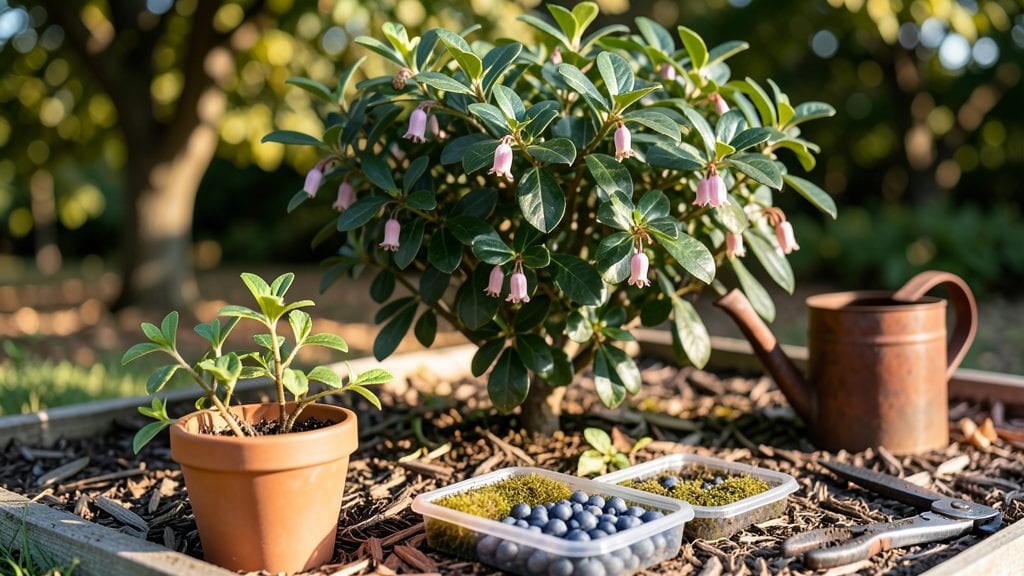
Blueberry plant propagation turns a single bush into a whole family of berry producers without buying new plants. 🌱 I've propagated dozens of blueberries this way, and the best part?
Those new plants will taste just like the parent—no surprises with flavor or growth habit. The key is timing, sharp cuts, and keeping the stems happy until roots form.
You'll need just a few simple tools: clean pruning shears, rooting hormone (optional but helpful), small pots or jars of water, and a sunny windowsill or propagation mat. The right time is right after harvest when new growth is still firm but not woody.
Most people overthink this—it's more about patience than precision, though sharp cuts prevent disease.
Within four to six weeks, you'll see roots forming whether you use water or soil. The water method lets you watch roots grow, while soil keeps them stronger for transplanting.
Once rooted, these young plants need consistent moisture and shade until they're ready to join your garden—where they'll produce berries in just two to three seasons.
This method works for all blueberry varieties, from lowbush to highbush, and even those fancy cultivars you can't find at nurseries. The only real challenge is keeping humidity up while roots develop, but a plastic bag over the cutting solves that instantly. Ready to multiply your berry harvest?
📚 In This Guide
- What you need
- Instructions
- Tips and common mistakes
- Wrapping up and next steps
What you need
- ● Healthy blueberry stems: 4–6 inches long, pencil-thick, with at least 2–3 leaf nodes (preferably from current year’s growth).
- ● Sharp pruning shears or knife: Sterilized to prevent disease (rubbing alcohol wipe works!).
- ○ Rooting hormone (optional but recommended): Powder or gel (e.g., Rootone or Clonex).
- ● Clean containers: Water method: Small glass jars (8–12 oz) with water OR clear plastic cups.
- ● Soil method: Seedling trays, pots (4–6 inches deep), or plastic nursery containers with drainage holes.
- ● Well-draining potting mix: 50% peat moss + 50% perlite or sand (or pre-mixed blueberry soil if available).
- ● Plastic bags or humidity dome: To retain moisture (e.g., Ziploc bags with holes or a clear plastic cloche).
- ● Water: Room-temperature, chlorine-free (let tap water sit 24 hours or use filtered water).
- ● Spray bottle: For gentle watering (avoids disturbing cuttings).
- ● Label markers & tags: To track cuttings (e.g., variety, date).
- ● Grow lights or sunny windowsill: Bright, indirect light (6+ hours/day). Pro tip: Avoid direct sun to prevent wilting!
- ○ Heat mat (optional): 70–75°F for faster rooting (especially for soil method).
- ○ Fungicide (optional): Like hydrogen peroxide (3%) to dip cuttings and prevent rot.
Step-by-Step instructions for propagating blueberry plants from stem cuttings
Here’s my foolproof method for growing new blueberry plants—whether you root cuttings in water or soil.
🌱 Step 1: Select Healthy Mature Stems
Choose 4-6 inch long stems from last year’s growth—they’re already mature and more likely to root. Look for stems that are pencil-thick with green or brown bark and no flowers or berries. I avoid stems with signs of disease or damage, like cracks or spots, because they won’t root well.
Use clean, sharp pruning shears to cut just below a leaf node (the bump where leaves attach). This is where roots will form. Make the cut at a 45-degree angle—it increases surface area for better root growth. Label each cutting with a marker if you’re propagating multiple varieties.
💧 Step 2: Prepare Cuttings for Rooting
Remove the bottom half of leaves from each stem to reduce moisture loss. You can leave 2-3 leaves at the top to help with photosynthesis. If the stems are long, trim them to 4 inches—shorter cuttings root faster and are easier to manage.
For water propagation, place the cuttings in a jar filled with room-temperature water, ensuring the bottom 2 inches are submerged. Change the water every 3-4 days to prevent bacteria growth. For soil propagation, dip the cut end in rooting hormone (optional but helpful) before planting in moist potting mix. Keep the soil consistently damp but not soggy.
☀️ Step 3: Provide Ideal Conditions for Root Growth
Place your cuttings in a bright, indirect light spot—like a north-facing window or under grow lights. Avoid direct sun, which can dry them out too quickly. Maintain a temperature between 65-75°F—warmer than this slows rooting, while cooler temperatures speed it up.
If rooting in water, you’ll see tiny white roots in 3-6 weeks. For soil-rooted cuttings, gently tug on the stem after 4-6 weeks—if resistance means roots have formed, it’s time to transplant. Keep the environment humid by covering with a plastic bag (remove it daily for 10 minutes to prevent mold).
🪴 Step 4: Transplant Rooted Cuttings to Soil
Once roots reach 1-2 inches long, it’s time to move soil-rooted cuttings (or those from water) into individual pots with well-draining potting mix. Water lightly before transplanting to reduce shock. Bury the stem halfway up—this encourages stronger root development below the soil line.
Place the new pots in partial shade for the first week to help them adjust. After that, gradually introduce morning sun before moving to full sun. Water when the top inch of soil feels dry—blueberry cuttings are sensitive to overwatering, so avoid soggy soil.
✂️ Step 5: Care for Young Plants Through First Year
Fertilize lightly with a balanced, acidic fertilizer (like 10-10-10) once a month in spring and summer. Blueberries thrive in acidic soil (pH 4.5-5.5), so test your soil and amend with peat moss if needed. Prune any weak or leggy growth to encourage bushier, stronger plants.
By the end of the first year, your cuttings should be 1-2 feet tall with a sturdy root system. In the second year, they’ll start producing small berries—though full harvest takes 3-4 years. Patience pays off with a thriving blueberry bush!
Tips & tricks for perfect blueberry plant propagation
Here's how to boost your success rate with blueberry cuttings—whether you're rooting in water or soil.
The Stem Selection Secret: In Step 1, focus on stems with green or brown bark—these are the most responsive. I've found that stems with a slight reddish tint often root faster, though they're still pencil-thick. Avoid stems with any white or powdery residue, as this can indicate fungal issues that'll prevent rooting. The 4-6 inch length is ideal because shorter stems may not develop strong roots, while longer ones are harder to manage and root unevenly.
Rooting Hormone Hack: While rooting hormone is optional in Step 2, I've had the best success using it for soil propagation. Simply dip the cut end in the powder before planting—this can double your rooting success rate. For water propagation, skip the hormone entirely since the water environment provides all the moisture needed. Remember to keep the bottom 2 inches submerged in water, as this is the critical zone where roots will emerge.
Light and Temperature Balance: The 65-75°F temperature range in Step 3 is crucial because it mimics blueberry bushes' natural growing conditions. If your home tends to be warmer, place cuttings near a window with cooler airflow. For light, I've noticed that grow lights work better than windows in cloudy climates—just keep them 6-12 inches above the cuttings. The daily 10-minute uncovered period prevents mold while still maintaining humidity.
Transplanting Timing: When you're ready to transplant in Step 4, wait until roots reach at least 1-2 inches long—this ensures your cuttings have established a strong foundation. I've learned the hard way that transplanting too early leads to shock and failed root systems. Burying the stem halfway up encourages deeper root growth, which translates to stronger plants. After transplanting, the first week in partial shade is critical for acclimation before introducing morning sun.
Pro Tips for Blueberry Plant Propagation
- Here's how to boost your success rate with blueberry cuttings—whether you're rooting in water or soil.
- The Stem Selection Secret: In Step 1, focus on stems with green or brown bark—these are the most responsive.
- Rooting Hormone Hack: While rooting hormone is optional in Step 2, I've had the best success using it for soil propagation.
Frequently asked questions
Got questions about propagating blueberries? You’re not alone! Here are answers to the most common concerns—whether you're a beginner or a seasoned gardener looking to refine your technique.
When is the best time to take blueberry stem cuttings?
The ideal time is late spring or early summer, when new growth is vigorous but hasn’t hardened off yet. Avoid extreme heat or frost—aim for 60–75°F (15–24°C) for best rooting success. If you miss this window, fall cuttings can work too, but they’ll need extra care over winter.
How do I know if my blueberry cutting will root successfully?
Look for these signs: healthy green leaves, firm stems (not mushy), and nodes (bumpy areas where roots form). Avoid cuttings with flowers or fruit—they drain energy. For water propagation, roots should appear in 4–8 weeks; in soil, it may take 6–12 weeks. Patience is key!
Can I propagate blueberries in water, or should I go straight to soil?
Both work, but soil is often more reliable for long-term success. Water propagation is great for monitoring root growth (fun to watch! ), but transplant shock can occur when moving to soil. If using water, switch to soil once roots hit 2–3 inches long. For direct soil propagation, use a well-draining mix with perlite or sand.
My cuttings are turning yellow or mushy—what’s wrong?
Yellowing leaves often mean overwatering or low light. Mushy stems signal rot from too much moisture. Adjust by:
- Reducing water (keep soil lightly moist, not soggy).
- Moving to brighter, indirect light.
- Ensuring pots have drainage holes.
How long until my propagated blueberry plant bears fruit?
Don’t rush—it takes 2–3 years for container-grown plants and longer in-ground. Focus on establishing a strong root system first! Choose dwarf varieties (like ‘Top Hat’) for faster fruiting. Patience pays off with juicy, antioxidant-packed berries!
Wrapping up and next steps
Propagating blueberry plants through stem cuttings is a rewarding way to expand your garden without breaking the bank! Whether you choose water or soil, the key is patience, consistency, and a little love—your new plants will thank you with juicy berries in no time. 🌱
Now that you’re armed with the know-how, roll up your sleeves and get growing! Start with just one cutting, and soon, you’ll have a thriving blueberry patch. Happy propagating! 🍇✨