
Watering
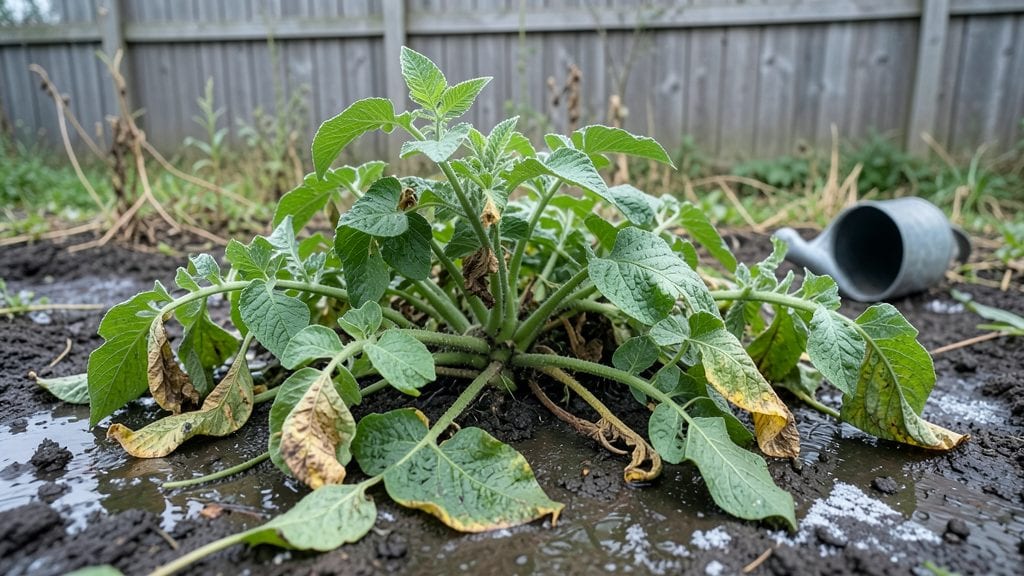
Overwatered potato plants can still yield a harvest with the right moves. I’ve pulled soggy tubers back from the brink—blackened stems, fungal fuzz, and all—by cutting back on water and boosting airflow. The key isn’t panic; it’s knowing when to step back and let the soil dry.
Most gardeners drown potatoes thinking they’re thirsty plants, but too much water suffocates roots and invites rot. I check soil moisture with my finger—if it’s damp past two inches, hold off.
Raised beds or containers help, since they drain faster than heavy garden soil. A little mulch keeps moisture steady without smothering the plants.
With adjusted watering, you’ll see new green shoots within a week, and tubers will firm up instead of turning mushy. The harvest might be smaller, but you’ll salvage what you’ve got—and next season, your soil will remember the lesson. Here’s how to turn things around.
This works for backyard rows, containers, or even a single bucket of potatoes on a balcony. The fix is simple, but it takes patience. Your tubers will thank you at harvest time.
The Hidden Triggers Behind Soggy Tubers
When your potato plants look more like a swamp than a thriving crop, the blame often points to one culprit: excessive moisture. But why does this happen? Even well-intentioned gardeners can fall into the trap of overwatering, and the consequences—yellowing leaves, stunted growth, and rotting tubers—can be devastating.
Let’s break down the real reasons your plants are drowning in their own downpour.
Potatoes thrive in well-draining soil, but if your garden bed or containers lack proper drainage, water pools around the roots instead of seeping away. Here’s why this is a disaster:
- Compacted soil (from foot traffic, heavy clay, or lack of organic matter) creates a waterlogged barrier, suffocating roots.
- Shallow planting in containers or raised beds can trap excess water near the base, where tubers form.
- Clay-heavy soil holds moisture like a sponge, preventing oxygen from reaching roots—potatoes need aeration to grow.
Actionable fix: Amend soil with coarse sand, perlite, or compost to improve drainage. For containers, use pots with drainage holes and line them with gravel.
Potatoes are drought-tolerant once established, but many gardeners assume they need constant moisture—especially during hot spells. Here’s how overwatering sneaks up on you:
- Automatic irrigation systems (like drip lines or sprinklers) can deliver too much if left running on timers without soil checks.
- Morning watering habits may seem logical, but if the soil doesn’t dry between sessions, roots stay soggy.
- Ignoring weather forecasts—heavy rain + your watering schedule = double the moisture.
Actionable fix: Water deeply but infrequently—aim for 1–1.5 inches per week, adjusting for rain. Use your finger to check soil moisture: if the top 2 inches are dry, it’s time to water.
Potatoes grow underground, and if planted too shallowly, their tubers (which form near the soil surface) sit in a permanent puddle. Here’s the science:
- Tubers need oxygen—when buried too close to the surface, they suffocate and rot.
- Shallow hills (common in container gardening) trap water against the sides of the pot.
- Succession planting without hilling (adding soil as plants grow) leaves stems exposed, causing tubers to form in wet, compacted layers.
Actionable fix: Plant seed potatoes 4–6 inches deep in loose, well-draining soil. As stems grow, hill soil around the base (every 2–3 weeks) to encourage deeper tuber formation and prevent water pooling.
Potatoes hate humid, cool conditions, which slow evaporation and keep soil damp for days. Here’s how climate plays a role:
- Cooler nights (below 60°F) reduce soil warmth, slowing water absorption and increasing fungal risks (like blight).
- High humidity (above 70%) prevents soil from drying, even if you’re not watering.
- Rainy seasons paired with poor airflow (e.g., dense foliage or shaded beds) create a perfect storm for waterlogged roots.
Actionable fix: Choose sunny, well-ventilated spots for planting. Use mulch sparingly (if at all) to avoid trapping moisture—opt for straw instead of thick layers of wood chips.
Most of these issues stem from misunderstood needs—potatoes don’t want to swim! By addressing drainage, watering habits, planting depth, and climate factors, you’ll give your tubers the dry-but-moist environment they crave. 🌱
Revive Your Potatoes Now
Overwatered potato plants can feel like a gardener’s nightmare—wilting leaves, yellowing foliage, and that dreaded mushy soil. But don’t toss those tubers just yet! With the right steps, you can nurse your plants back to health and even salvage a harvest.
Below are practical, step-by-step solutions tailored to the root causes of overwatering, plus prevention tips to keep your spuds thriving.
If your soil is soggy and roots are suffocating, cut back on water right away.
- 💧 Stop watering for 2–3 days to let excess moisture evaporate. This helps prevent root rot and fungal diseases. - 🌱 Water only when the top 1–2 inches of soil feel dry.
Stick your finger in—if it’s damp, wait. - ⏰ Schedule watering in the morning (6–9 AM) to allow foliage to dry before evening, reducing disease risk.
Pro Tip: 💡 Use a moisture meter for accuracy—no more guesswork!
Poor drainage is the #1 enemy of potatoes. Fix it with these quick fixes:
- 🔪 Dig in coarse sand or perlite (1–2 inches) to break up compacted soil and boost aeration. - 🌿 Mix in compost or aged manure (20–30%) to improve structure and fertility—just avoid fresh manure, which can burn roots. - 🏗️ Raise beds or mounds if your soil is naturally heavy clay.
Potatoes love loose, well-draining soil!
Pro Tip: 🌡️ Test your soil’s pH—potatoes prefer 5.0–6.5. Amend with sulfur or lime if needed.
Overwatered plants often develop soft stems and droopy leaves. Give them a helping hand:
- ✂️ Trim yellow or mushy leaves to redirect energy to healthy growth. Use clean, sharp scissors.
- 🪑 Prop up weak stems with small stakes or cages to prevent lodging (falling over).
- 🌿 Thin crowded foliage if plants are competing for air circulation—this reduces humidity and disease.
Pro Tip: ✨ If leaves are completely brown and crispy, the plant may be beyond saving. Focus on rescuing the tubers instead.
If your plant is already struggling, harvest early to prevent rot:
- 🕵️ Dig carefully 2–3 weeks before the first frost (or when tops die back). Use a fork to avoid piercing tubers. - 🧼 Cure the harvest: Brush off soil, then let potatoes air-dry in a cool (50–60°F), dark, well-ventilated space for 1–2 weeks.
This thickens skins and prevents decay. - 🗑️ Discard mushy or moldy tubers—they won’t store well.
Pro Tip: 📊 Store potatoes in a single layer (not stacked) in a cardboard box with a little sand or peat moss to absorb moisture.
Once you’ve revived your plants, keep these habits to avoid repeats:
- 💧 Use drip irrigation or soaker hoses—they deliver water directly to roots and reduce waste.
- 🌧️ Mulch with straw or grass clippings (2–3 inches) to slow evaporation and keep soil even-moisture.
- 📅 Monitor weather forecasts—adjust watering during heavy rains or humidity spikes.
- 🌱 Rotate crops—don’t plant potatoes in the same spot yearly to prevent soil-borne diseases.
Pro Tip: 🔥 Plant potatoes in ridges or hills—this naturally improves drainage and makes harvesting easier!
Final Note: Patience is key! Reviving overwatered potatoes takes time, but with these steps, you’ll be back to harvesting crisp, golden spuds in no time. 🥔✨
Frequently asked questions
Why do my potato leaves turn yellow when overwatered?
Yellowing leaves signal root suffocation from excess water. Too much moisture blocks oxygen, preventing roots from absorbing nutrients. Check soil—if it stays damp 2+ inches down, cut back immediately. Yellow leaves often appear first on older foliage as the plant struggles to transport energy.
Can I still harvest potatoes if they're overwatered?
Yes, but act fast! Dig carefully when tops die back or after 2-3 weeks of dry conditions. Cure harvested tubers in a cool (50-60°F), dark, well-ventilated spot for 1-2 weeks to toughen skins. Discard any mushy or moldy potatoes—they won't store well. You may get smaller yields, but quality often improves with proper drying.
How often should I water potatoes after fixing overwatering?
Once recovered, water deeply but infrequently—about 1-1.5 inches per week, adjusting for rain. Use your finger: if the top 1-2 inches of soil feel dry, it's time. Morning watering prevents evening moisture buildup. Containers dry faster than garden beds, so check them daily in hot weather.
Will overwatered potatoes grow back if I stop watering?
New growth is possible if roots aren't completely rotted! Prune damaged foliage to redirect energy. Healthy stems will sprout from the base within 7-10 days if soil drains properly. For severe cases, focus on saving tubers—new plants may emerge from remaining healthy roots, but yields will be limited.