
Pruning
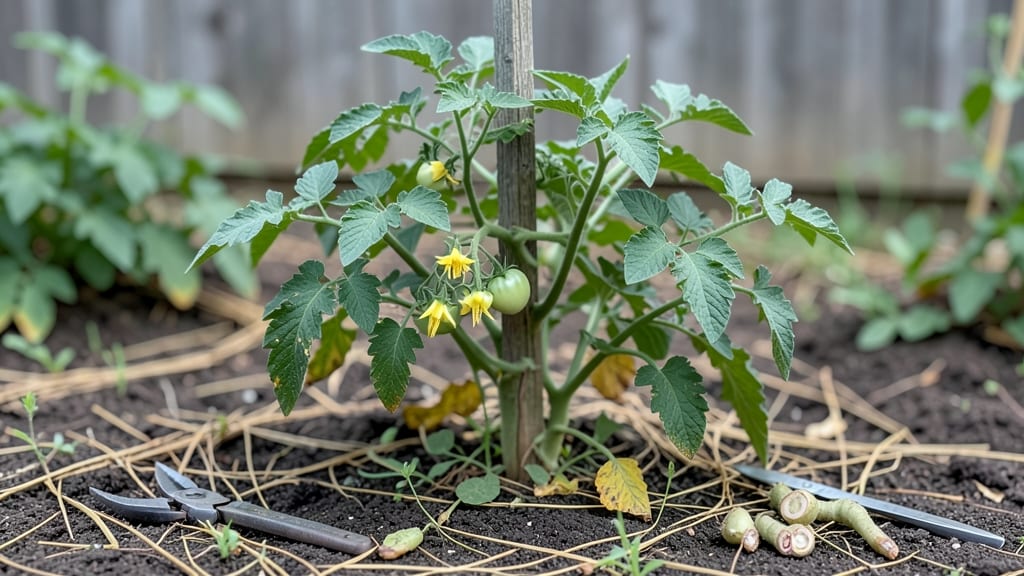
Pinching back tomato plants transforms leggy, weak vines into sturdy, productive bushes that yield more fruit and resist disease better. ✨ I learned the hard way—skipping this step meant fewer tomatoes and more trouble with blight.
The right timing and technique make all the difference, and it only takes a few minutes each week.
You’ll need sharp pruning shears, a sunny morning to work, and a clear understanding of which stems to cut. Focus on the suckers—those little shoots growing between the main stem and branches—removing them when they’re about 2 inches long.
This encourages the plant to put energy into existing branches instead of new growth that won’t bear fruit.
Within 2-3 weeks, you’ll see thicker stems, more leaves, and stronger roots. The plant channels its energy into bigger tomatoes rather than extra foliage, and air circulation improves, keeping diseases at bay. It’s a small effort for a huge payoff at harvest time.
Works for both indeterminate (vining) and determinate (bush) varieties, though indeterminate types benefit most. Avoid over-pruning—just remove the suckers, and your plants will thank you with bushier vines and heavier yields. Ready to give it a try?
📚 In This Guide
- What you need
- Instructions
- Tips and common mistakes
- Wrapping up and next steps
What you need
- ● Clean, sharp pruning shears or scissors – Choose a pair with bypass blades (not anvil-style) to avoid crushing stems. A 5-inch pair works best for most tomato varieties.
- ● Rubbing alcohol (70% isopropyl) or a bleach solution (1 part bleach to 9 parts water) – For sterilizing tools between cuts to prevent disease spread.
- ○ Gloves (optional but recommended) – Nitrile or garden gloves protect your hands from thorns and sap.
- ● Tomato plants at the right stage – Pinch when plants are 6-12 inches tall and have 4-6 true leaves (not seed leaves).
- ● Sunny outdoor space or a well-lit indoor grow area – Tomato plants need 6-8+ hours of sunlight daily to recover well from pruning.
- ● Garden twine or soft plant ties – If your tomatoes need staking or trellising after pruning for support.
- ● Garden pruners with a magnifying lens – Makes spotting the perfect pinch point easier on smaller plants.
- ● Compost or mulch – To replenish nutrients in the soil after pruning stress.
- ○ Plant growth regulator (optional) – Like seaweed extract, to help plants recover faster (follow label instructions!).
Step-by-Step guide for pinching back tomato plants
Here’s how to coax stronger stems and heavier fruit from your tomato plants—just a few minutes of pruning makes all the difference.
🌱 Step 1: Identify the Right Growth Points to Pinch
Pinching focuses on the terminal bud, the small bump at the very top of each vine where new growth emerges. This is where the plant directs its energy—removing it forces side shoots to develop instead. Use your fingers to gently squeeze off the top 1-2 inches of growth, including that terminal bud. You’ll feel a satisfying snap when you remove it correctly.
Wait until the plant has at least 4-5 sets of true leaves (not the initial seed leaves) before pinching. This ensures the plant has enough energy stored to branch out. If you pinch too early, you risk stunting overall growth. Look for vigorous, upright stems—those are ready for shaping.
✂️ Step 2: Remove Suckers and Weak Shoots
Suckers are the small shoots that grow in the leaf axils (the angle between the stem and a leaf). These compete with your main vine for nutrients, diverting energy away from fruit production. Pinch these off early—when they’re still less than 2 inches long—to avoid stressing the plant. Use clean pruners or your fingers to avoid tearing the stem.
Don’t remove all side shoots, though. Leave 1-2 strong suckers below the first flower cluster to encourage additional fruiting branches. Weak, leggy shoots can stay—just pinch them back to a leaf node. You’ll know you’re doing it right when the plant starts developing a bushier, more compact shape within a few weeks.
☀️ Step 3: Monitor and Repeat for Ongoing Growth
Pinching isn’t a one-time task—repeat the process every 1-2 weeks as new growth appears. Focus on maintaining the plant’s central leader (the main stem) and removing any aggressive suckers that threaten to outcompete it. In determinate varieties (bush tomatoes), pinch just enough to open up the plant for airflow and sunlight.
Watch for yellowing leaves or stunted growth—these are signs of over-pruning. If the plant looks stressed, hold off until it recovers. The goal is balance: enough pinching to encourage bushiness, but not so much that you sacrifice fruit production. A well-pinched tomato plant will have thicker stems, more flowers, and heavier fruit clusters by mid-season.
Tips & tricks for perfect tomato plant pruning
A few strategic adjustments can transform your tomato plants from leggy vines into robust producers—here's how to maximize your efforts.
Timing is Everything: The 1-2 inch pinch in Step 1 should only happen when your plant has established 4-5 sets of true leaves. This ensures the plant has built enough energy reserves to handle the stress of pruning. I've seen gardeners rush this step and end up with stunted plants that never recover. Wait until you see those vigorous, upright stems before making your first cut.
Tool Selection Matters: While fingers work for small plants, invest in clean, sharp pruners for larger vines. Dull tools crush stems and create entry points for disease. I sterilize my pruners with rubbing alcohol between plants to prevent spreading pathogens. For suckers in leaf axils, fingers are actually better—they give you more control over that precise pinch.
Determinate vs Indeterminate Strategy: Indeterminate varieties (the vining types) need aggressive pinching to direct energy upward, while determinate (bush) tomatoes only require light shaping. In Step 3, focus on maintaining that central leader in indeterminate plants, but for bush types, just open up the canopy for airflow. The difference in harvest size is dramatic when you tailor your approach to the variety.
Seasonal Adjustments: Early in the season, prioritize pinching to build strong stems. As you approach flowering, shift focus to removing suckers that compete with fruit production. I make a note in my garden journal to check plants every 7-10 days during peak growth—this consistent monitoring makes all the difference in final yields.
Pro Tips for Pinch Back Tomato Plants
- A few strategic adjustments can transform your tomato plants from leggy vines into robust producers—here's how to maximize your efforts.
- Timing is Everything: The 1-2 inch pinch in Step 1 should only happen when your plant has established 4-5 sets of true leaves.
- Tool Selection Matters: While fingers work for small plants, invest in clean, sharp pruners for larger vines.
Frequently asked questions
Got questions about pinching back tomato plants?
You’re not alone! Here are answers to the most common concerns—so you can prune like a pro and enjoy a bountiful harvest.
When is the best time to pinch back tomato plants?
Pinch back your tomato plants when they’re 6–12 inches tall and have 4–6 true leaves (not just seed leaves). For indeterminate varieties, keep pruning throughout the growing season to encourage bushiness. For determinate (bush) tomatoes, minimal pruning is needed—just remove suckers if desired. Pro tip: Do it in the morning when plants are hydrated!
How often should I pinch back tomato suckers?
Check your plants every 1–2 weeks during the growing season. Suckers grow fast, so don’t wait too long—removing them early prevents energy loss and keeps your plant focused on fruit production. If you’re busy, a quick weekly glance is better than nothing!
What if I don’t pinch back my tomato plants?
No worries! While pinching promotes bushier growth and bigger fruit, determinate tomatoes (like cherry varieties) often thrive without it. If you skip pruning, your plant may grow taller but could be more prone to disease or pests. Still, you’ll likely get some tomatoes—just maybe fewer!
Can I pinch back tomato plants in hot or cold weather?
Avoid pruning during extreme heat (above 90°F) or cold snaps—stress weakens plants. Aim for mild, overcast days or early morning/evening when temps are cool. If you must prune in heat, water deeply before and after to help recovery.
Will pinching back tomato plants reduce my harvest?
Not at all! In fact, it boosts yields by directing energy to fruit production. Indeterminate tomatoes (like Roma or Beefsteak) benefit the most from pruning, producing larger, healthier tomatoes. Determinate types may see slightly fewer butts more fruit—so it’s a trade-off. Pro tip: Focus on removing only suckers, not leaves!
What’s an alternative if I don’t want to pinch suckers?
Try topping (cutting the main stem) or trellising to guide growth upward. For indeterminate tomatoes, let them climb—this naturally reduces sucker growth. You can also prune leaves near the soil to improve airflow and prevent disease, even without removing suckers.
Wrapping up and next steps
Pinching back your tomato plants is a simple yet powerful way to boost growth, improve airflow, and unlock bigger, healthier harvests! 🌱 With just a few snips and a little timing, you’ll encourage bushier vines and stronger fruit production—no green thumb required.
Now that you’re armed with the know-how, get out there and prune with confidence!
Ready to take it further? Monitor your plants weekly—adjust pruning as they grow, and soon you’ll be enjoying a bounty of juicy tomatoes straight from your garden. Happy growing! 🍅✨